Iran's Supreme Leader Gives Government Some Negotiating Authority... Oil Prices Plunge 7% (Roundup)
Iran's Supreme Leader Grants Government Some Authority to Negotiate
Netanyahu Presses Trump to Resume the War
Uncertainty Persists After the U.S. Midterm Elections
International oil prices closed down more than 7% amid hopes that peace talks between the United States and Iran would resume. The decline came after reports that Iran's supreme leader had granted the government some authority to negotiate, somewhat easing concerns over disruptions to crude oil supplies from a prolonged war in the Middle East.

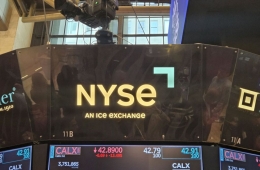
On Nov. 2 (local time), December Brent crude futures fell 7.63% from the previous session to settle at $104.77 per barrel on the ICE Futures Exchange in London. December West Texas Intermediate (WTI) crude futures fell 7.36% to settle at $96.46 per barrel on the New York Mercantile Exchange. During the session, Brent briefly fell to the $103 range and WTI to the $95 range.
Comments by Iranian President Masoud Pezeshkian were cited as the reason for the sharp drop in international oil prices. "The government is trying to resolve the issue through dialogue," Pezeshkian said that day. "The supreme leader has granted the government some authority in this regard." The remarks were interpreted as a sign that the supreme leader, who has final say over Iran's foreign and security policies, had given U.S. negotiations his backing. However, the extent of the concessions approved by Iran's leadership has not been disclosed.
Countries acting as mediators, led by Qatar, are also reportedly accelerating efforts to broker talks. Iranian officials held discussions with mediators in Doha, Qatar, over the weekend. Earlier, on Oct. 30, a Qatari negotiating team visited Tehran and held consultations for a day.
A person briefed on the talks told the Financial Times (FT) that both the United States and Iran wanted a deal and were showing more flexibility than before. However, the outlet noted that it remained unclear whether the two sides could reach an agreement, as their positions still differed widely. Mediators are trying to persuade U.S. President Donald Trump to allow more time for a diplomatic solution.
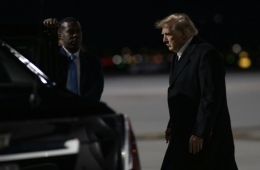
Military tensions also persist. Citing people familiar with the matter, the FT reported that Israeli Prime Minister Benjamin Netanyahu was pressuring Trump to resume the war soon. Trump is said to have taken the position that he would not launch an attack before the U.S. midterm elections on Nov. 3, but has yet to decide whether to resume military action afterward.
Markets view the oil price drop as the result of some easing in the geopolitical risk premium. Francesco Pesole, an ING strategist, said, "A substantial geopolitical risk premium is currently priced into oil," explaining that the more measured statements from both the United States and Iran had driven prices lower.
However, supply and demand conditions in the oil market remain tight. Eight months of disruptions to Middle Eastern oil supplies have significantly reduced the global market's capacity to absorb shocks. Russell Hardy, CEO of global oil trading company Vitol, said that day, "A significant amount of fear and risk is currently priced into oil, and supply and demand conditions are very tight." He added, "The answer to whether we can withstand further supply disruptions is 'no.'"
Hot Picks Today
 "Two Spend 500,000 Won in a Flash, Yet Wait Two Hours?" ... 'Dreamland' Shunned by Kids and Foreign Tourists
- The Era of Getting 200 Million Won After 30 Years Is Over... A Japanese Bank's "Perpetual Department Head" Who Just Clocked In Cries Out
- Spain Hit by Its Worst Tragedy... Lee Kangin, Moreno and Real Madrid Join Soccer World in Mourning
- They Said, “Make It Your Home for Life” - Then Suddenly Kicked 200 Passengers Off... What Happened to the Around-the-World Cruise?
- "130 Rice Bowls Sold Out in a Day"... 'Unfiltered Face' Adds 8 Million Won to Night Market Sales: China's Bungeunwoo
Experts remain cautious despite the possibility of renewed talks. Helima Croft, global head of commodity strategy at RBC Capital Markets, said, "The key question is whether Khamenei has actually approved concessions that would persuade hardliners who want to see the war through to back down."
© The Asia Business Daily. All rights reserved. Unauthorized AI training and use prohibited.