Democrats Could Retake House and Senate... Trump Faces 'Early Lame-Duck' Crisis [U.S. Midterms: 1 Day to Go]
Democrats have a 64% chance of retaking the Senate
Republican strongholds Texas and Kansas are also in play
High prices turn voters against Republicans
With the U.S. midterm elections approaching, Democrats are increasingly likely to reclaim the majority in the Senate as well as the House. With Democratic candidates leading even in traditionally Republican strongholds, observers say President Donald Trump could enter an “early lame-duck” period if Democrats take control of both chambers of Congress.
According to the final poll released the previous day by The New York Times (NYT) and Siena University, Democratic candidates were ahead of their Republican opponents in all seven major battleground states that will determine control of the Senate.

Election forecast group DDHQ projected on the 2nd (local time) that Democrats had a 65% chance of winning the Senate election. DDHQ
View original imageDecision Desk HQ (DDHQ), an election forecasting organization, also projected this afternoon that Democrats have a 65% chance of winning a Senate majority, while Republicans have a 35% chance of retaining control. It forecast that Democrats would win 52 seats and Republicans 48. In the House, it put Democrats’ chances of winning at 84%.
In this midterm election, voters will choose 35 of the Senate’s 100 members, who serve six-year terms, as well as all 435 members of the House. Republicans currently hold 53 Senate seats, while Democrats and their allies hold 47. Democrats can reclaim the majority if they retain all their current seats and gain at least four Republican-held seats.
Democrats lead even in Republican strongholds... Seven Senate races in the balance
The races attracting the most attention are in Texas and Kansas. In the 2024 presidential election, President Trump won both states by double-digit margins, making them Republican strongholds. But amid growing discontent over high prices, soaring energy costs linked to the war with Iran, and tariff policies, Democratic candidates are threatening Republican incumbents and candidates.
In the NYT-Siena University poll, James Talarico, the Democratic candidate in Texas, had 50% support, leading Republican candidate Ken Paxton (43%) by 7 percentage points. Texas is a prominent Republican stronghold that has not elected a Democratic U.S. senator since 1988. A Talarico victory is expected to send shock waves through U.S. politics.
In Kansas, Democratic candidate Adam Hamilton led Republican incumbent Senator Roger Marshall by 5 percentage points, with 49% support to Marshall’s 44%. Kansas has not elected a Democratic candidate to the U.S. Senate since 1932. Hamilton is appealing to moderate voters and courting even Republican supporters who are disappointed with President Trump.
Democrats also have a clear lead in other battlegrounds. In Michigan, Democratic candidate Abdul El-Sayed led Republican candidate Mike Rogers by 11 percentage points, with 53% support to Rogers’ 42%. However, divisions within the Democratic Party have emerged, with Representative Haley Stevens, who lost in the party’s primary near the end of the campaign, publicly endorsing the Republican candidate. This could affect the race.

Republican incumbent Senator Susan Collins (left), running in Maine's midterm election, and Troy Jackson, former Democratic president of the state Senate. Campaigns of the candidates from each party.
View original imageIn Maine, Democratic candidate Troy Jackson led Republican incumbent Senator Susan Collins by 6 percentage points. In Ohio, Democratic candidate Sherrod Brown was ahead of Republican Senator Jon Husted by 5 percentage points.
In Alaska, Democratic candidate Mary Peltola narrowly led Republican incumbent Senator Dan Sullivan, 48% to 46%. Iowa was also effectively tied, with Democratic candidate Josh Turek at 48% and Republican candidate Ashley Hinson at 47%.
However, as the polling gaps in many states fall within the margin of error, it is difficult to predict the actual results. In 2020, Senator Collins consistently trailed the Democratic candidate in polls during her reelection campaign. In the actual election, however, she won with 51.0% of the vote, beating Democratic candidate Sara Gideon (42%) by 8.6 percentage points.
Analysts say the preferences of Republican voters that have not been captured by polls could also affect this election. The NYT found that voters who decided whom to support within the past month favored Republican candidates over Democratic candidates by 9 percentage points.
Democrats favored to retake the House... Concerns grow over an early Trump lame-duck period

Democrats appear even more likely to reclaim the majority in the House. According to a final race analysis released on October 30 by the U.S. election analysis organization Cook Political Report, Democrats were favored in 222 districts, more than the 218 seats needed for a majority. Republicans were favored in 195 districts, while the remaining 18 were classified as toss-ups in which neither side could be considered certain to win.
Notably, Republicans currently hold 14 of the 18 toss-up districts. If Democrats win additional seats in these districts, they could widen their lead over Republicans considerably, rather than merely reclaiming the majority.
High prices and the resulting erosion of public support are cited as the main reason Republicans are struggling. The war with Iran and tariff policies have driven up the cost of gasoline and everyday essentials, increasing the cost-of-living burden on voters. President Trump has highlighted U.S. economic growth and a booming stock market, but analysts say voters’ own experience of the economy is worsening.

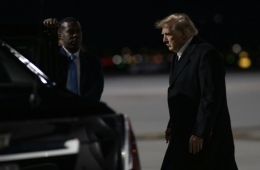
U.S. President Donald Trump ahead of the midterm elections on Nov. 3 (local time). The White House
View original imageTurnout among Republican supporters is another factor. Even if conservative voters disappointed with President Trump and the Republican Party do not vote for Democratic candidates, staying home could work against Republicans.
If Democrats take control of the Senate as well as the House, President Trump is expected to lose significant momentum in the latter half of his term. Democrats could step up their scrutiny of the Trump administration by using congressional investigative powers and holding hearings. Clashes between the parties over major spending bills and legislation are also expected to be inevitable.
President Trump appears to be anticipating the possibility that Democrats could take control of Congress. In an interview with the New York Post released the previous day, he said that if Democrats won the midterm elections, “I’ll probably be ‘Mr. Veto.’” He meant that he would use his presidential veto power to block legislation led by Democrats.
He also said on November 3 that he would issue preemptive pardons to aides and allies if Democrats took control of Congress in the midterm elections. Appearing on the New York Post podcast, he said he would do so “if necessary” if Democrats reclaimed the congressional majority and launched investigations targeting members of his administration.
Hot Picks Today
 "Two Spend 500,000 Won in a Flash, Yet Wait Two Hours?" ... 'Dreamland' Shunned by Kids and Foreign Tourists
- The Era of Getting 200 Million Won After 30 Years Is Over... A Japanese Bank's "Perpetual Department Head" Who Just Clocked In Cries Out
- Spain Hit by Its Worst Tragedy... Lee Kangin, Moreno and Real Madrid Join Soccer World in Mourning
- They Said, “Make It Your Home for Life” - Then Suddenly Kicked 200 Passengers Off... What Happened to the Around-the-World Cruise?
- "130 Rice Bowls Sold Out in a Day"... 'Unfiltered Face' Adds 8 Million Won to Night Market Sales: China's Bungeunwoo
The midterm elections will be held across the United States starting on the morning of November 3. Vote counting will begin as polls close in each state. However, with many races expected to be close, the balance of power in the Senate is not expected to become clear until November 4 or later.
© The Asia Business Daily. All rights reserved. Unauthorized AI training and use prohibited.