Health Minister Jeong Eun-kyeong to Discuss 'Emergency Room Investigation Guidelines' with National Police Agency
Meeting with Acting National Police Agency Commissioner General Kim Jongcheol on the afternoon of November 3
The medical community: "Searches and seizures at essential medical care settings should be restricted in principle"
The Ministry of Health and Welfare is working with the National Police Agency to establish investigation guidelines for essential medical care settings. Following controversy over a police search and seizure of the pediatric emergency room at Ajou University Hospital, the medical community has called for searches and seizures at emergency rooms and other essential care facilities to be restricted in principle. The establishment of specific investigation standards has emerged as a key issue.

Lee Jisook, director of the Pediatric Emergency Medical Center at Ajou University Hospital, answers reporters' questions at an emergency press conference titled “Condemning the Search of a Pediatric Emergency Room and Calling for the Protection of the Right to Provide Medical Care,” held at the Korean Medical Association in Yongsan-gu, Seoul, on the 30th. Yonhap News Agency
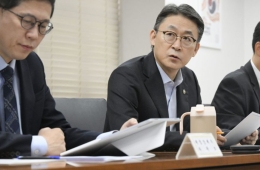
View original imageAccording to the Ministry of Health and Welfare and the medical community on November 3, Minister of Health and Welfare Jeong Eun-kyeong is scheduled to meet Kim Jongcheol, acting Commissioner General of the National Police Agency, at an undisclosed location in Seoul this afternoon to discuss guidelines on investigation procedures in essential medical care. The possibility of representatives from the medical community, including the Korean Society of Pediatric Emergency Medicine, joining the meeting was initially considered. However, the schedule was reportedly coordinated so that the Ministry of Health and Welfare and the National Police Agency would consult first. The government plans to subsequently establish a separate consultative body involving the National Police Agency and the medical community to develop investigation guidelines.
On October 30, Minister Jeong met with representatives of the Korean Society of Pediatric Emergency Medicine and heard the medical community's views on the search and seizure at Ajou University Hospital. The society called for restraint in conducting compulsory investigations at emergency rooms and other essential care facilities, and recommended that investigators first request the voluntary submission of any materials they need. It also proposed strengthening the transfer system for critically ill pediatric patients, expanding public support to secure pediatric emergency care staff, and launching a public awareness campaign to prevent disputes over emergency room treatment from leading to reports or criminal complaints.
At the meeting, Minister Jeong said, "The government deeply understands the difficulties felt by those working in essential medical care," and pledged, "We will continue working to create an environment where medical staff can work with peace of mind."
The controversy began on September 30, when the Gyeonggi Nambu Provincial Police Agency searched and seized materials at the Pediatric Emergency Medical Center and other facilities at Ajou University Hospital while investigating the death of a child patient. The medical community objected, saying investigators had entered an emergency room where critically ill children were receiving treatment, undermining the care environment. Police said the search and seizure was conducted lawfully under a warrant, took just 17 minutes, and did not interfere with patient care.
The medical community argues that investigation principles must first be clarified to prevent a recurrence. It says searches and seizures should, in principle, be restricted in areas where patients in life-threatening condition receive treatment, including emergency rooms, intensive care units, and delivery rooms. Even when such action is unavoidable, prior consultation and consideration of medical experts' opinions should be mandatory. The community maintains that compulsory investigations involving direct entry into treatment areas should be a last resort, since the course of treatment and the cause of death can be determined using objective records such as electronic medical records (EMRs), nursing records, and CCTV footage.
At a press conference on October 30, the Korean Society of Pediatric Emergency Medicine also proposed principles including restricting searches and seizures at essential medical care facilities in principle, establishing safeguards against indiscriminate execution of warrants for materials that can be submitted voluntarily, and improving the practice of excessive on-site investigations into ordinary patient deaths. The society also urged the government to make public a draft of the investigation guidelines currently being prepared by the end of November.
Meanwhile, legal controversy over the search and seizure at Ajou University Hospital continues. The civic group Citizens' Coalition for Economic Justice and People's Livelihoods filed a complaint with the Seoul Metropolitan Police Agency on November 2 against eight people, including acting National Police Agency Commissioner General Kim Jongcheol, National Office of Investigation chief Hong Seokgi, Minister of the Interior and Safety Yoon Hojung, and Minister of Health and Welfare Jeong Eun-kyeong. The complaint alleges abuse of authority, dereliction of duty, obstruction of business, and violations of the Emergency Medical Service Act, among other offenses. The group argued in its complaint that the search and seizure could undermine care at essential medical facilities and even put the lives of other child patients at risk.
Concerns are also growing that medical staff may leave their positions. At the Pediatric Emergency Medical Center at Ajou University Hospital, which was searched, seven of its nine specialists have expressed their intention to resign, and three of them, including center director Lee Jisook, have reportedly submitted their resignations. At a recent press conference, Lee said, "Even after the investigation guidelines are finalized, it is difficult to be certain that there will be residents or fellows willing to work alongside us."
Since October 30, members of the Korean Medical Association have been holding one-person protests in front of the National Police Agency in Seoul's Seodaemun District, condemning the search and seizure of the pediatric emergency center. The protests have continued for a third consecutive day, beginning with association president Kim Taekwoo, followed by Vice President Jwa Hunjung and Park Jonghwan, a member of the All-Medical Community Special Countermeasures Committee's Struggle Committee.
Hot Picks Today
 "Two Spend 500,000 Won in a Flash, Yet Wait Two Hours?" ... 'Dreamland' Shunned by Kids and Foreign Tourists
- The Era of Getting 200 Million Won After 30 Years Is Over... A Japanese Bank's "Perpetual Department Head" Who Just Clocked In Cries Out
- Spain Hit by Its Worst Tragedy... Lee Kangin, Moreno and Real Madrid Join Soccer World in Mourning
- They Said, “Make It Your Home for Life” - Then Suddenly Kicked 200 Passengers Off... What Happened to the Around-the-World Cruise?
- "130 Rice Bowls Sold Out in a Day"... 'Unfiltered Face' Adds 8 Million Won to Night Market Sales: China's Bungeunwoo

Kim Taekwoo, president of the Korean Medical Association, is staging a one-person protest in front of the National Police Agency in Seodaemun-gu, Seoul, on Oct. 30, denouncing the Gyeonggi Nambu Provincial Police Agency's search and seizure of the pediatric emergency center at Ajou University Hospital. Korean Medical Association
View original image© The Asia Business Daily. All rights reserved. Unauthorized AI training and use prohibited.