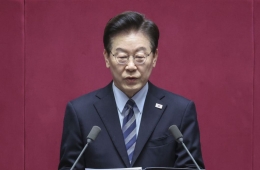
Gyeonggi Education Superintendent Ahn Minseok Unveils "10 Key Education Solutions" Based on Voices from 31 Cities and Counties
Gyeonggi Province Superintendent of Education Ahn Minseok will develop “10 Key Education Solutions” based on feedback from parents and education officials during visits to all 31 cities and counties, and move ahead with implementing the policies.
Beginning with Hwaseong and Osan on September 17, 2026, and ending in Uijeongbu on October 30, Superintendent Ahn held town hall meetings as part of his “Superintendent’s Office on the Road” initiative over 44 days, meeting with 6,116 people, including parents and education officials. He gathered firsthand accounts of local education issues and explored ways to address them, turning the findings into 10 key education solutions.
“Even when the issue is the same, such as overcrowded classrooms, the causes and solutions differ by region. I saw difficulties firsthand that I had not known about from reports alone,” Superintendent Ahn said. “I will turn the voices I heard across all 31 cities and counties into practical initiatives to transform education in Gyeonggi Province.”
The 10 key education solutions announced by the Gyeonggi Provincial Office of Education are: reducing the education gap; digital detox; resuming experiential activities; addressing overcrowded classrooms; supporting small schools; special education and Hand Warmer Education; reducing teachers’ administrative workload; supporting student commutes; eliminating corruption in school uniforms; and supporting and collaborating with parents.
To reduce the education gap, the office will consider changes to school principals’ terms of office and ways to use military mentors. Under its digital detox policy, it will promote “Phone OFF, RAS ON” to reduce smartphone use and expand reading, arts and sports activities, while also considering a ban on the use of generative artificial intelligence (AI).
The office aims to resume experiential activities in 2027, drawing on operating models in Ansan and Yangpyeong. For overcrowded classrooms, it will provide assistant teachers and promote “Wall-Breaking Collaboration,” linking schools with community resources. It also plans to improve educational conditions at small schools through joint programs run by multiple schools.

For students who need individual attention and support, including students from migrant backgrounds and students with ADHD, the office will strengthen cooperation with local governments and explore tailored support that takes each student’s needs into account.
To reduce teachers’ administrative workload, the office will expand successful practices from Ansan, Pocheon, Yangpyeong and Pyeongtaek. It will also work with local governments to improve student commutes through the “Ansim Edu Bus” initiative. School uniform policies will be improved to eliminate corruption, raise quality and reduce the cost burden on parents. The office also plans to treat parents as partners in education and strengthen communication and collaboration with them.
The Gyeonggi Provincial Office of Education plans to work with relevant departments and education support offices to develop the 10 key education solutions in detail and incorporate them into policies suited to local conditions.
Hot Picks Today
 "Two Spend 500,000 Won in a Flash, Yet Wait Two Hours?" ... 'Dreamland' Shunned by Kids and Foreign Tourists
- The Era of Getting 200 Million Won After 30 Years Is Over... A Japanese Bank's "Perpetual Department Head" Who Just Clocked In Cries Out
- Spain Hit by Its Worst Tragedy... Lee Kangin, Moreno and Real Madrid Join Soccer World in Mourning
- They Said, “Make It Your Home for Life” - Then Suddenly Kicked 200 Passengers Off... What Happened to the Around-the-World Cruise?
- "130 Rice Bowls Sold Out in a Day"... 'Unfiltered Face' Adds 8 Million Won to Night Market Sales: China's Bungeunwoo
“Parents did more than simply talk about their difficulties; they also suggested solutions,” Superintendent Ahn said. “Now it is the education office’s turn to respond. We will not let what we heard in the field end as words alone. We will take action, one step at a time, so that parents and students can feel real change.”
© The Asia Business Daily. All rights reserved. Unauthorized AI training and use prohibited.