4.5 Trillion Won in Guarantee-Backed Loans for 9,000 Regional SMEs and Mid-Sized Firms... Trade Receivable-Backed Loan Maturities Cut to 60 Days
Banks to Make 300 Billion Won in Special Contributions; Support for 9,000 Regional Companies Over Three Years
Trade Receivables and Secured Loans: Maturities Cut from 90 to 60 Days
Right of Recourse on Secured Loans to Be Abolished as a General Rule
Guarantee-backed loans totaling 4.5 trillion won will be provided over the next three years to about 9,000 key small and mid-sized companies across the country’s five mega-regions and three special regions. The maturity of trade receivables and loans secured by trade receivables will be shortened from the current maximum of 90 days to no more than 60 days. This is expected to enable the early conversion to cash of about 117 trillion won in payments owed to small and mid-sized companies and reduce their annual interest burden by 36.3 billion won.

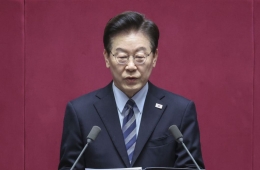
The Financial Services Commission (FSC) said on November 2 that it had discussed these measures at the sixth meeting on the transformation to productive finance, chaired by FSC Chairman Lee Eog-weon. The meeting also saw 16 banks and 18 institutions, including the Korea Credit Guarantee Fund and the Korea Technology Finance Corporation, sign a memorandum of understanding to support key small and mid-sized companies in the five mega-regions and three special regions.
Starting next year, low-interest, guarantee-backed loans totaling 4.5 trillion won will be provided over three years to about 9,000 key small and mid-sized companies in 13 cities and provinces outside the Seoul metropolitan area. Sejong will be included in the Chungcheong region. The Korea Credit Guarantee Fund and the Korea Technology Finance Corporation will provide guarantees under the agreement worth 15 times the 300 billion won in special contributions that the banking sector will make over the three-year period.
Local governments will recommend key companies, taking into account their growth potential and contribution to the regional economy. Recommended companies will receive priority consideration during guarantee reviews, and local governments may also choose to participate in interest-subsidy programs using local funds.
The FSC plans to allocate different levels of support to each region after holding an application process and evaluation for local governments. Each of the three cities and provinces receiving the highest rating will be allocated 450 billion won; each of the five receiving an excellent rating will receive 350 billion won; and each of the five receiving an average rating will receive 280 billion won. Regions will be selected based on a comprehensive assessment of local governments’ capacity to implement projects, the execution of regional financial programs, and alignment with policy objectives.
Applications from local governments will be accepted through the end of 2026, and an evaluation committee will be formed in January 2027 to finalize each region’s rating. The FSC plans to ensure that guarantee-backed loans can be provided to regional companies within the first quarter of 2027. To encourage banks to participate actively, starting with the 2028 evaluation, the amount of guarantee-backed loans provided will count as a bonus item in the regional reinvestment evaluation for three years.
The system for small and mid-sized companies’ trade receivables and loans secured by trade receivables will also be improved. Trade receivables are claims arising from commercial transactions that a selling company, such as a small or mid-sized company, holds against a purchasing company after delivering goods or services. A seller can use these receivables as collateral to borrow from a bank and convert its payment into cash early.
According to the FSC, trade receivables issued in 2025 totaled 527.3 trillion won, while loans secured by trade receivables amounted to 56.3 trillion won. Under the current Act on the Promotion of Mutually Beneficial Cooperation Between Large Enterprises and Small and Medium Enterprises and other laws, the settlement period for payments to suppliers is generally limited to 60 days. However, some trade receivables and related loans have maturities exceeding 60 days, drawing criticism that they make it difficult for small and mid-sized companies to manage their cash flow.
In response, financial authorities have decided to shorten the maturity of trade receivables, loans secured by trade receivables, and win-win cooperation receivables to no more than 60 days starting in February 2027. This is expected to enable the early conversion to cash of about 116.7 trillion won in trade receivables with existing maturities of 61 to 90 days. The reduction in interest costs resulting from shorter maturities on loans secured by trade receivables is estimated at about 36.3 billion won annually.
The right of recourse on loans secured by trade receivables will also be abolished as a general rule starting in January 2027. Previously, to manage banks’ risk, a right of recourse against selling companies applied to about 50% of the annual amount of newly issued loans secured by trade receivables. Going forward, the right of recourse will also be abolished for existing loans that carry such a right when they mature or are renewed after January 2027. However, it will be permitted in limited cases when a selling company explicitly requests that the right be granted. The FSC expects the measure to ease the burden of guarantee liabilities for small and mid-sized companies, covering about 463,000 cases and 26.9 trillion won based on 2025 figures.
The recipients of interest refunds following early repayment of loans secured by trade receivables will also change. When providing these loans, banks collect interest upfront from the selling company, usually a small or mid-sized company, for the period until maturity. If the purchasing company repays the loan early, some banks have refunded part of the interest to the purchasing company, usually a large company, rather than to the selling company that paid it.
Starting in January 2027, the FSC will standardize the recipient of upfront interest refunds so that the selling company receives them. As a result, about 8.3 billion won in annual interest refunds that were previously paid to purchasing companies is expected to go to small and mid-sized companies.
In addition, the range of purchasing companies eligible to use win-win settlement loans will be expanded in stages. These loans allow second-tier and lower-tier selling companies to convert their trade receivables into cash early based on the creditworthiness of the top-tier purchasing company. Incentives for companies using the win-win settlement system will also be expanded.
Hot Picks Today
 "Two Spend 500,000 Won in a Flash, Yet Wait Two Hours?" ... 'Dreamland' Shunned by Kids and Foreign Tourists
- The Era of Getting 200 Million Won After 30 Years Is Over... A Japanese Bank's "Perpetual Department Head" Who Just Clocked In Cries Out
- Spain Hit by Its Worst Tragedy... Lee Kangin, Moreno and Real Madrid Join Soccer World in Mourning
- They Said, “Make It Your Home for Life” - Then Suddenly Kicked 200 Passengers Off... What Happened to the Around-the-World Cruise?
- "130 Rice Bowls Sold Out in a Day"... 'Unfiltered Face' Adds 8 Million Won to Night Market Sales: China's Bungeunwoo
“As strengthening the foundations for regional growth and achieving balanced development are urgent national priorities, we expect guarantee-backed loans funded by special contributions from the banking sector to serve as seed funding and actively fill gaps in regional financing that market forces alone cannot address,” Lee said.
© The Asia Business Daily. All rights reserved. Unauthorized AI training and use prohibited.