Rotary International President Babalola: "I Hope Rotary in Korea Will Continue to Spread Its Positive Influence as It Prepares for Its Next 100 Years"
President Babalola Holds Press Conference in Suwon
More Than 64,000 Members in Korea
Highlights 99.9% Reduction in Polio Cases
Ahead of Rotary in Korea's Centennial, Emphasizes "Service and Peace"
As Rotary in Korea approaches its 100th anniversary, Rotary International President Babalola Olayinka Hakeem has visited Korea. He is here to review the achievements of international service, including efforts to eradicate polio, and discuss Rotary in Korea’s role and ways to expand humanitarian cooperation.

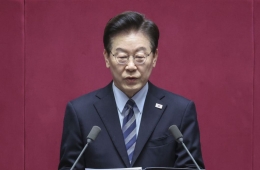
Rotary International President Olayinka Hakeem Babalola explains the organization's international service activities and plans to eradicate polio at a press conference marking his visit to Korea at Novotel Ambassador Suwon in Suwon, Gyeonggi Province, on the morning of the 2nd. Photo by Lee Jonggu
View original imageRotary International held a press conference marking President Babalola’s visit to Korea at 9:30 a.m. on November 2 at Novotel Ambassador Suwon in Suwon, Gyeonggi Province. Organized in conjunction with the 2026 Suwon Institute, the conference focused on polio eradication, promoting peace, and Rotary in Korea’s international role.
The Rotary International president said, “The Republic of Korea has risen from a country that once received assistance to a model nation that now provides help to people around the world.” He added, “I hope Rotary in Korea will continue to spread its positive influence as it prepares for its next 100 years.”
He went on to describe Rotary as “an organization in which volunteers—friends, neighbors, and professionals—create change in their communities and around the world through service.” Members contribute to polio eradication, world peace, and expanded access to education and opportunity, building on friendships and trust that last a lifetime.
Rotary in Korea began in 1927, during the Japanese colonial period, when the Gyeongseong Rotary Club joined Rotary International. It will mark its 100th anniversary in July 2027. According to Rotary International, more than 60,000 members are active in Korea. Korea ranks fourth worldwide in membership, after the United States, India, and Japan, and third in the scale of donations.
Korean members have carried out service projects at home and abroad, including the “Green Mongolia” environmental initiative, vaccination support in developing countries, psychological therapy for children, and vocational training for people with developmental disabilities. They are also preparing large-scale service projects and events to mark the centennial.
A key issue on the agenda for this visit is polio eradication. Rotary International said it has reduced the number of polio cases by 99.9% in partnership with organizations including the World Health Organization through the Global Polio Eradication Initiative (GPEI). More than $3 billion has been donated to eradication efforts, including $27.2 million from Korean members.
Rotary’s polio eradication program, launched in 1985, has been regarded as a leading example of international cooperation. President Babalola emphasized that vaccination has reduced the number of polio cases by 99.9%, but further efforts are needed to eradicate the disease completely.
“Our work is not done as long as even one child remains at risk of polio,” he said. He added that polio is difficult to address through the efforts of any one country alone and called for continued vaccination and cooperation among countries and organizations.

President Babalola is from Nigeria and is the second president of Rotary International from Africa in the organization’s history. He took office in July and is leading Rotary International for the 2026-27 year. His priorities include community-led, sustainable solutions to problems and peacebuilding.
With a background in engineering, he worked in the oil and gas industry, held a senior position at Shell, and conducted business across four continents. After joining the Trans Amadi Rotary Club in Nigeria in 1994, he served as a district governor, Rotary International director, and vice president, among other roles.
Hot Picks Today
 "Two Spend 500,000 Won in a Flash, Yet Wait Two Hours?" ... 'Dreamland' Shunned by Kids and Foreign Tourists
- The Era of Getting 200 Million Won After 30 Years Is Over... A Japanese Bank's "Perpetual Department Head" Who Just Clocked In Cries Out
- Spain Hit by Its Worst Tragedy... Lee Kangin, Moreno and Real Madrid Join Soccer World in Mourning
- They Said, “Make It Your Home for Life” - Then Suddenly Kicked 200 Passengers Off... What Happened to the Around-the-World Cruise?
- "130 Rice Bowls Sold Out in a Day"... 'Unfiltered Face' Adds 8 Million Won to Night Market Sales: China's Bungeunwoo
Founded in 1905, Rotary International is the world’s largest private charitable and service organization, with more than 45,000 clubs and 1.2 million dedicated members worldwide. It focuses on eradicating disease, improving maternal and child health, supporting basic education, providing clean water and sanitation, promoting local economic development, and protecting the environment. Through its Rotary Foundation, it has distributed more than $5.5 billion in service grants around the world over the past century, equivalent to about 7.6 trillion won.
© The Asia Business Daily. All rights reserved. Unauthorized AI training and use prohibited.