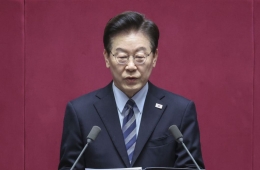
Seoul Police Chief Ko Beomseok: "Criminal Procedure Act Revision Has Not Significantly Increased Burden; No Confusion in the Field"
"No increase in investigative burden or reports of difficulties so far"
Requests for supplementary investigations rose by 19 at Seoul agency in one month
Strengthening job training to help new investigators adapt to fieldwork
One month after the revised Criminal Procedure Act took effect, the Seoul Metropolitan Police Agency found that, contrary to initial concerns, neither the burden of handling cases nor confusion in the field had increased significantly.
Ko Beomseok, chief of the Seoul Metropolitan Police Agency, said at a regular press briefing on Nov. 2, "So far, we have not seen significant confusion in the field or major concerns related to the revision of the Criminal Procedure Act."

Go Beomseok, Commissioner of the Seoul Metropolitan Police Agency, Yonhap News Agency
View original imageAccording to Ko, the Seoul Metropolitan Police Agency receives about 45,000 cases each month. The number of cases received in October, after the revision took effect, rose by about 1,000 from the previous month, an increase of just 2%. He said this was not enough to make the caseload difficult for investigative agencies to handle.
There were also few cases transferred to police from prosecutors, who had been investigating them. Since the revised Criminal Procedure Act took effect on Oct. 2, a total of 37 cases had been transferred to the Seoul Metropolitan Police Agency. "At this point, the number is manageable," Ko said. "It is difficult to say that the investigative burden has increased significantly."
The number of requests for supplementary investigations rose somewhat. Requests, which averaged about 75 per month from January to September this year, increased by 19 to 94 in October, the first month after the law was revised. However, spread across all 31 police stations, that amounts to only about 0.6 cases per station, so the Seoul Metropolitan Police Agency said the burden on officers in the field was limited.
The agency also found that most of the additional requests for supplementary investigations concerned checking facts or addressing procedural issues, rather than complex legal analysis. "They concern facts and procedural improvements rather than difficult legal issues, so they are not particularly burdensome," Ko said. "Few police stations on the front lines have reported any particular difficulties."
The Seoul Metropolitan Police Agency is also operating a dedicated task force (TF) to gather feedback from officers in the field on the changes to the system. A total of 171 suggestions have been received so far. Of these, 138, or 81%, were routine inquiries about how to apply the revised procedures.
The police nevertheless plan to continue preparing for the new system to take hold. In particular, as investigative staff have been added, the agency is strengthening job training to help newly appointed investigators adapt quickly to fieldwork. "We are focusing on training so that newly appointed investigators can carry out their work steadily in the field," Ko said.
Hot Picks Today
 "Two Spend 500,000 Won in a Flash, Yet Wait Two Hours?" ... 'Dreamland' Shunned by Kids and Foreign Tourists
- The Era of Getting 200 Million Won After 30 Years Is Over... A Japanese Bank's "Perpetual Department Head" Who Just Clocked In Cries Out
- Spain Hit by Its Worst Tragedy... Lee Kangin, Moreno and Real Madrid Join Soccer World in Mourning
- They Said, “Make It Your Home for Life” - Then Suddenly Kicked 200 Passengers Off... What Happened to the Around-the-World Cruise?
- "130 Rice Bowls Sold Out in a Day"... 'Unfiltered Face' Adds 8 Million Won to Night Market Sales: China's Bungeunwoo
Ko also said that at a videoconference with police station chiefs that morning, he had called for closer reviews of investigative procedures and case management systems. "With the investigation review officers at the center, we will continue to check what issues arise in the field and prepare accordingly," he said.
© The Asia Business Daily. All rights reserved. Unauthorized AI training and use prohibited.