Literary Budget Up 67%, but Translation Graduate School Faces Turmoil; Literature Sharing Cut by 600 Million Won
2027 Government Budget Proposal: 77.8 Billion Won, Up 31.2 Billion Won From This Year
National Korean Literature Museum Budget Rises by 18.2 Billion Won, Accounting for 58% of Total Increase
Expanded Creative Support for Emerging Writers; Translation and Publishing Budget Doubles
Literary Community Opposes Translation Graduate Program With Chungnam National University; Choi Hwiyeong: "Further Discussions With the Ministry of Education"
The government’s budget proposal for the literary sector next year totals 77.8 billion won, up 67% from this year. Funding for emerging writers’ creative work has been expanded, and the budget for translation and publication has more than doubled. However, more than half of the total increase is accounted for by higher spending on the National Korean Literature Museum, while the budget for distributing domestic literary books has actually been cut. Concerns have also been raised in literary circles about plans to establish a graduate school to train specialists in Korean literary translation.

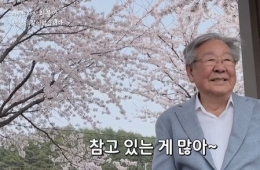
Minister of Culture, Sports and Tourism Choi Hwi-young speaks at the fourth meeting of the Literature Subcommittee of the Cultural and Arts Policy Advisory Committee, held at the National Museum of Modern and Contemporary Art, Seoul, in Jongno-gu, Seoul, on the 30th. The meeting discussed the government’s 2027 budget proposal for the literature sector and plans to establish a graduate school for literary translation in Korea. Ministry of Culture, Sports and Tourism
View original imageOn October 30, the Ministry of Culture, Sports and Tourism held the fourth meeting of the Literature Subcommittee of the Cultural and Arts Policy Advisory Committee at the National Museum of Modern and Contemporary Art, Korea, Seoul, in Jongno-gu, Seoul. The meeting, chaired by Minister Choi Hwiyeong, discussed the 2027 budget proposal and key policies.
The proposed literary budget for next year is 77.8 billion won, an increase of 31.2 billion won from this year’s 46.6 billion won. The ministry focused funding on support for literary creation, promoting Korean literature overseas, the opening of the National Korean Literature Museum, and revitalizing regional literature museums.
The National Korean Literature Museum is the individual item with the largest increase. Ahead of its scheduled opening in the first half of next year, its budget was raised by 18.2 billion won, from 5.2 billion won this year to 23.4 billion won. This accounts for about 58.3% of the 31.2 billion won increase in the overall literary budget. Funding to revitalize regional literature museums was also increased, from 420 million won to 4.3 billion won.
Support that goes directly to writers will also be strengthened. Funding for literary writers’ creative work has increased more than threefold, from 600 million won this year to 1.95 billion won next year. The ministry plans to divide eligible recipients into emerging, promising, and established writers, rather than focusing mainly on established writers, and provide support suited to each stage of their careers.
The Literary Writers-in-Residence program will receive an increase in funding from 3.2 billion won to 6.7 billion won. The number of supported writers will rise from 100 to 175, their activity period will be extended from seven months to nine months, and their wages will also increase. The aim is to expand job opportunities and the creative foundation for writers working at libraries, bookstores, and other venues.
The budget to promote Korean literature overseas has also been increased by 9.4 billion won, from 25 billion won to 34.4 billion won. Within that amount, support for translation and publication will more than double, from 5.9 billion won to 12.2 billion won, and translation fees will also rise. A new commissioned translation program, with a budget of 2 billion won, will identify Korean classics and modern and contemporary masterpieces and introduce them overseas directly, moving beyond an approach that relied on requests from foreign publishers.
The question is how to train translators. At the meeting, concerns were repeatedly voiced about the government’s plan to establish a graduate school of translation under the Literature Translation Institute of Korea.

The launch ceremony for the committee promoting the establishment of a graduate university of translation, hosted by the Literature Translation Institute of Korea. The institute initially pursued plans to establish an independent graduate university of translation in Seoul, but after the Ministry of Education rejected the proposal, it began considering a partnership with Chungnam National University. Debate continues over the independence and specialization of the curriculum. Literature Translation Institute of Korea
View original imageThe Literature Translation Institute of Korea initially pursued a plan to establish an independent graduate university for translation in Seoul and open it in September next year. However, after the Ministry of Education declined to allow a standalone institution in the Seoul metropolitan area, citing balanced regional development and other reasons, a graduate program in partnership with Chungnam National University was proposed as an alternative.
Those in the translation field voiced concerns that the curriculum’s independence and specialization could be weakened. On October 13, about 90 people, including professors at the Translation Academy, issued a statement calling for an independent graduate school rather than a joint program with a specific university.
Kwak Hyohwan, former president of the Literature Translation Institute of Korea, who attended the meeting, questioned the feasibility of the partnership with Chungnam National University, saying that the explanations from the Ministry of Culture, Sports and Tourism and the university differed. Jeong Eungwi, a professor at Hankuk University of Foreign Studies, also expressed concern that the program’s original purpose of training translators could be undermined.
The Ministry of Culture, Sports and Tourism said it was discussing with the Ministry of Education a plan under which about 70% to 75% of the total credits required for graduation would be completed through the Translation Academy program, with the remaining credits taken at the partner university.
Minister Choi acknowledged that the ministry had moved quickly to establish the school in response to demand from translators seeking academic degrees, and said it would hold further discussions with the Ministry of Education. He said the ministry would consider possible options, including opening a program through a partner university and establishing an independent graduate school, and seek further input from people in the field.
The budget for the literary book distribution program also drew criticism. Funding for the Literature Sharing program, which purchases outstanding domestic literary books and supplies them to libraries and welfare facilities nationwide, was cut by 600 million won, from 5.4 billion won this year to 4.8 billion won next year.
The ministry explained that the cut reflected adjustments to event costs and that the program funding used to distribute books had not decreased. However, members of the literary community said the program should be expanded because it improves access to books and supports the distribution networks of writers and publishers.
Novelist Bang Hyeonseok called for the Literature Sharing program to be expanded, describing students who wanted to read literary books but found that their libraries had too few copies. Novelist Eun Heekyung said she agreed that the program was necessary, but added that its selection process should be improved to ensure support was not concentrated among a small number of recipients.
Separately, Kim Hyunwoo, head of a publishing agency, proposed creating a permanent space for exchanges between domestic and overseas writers and translators, while web novelist Lee Nakjun called for more competitions in the web novel sector. Jan Dirks, a professor at the Translation Academy, said translation education and the way competitions are run should be reconsidered in light of the spread of artificial intelligence (AI).
Hot Picks Today
 "Two Spend 500,000 Won in a Flash, Yet Wait Two Hours?" ... 'Dreamland' Shunned by Kids and Foreign Tourists
- The Era of Getting 200 Million Won After 30 Years Is Over... A Japanese Bank's "Perpetual Department Head" Who Just Clocked In Cries Out
- Spain Hit by Its Worst Tragedy... Lee Kangin, Moreno and Real Madrid Join Soccer World in Mourning
- They Said, “Make It Your Home for Life” - Then Suddenly Kicked 200 Passengers Off... What Happened to the Around-the-World Cruise?
- "130 Rice Bowls Sold Out in a Day"... 'Unfiltered Face' Adds 8 Million Won to Night Market Sales: China's Bungeunwoo
“As global interest in Korean literature grows, it is important to build a robust literary ecosystem so that these achievements can be sustained,” Minister Choi said, adding that he would pursue policies that people in the field can experience firsthand.
© The Asia Business Daily. All rights reserved. Unauthorized AI training and use prohibited.