"Risky Mandatory Tender Offers Favoring Major Shareholders," VIP Asset Management CEO Kim Minguk Tells President Lee
Mandatory Tender Offers Should Treat All Shareholders Equally
"Fair Shareholder Protection Can Coexist with a Vibrant M&A Market"
Japan's M&A Market Hits Record High After Pro Rata Allocation Introduced

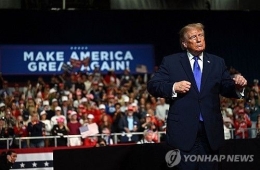
President Lee Jaemyung speaks at the second plenary meeting of the National Committee on Public Safety and Life, held at Cheong Wa Dae on the 28th. Yonhap News Agency
View original imageWhen President Lee Jaemyung asked for views on a "mandatory tender offer system" that would require buyers to purchase all shares in a listed company during a merger or acquisition (M&A), the head of a leading domestic value investment firm voiced concern that a system favoring only major shareholders could further set back the capital market.
On October 30, Kim Minguk, CEO of VIP Asset Management, responded along those lines after President Lee asked on social media for views on introducing a mandatory tender offer system.
Kim Minguk, CEO of VIP Asset Management, argued that the system should guarantee major shareholders and ordinary shareholders the same proportionate opportunity to sell their shares. Even if the amount to be purchased were capped at "50%+1 share" to account for the buyer's funding burden, he said, the approach of buying major shareholders' stakes first should be ruled out. "All shares of the same class in the same company should be offered the opportunity to be sold at the same price and on the same terms, regardless of who holds them," he said.
Currently, the average ownership stake of controlling shareholders in KOSPI 200 companies is about 44%. Even if the volume subject to a mandatory tender offer is set at 50%+1 share, buying all of the major shareholders' stakes first would leave ordinary shareholders with only about 6% of the company's total shares available for purchase. In effect, ordinary shareholders would be able to sell only about one of every 10 shares they hold at a price reflecting a control premium.
Kim said, "Major shareholders can receive a control premium, sell all of their stakes and exit, while ordinary shareholders have far more limited opportunities to receive the same premium and must also bear the risks associated with a change in control."

As an alternative, he proposed a "50%+1-share pro rata tender offer." Under this approach, all shareholders would participate in the same tender offer, with no priority given to major shareholders, and any oversubscribed shares would be purchased in proportion to each shareholder's stake. If all shareholders tendered all the shares they held, both major and ordinary shareholders could sell about half of their shares at the same price.
Kim also rejected concerns that some M&A deals could be deterred if major shareholders were unable to sell their entire stakes. He said it would be difficult to conclude that the M&A market as a whole would contract simply because a major shareholder was not guaranteed the right to sell all of their shares. A buyer could acquire the stake needed to secure control with the same amount of funding, he explained, adding that whether an M&A deal goes through depends on various factors, including the company's growth potential and the transaction price.
He also cited overseas examples. Japan applies a pro rata allocation principle to oversubscribed partial tender offers, and in May this year it lowered the threshold for triggering a mandatory tender offer to ownership of more than 30%. M&A transactions involving Japanese companies reached a record 5,115 last year, and the 3,883 recorded from January to September this year represented a 5% increase from the same period a year earlier. "制度 and market conditions differ from country to country, and various factors are at play, but these examples show that fair shareholder protection and a vibrant M&A market can coexist," Kim said.
He stressed that the discussion was also directly linked to resolving the Korea discount. With last year's amendment to the Commercial Act codifying directors' duty to treat all shareholders fairly, allowing major shareholders' stakes to be purchased first could undermine the intent of capital market reforms, he said.
Hot Picks Today
 "Two Spend 500,000 Won in a Flash, Yet Wait Two Hours?" ... 'Dreamland' Shunned by Kids and Foreign Tourists
- The Era of Getting 200 Million Won After 30 Years Is Over... A Japanese Bank's "Perpetual Department Head" Who Just Clocked In Cries Out
- Spain Hit by Its Worst Tragedy... Lee Kangin, Moreno and Real Madrid Join Soccer World in Mourning
- They Said, “Make It Your Home for Life” - Then Suddenly Kicked 200 Passengers Off... What Happened to the Around-the-World Cruise?
- "130 Rice Bowls Sold Out in a Day"... 'Unfiltered Face' Adds 8 Million Won to Night Market Sales: China's Bungeunwoo
"M&A is an important decision that affects a company's future, ordinary shareholders, employees and business partners. So, just as important as increasing the number of transactions is encouraging good M&A that increases corporate value and benefits all shareholders," Kim said. "A mandatory tender offer system that guarantees all shareholders a fair opportunity to sell would strengthen trust in our capital market and lay the groundwork for better M&A. It would also support the fair market order and capital market advancement that President Lee seeks."
© The Asia Business Daily. All rights reserved. Unauthorized AI training and use prohibited.