Rumors of "Bringing 10 Family Members to Korea on a Work Visa"... Justice Ministry: "Not True"
Related posts surfaced on online communities
"Only 0.2% invited five or more on E-7 visas"
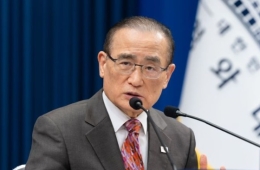
A claim circulated on online communities that “a foreign national who obtained an E-7 (Specific Activities) visa brought 10 family members to Korea,” but the Ministry of Justice said it was not true.
On October 30, the Ministry of Justice said that an exhaustive survey of family members accompanying foreign nationals on E-7 visas found that only 0.2% had invited five or more family members to Korea, and that no one had invited 10.

The Ministry of Justice explained, “An exhaustive survey of family members accompanying foreign nationals staying in Korea on E-7 visas found that no foreign national is staying in Korea with 10 invited family members.” The E-7 visa, commonly called a “work visa,” allows foreign workers to work in designated fields where there is a need to bring in personnel with specialized knowledge, skills or technical expertise.
Foreign nationals, including those on E-7 visas, who are legally staying in Korea long term may invite only their legal spouse and minor children under the F-3 dependent visa category; parents, siblings and other relatives are not eligible. Among foreign nationals on E-7 visas, 20.6% had invited family members, bringing an average of 1.6 people each, according to the survey.
To invite family members living in their home country to Korea, foreign nationals must meet income requirements based on the number of household members, with the threshold rising as the number of invitees increases. Under this year's requirements, a person bringing a spouse and two children must prove an annual income of about 39 million won or more.
Recently, posts appeared on online communities such as DC Inside and FM Korea claiming that a Bangladeshi national had obtained an E-7 visa, brought 10 family members—including a spouse and nine children—to Korea, and registered them as dependents under the national health insurance system. The posts drew a succession of comments calling for such family reunification by foreign workers to be prevented.
Hot Picks Today
 "Two Spend 500,000 Won in a Flash, Yet Wait Two Hours?" ... 'Dreamland' Shunned by Kids and Foreign Tourists
- The Era of Getting 200 Million Won After 30 Years Is Over... A Japanese Bank's "Perpetual Department Head" Who Just Clocked In Cries Out
- Spain Hit by Its Worst Tragedy... Lee Kangin, Moreno and Real Madrid Join Soccer World in Mourning
- They Said, “Make It Your Home for Life” - Then Suddenly Kicked 200 Passengers Off... What Happened to the Around-the-World Cruise?
- "130 Rice Bowls Sold Out in a Day"... 'Unfiltered Face' Adds 8 Million Won to Night Market Sales: China's Bungeunwoo
The foreigner registration card, national health insurance dependent records and social networking service (SNS) posts attached to the original post came from different sources. The Ministry of Justice said, “It has not been confirmed whether they belong to the same person.”
© The Asia Business Daily. All rights reserved. Unauthorized AI training and use prohibited.