[Reporter’s Notebook] Seo Mihwa’s “Pointed Questions” vs. Kim Woni’s “Hunger Strike”... Political Skills Will Be Proven by Results

Jeong Seunghyeon, reporter at The Asia Business Daily's Honam Regional News Bureau.
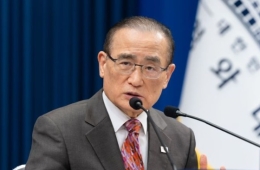
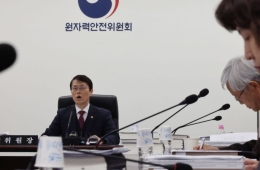
View original imageThe approaches taken by Democratic Party of Korea lawmakers Seo Mi-hwa and Kim Won-i over efforts to establish a national medical school in southwestern South Jeolla Province have been markedly different. Seo, a first-term lawmaker, pressed the government for answers during a parliamentary audit by raising specific concerns about the process for selecting candidate universities. Kim, a two-term lawmaker representing Mokpo, meanwhile, raised the pressure by announcing plans to stage a hunger strike.
The two lawmakers do not have different goals. They share the view that the selection process must be fair and that Mokpo National University should be guaranteed an opportunity to establish a medical school. The difference lies in how they convey local demands to the government and turn them into concrete action.
Seo's strength in this latest effort was her questioning, which focused on specific issues.
During the parliamentary audit, Seo questioned the Minister of Health and Welfare about whether the candidate universities had secured sites, how long it would take to build university hospitals, and concerns about on-site inspections. Rather than simply protesting that the selection results were unfair, she emphasized the need to verify whether the plans submitted could actually be carried out.
Another notable point was that she asked whether the standards for verification were applied consistently by comparing the process with that for establishing other medical education institutions. This elevated an issue that could be seen as competition among regions to attract a school into a question of review standards that the government is responsible for verifying.
Seo also called for consultations between the Ministry of Education and the Ministry of Health and Welfare, as well as follow-up verification. The health and welfare minister responded by underscoring the need for procedural fairness and saying, in effect, that the ministry would consult with the Ministry of Education.
Of course, this response should not be presented as acceptance of a re-review or as a victory in securing a medical school for Mokpo National University. Still, Seo's prepared questioning as a first-term lawmaker deserves recognition for identifying the problems and clarifying what the government needs to verify.
Kim's hunger strike is a different form of response. It is a choice to increase political pressure by demanding that the Ministry of Education conduct a direct review that includes Mokpo National University. Kim has also continued to seek a meeting with the education minister and call for a reconsideration.
However, the responsibilities of a two-term lawmaker representing a district extend beyond the number of meetings held or the intensity of protests. Kim needs to explain how repeated meetings and the issues he has raised have been reflected in the government's formal review process and decisions.
It is on this point that Kim's response leaves something to be desired. Simply announcing plans to stage a hunger strike does not make clear where previous consultations stalled or what negotiations and efforts to find common ground were made to resolve the issue. Residents need not only an expression of urgency but also an account of the efforts made so far and a plan for resolving the issue going forward.
While Seo spelled out the questions the government must answer, Kim needs to use his political skills to turn those answers into tangible action. As the district's representative, he should persuade relevant government ministries and party officials, and work with lawmakers on other standing committees to create a path toward a solution.
The fact that the two lawmakers serve on different standing committees should be taken into account. As a member of the Health and Welfare Committee, Seo can directly question the Ministry of Health and Welfare during parliamentary audits, while Kim is not in the same position to do so. Even so, differences in committee assignments do not lessen the responsibility to negotiate and coordinate on local issues.
A hunger strike can draw the attention of the government and the public. But the act itself will not change the review criteria or guarantee Mokpo National University's participation in the review. The lawmakers must also set out who will consider the demands and when they will respond, as well as what follow-up steps they will pursue if the demands are rejected.
Seo, too, still has work to do. She must follow through to ensure that the commitments made during consultations at the parliamentary audit lead to actual verification and action. The value of well-prepared questioning becomes clearer when it is followed by continued oversight.
Securing a medical school for Mokpo National University is not a contest over who protested more forcefully. In this latest effort, first-term lawmaker Seo stood out for raising specific concerns and focusing on verification. Kim must show how, beyond the resolve behind a hunger strike, his experience and political skills as a two-term district representative can deliver results.
Hot Picks Today
 "Two Spend 500,000 Won in a Flash, Yet Wait Two Hours?" ... 'Dreamland' Shunned by Kids and Foreign Tourists
- The Era of Getting 200 Million Won After 30 Years Is Over... A Japanese Bank's "Perpetual Department Head" Who Just Clocked In Cries Out
- Spain Hit by Its Worst Tragedy... Lee Kangin, Moreno and Real Madrid Join Soccer World in Mourning
- They Said, “Make It Your Home for Life” - Then Suddenly Kicked 200 Passengers Off... What Happened to the Around-the-World Cruise?
- "130 Rice Bowls Sold Out in a Day"... 'Unfiltered Face' Adds 8 Million Won to Night Market Sales: China's Bungeunwoo
It is not enough to share residents' anger. Politics must turn that anger into questions the government has to answer, and then connect those questions to decisions that can be put into practice.
© The Asia Business Daily. All rights reserved. Unauthorized AI training and use prohibited.