BOJ Holds Rates Steady... Shifts from “Easing” to Inflation Control for First Time in 14 Years (Comprehensive)
Rates Held Steady by Majority Vote at Monetary Policy Meeting
Inflation Target Reached for First Time in 13 Years... Focus Now Shifts to Keeping It There
The Bank of Japan (BOJ) kept its benchmark interest rate unchanged at 1.25% per year and declared that underlying inflation had effectively reached its 2% target for the first time in 13 years. The BOJ judged that Japan is moving away from prolonged deflation and toward an economic structure in which wages and prices rise together. As a result, Japan’s monetary policy will shift its focus from encouraging inflation to curbing it for the first time in 14 years.

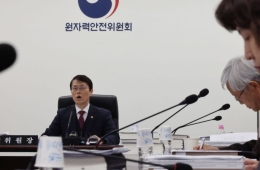
Bank of Japan Governor Ueda Kazuo speaks at a press conference following the BOJ's policy meeting in Tokyo, Japan, on the 18th of last month. Tokyo, Japan = Reuters-Yonhap.
View original imageAccording to the Nihon Keizai Shimbun (Nikkei) on October 30, the BOJ said at its monetary policy meeting that day that underlying inflation, excluding temporary factors, had “reached a level broadly consistent” with its 2% target. It has been 13 years since the BOJ introduced its price stability target in January 2013.
That day, eight of the BOJ’s nine policy board members voted in favor and one voted against keeping the target for the short-term policy rate—the unsecured overnight call rate—at 1.25% per year. The BOJ said it wanted to assess the impact of the rate hike implemented in September on the economy and prices.
Some also called for another rate hike. Policy board member Hajime Takata proposed raising the rate to 1.5%, arguing that the pace of rate increases should accelerate now that underlying inflation had reached 2%. The proposal was rejected, with a majority voting against it.
Accelerating the Normalization of Monetary Easing
In 2013, under former Governor Haruhiko Kuroda, the BOJ pursued its 2% inflation target by implementing an ultra-accommodative monetary policy that included large-scale government bond purchases. However, the target took longer to achieve because persistent deflationary sentiment proved difficult to dispel. More recently, rising international oil prices and increased consumer demand driven by wage growth have combined to keep prices on an upward trend.
At a press conference on October 16, BOJ Governor Kazuo Ueda voiced concern about rising prices, saying of underlying inflation, “From now on, any further increase would be unacceptable,” and signaling his intention to raise interest rates in the future.
In its economic and price outlook report released that day, the BOJ projected that underlying inflation would remain around 2%. It forecast that the consumer price index excluding fresh food would rise 2.6% in fiscal 2027, 0.2 percentage points higher than its previous forecast. The BOJ expects the rise in international oil prices since this summer to feed through to consumer prices with a lag.
The BOJ also revised some of its economic growth forecasts upward. It raised its forecast for real gross domestic product (GDP) growth in fiscal 2026 from 0.6% to 0.7%, expecting growing global demand for artificial intelligence (AI) to support corporate earnings. By contrast, it lowered its fiscal 2027 growth forecast from 0.8% to 0.7%.
The BOJ also unanimously decided to accelerate the pace of its annual sales of exchange-traded funds (ETFs), a process it began winding down in January. The BOJ started buying ETFs in 2010 as part of an expansion of monetary easing, and increased its annual purchases to as much as 6 trillion yen in 2016, during former Governor Kuroda’s tenure.

Japanese people walk through a shopping district in Tokyo on the 30th, carrying shopping bags in both hands. Tokyo, Japan = Reuters-Yonhap News.
View original imageJapanese Media Call It a “Policy Turning Point”
Major Japanese news outlets also focused on underlying inflation reaching the 2% target for the first time in 13 years, describing the development as a turning point for Japan’s monetary policy. Jiji Press reported, “The BOJ will now focus on curbing inflation, and monetary policy is entering a new phase for the first time in 14 years.”
The Mainichi Shimbun also said, “This marks a shift in monetary policy from addressing the deflation that persisted for many years to establishing a stable rate of price growth.” It added, “The target date had repeatedly been pushed back. The BOJ appears to have concluded that companies’ price pass-through and wage increases are gradually taking hold as resource prices, including oil, have risen since Russia’s invasion of Ukraine.”
The Nikkei noted that the BOJ’s decision to keep rates unchanged had increased the likelihood of another rate hike before the end of the year. “The risks of rising prices are growing due to persistently high oil prices amid tensions in the Middle East, increased demand related to AI, and higher import costs caused by the weaker yen,” the Nikkei reported. “The BOJ is expected to continue raising interest rates. The market sees an additional rate hike in December as likely.”
Hot Picks Today
 "Two Spend 500,000 Won in a Flash, Yet Wait Two Hours?" ... 'Dreamland' Shunned by Kids and Foreign Tourists
- The Era of Getting 200 Million Won After 30 Years Is Over... A Japanese Bank's "Perpetual Department Head" Who Just Clocked In Cries Out
- Spain Hit by Its Worst Tragedy... Lee Kangin, Moreno and Real Madrid Join Soccer World in Mourning
- They Said, “Make It Your Home for Life” - Then Suddenly Kicked 200 Passengers Off... What Happened to the Around-the-World Cruise?
- "130 Rice Bowls Sold Out in a Day"... 'Unfiltered Face' Adds 8 Million Won to Night Market Sales: China's Bungeunwoo
Governor Ueda is scheduled to explain the reasons behind the rate decision and the future direction of monetary policy at a press conference that afternoon.
© The Asia Business Daily. All rights reserved. Unauthorized AI training and use prohibited.