Democratic Party to Decide Within 1-2 Weeks on Further Delay of Virtual Asset Taxation (Updated)
Gathering industry input on virtual asset taxation
"If postponed, bill must be processed by the end of November"
The Democratic Party of Korea will decide within the next one to two weeks whether to further postpone the taxation of virtual assets, which is scheduled to take effect in January 2027.
Oh Ki-hyeong, the ruling party secretary on the National Assembly’s Finance and Economy Planning Committee, told reporters after a meeting with virtual asset operators and members of the party’s Policy Committee and Finance and Economy Committee at the National Assembly on October 30 that “we need to make a final decision on whether to postpone it within the next one to two weeks.”
“The Finance and Economy Committee will convene its Tax Subcommittee in November, so if taxation is postponed, the bill must be processed by the end of November,” Oh said. “We need to examine the social issues beforehand and wrap everything up within one to two weeks.”

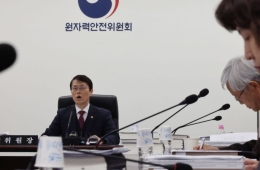
Kwon Chilseung, chair of the Democratic Party of Korea’s Policy Committee, delivers opening remarks at a meeting with virtual asset operators attended by party policy committee and finance committee members at the National Assembly Members’ Office Building on the 30th. Photo by Yoon Dongju.
View original imageAt the meeting, industry representatives called for a tax deferral, citing differences between the domestic and overseas virtual asset markets. “The industry says that there are many individual investors in Korea and almost no foreign investors,” Oh said. “They also said that in the United States, corporations manage the market and deal in derivatives as well.”
“We heard concerns about changes to the regulatory framework for virtual assets, an industry that is still in its early stages,” he added. “They asked us to defer taxation, and we will consider whether their arguments are persuasive.”
The meeting was attended by Kwon Chilseung, chair of the Democratic Party of Korea’s Policy Committee; Cho Seung-rae, chair of the Finance and Economy Committee; and the ruling party’s committee members. Industry representatives included Kim Jae-jin, standing vice chairman of the Digital Asset eXchange Alliance (DAXA); Oh Kyung-seok, CEO of Dunamu; Kim Na-young, CEO of Streami; Kim Tae-yoon, vice president of Bithumb; Kang Min-gyu, a director at Coinone; and Jin Myeong-gu, head of external policy at Digital X, along with other officials from the five major virtual asset exchanges.
In his opening remarks, Kwon said, “We need to resolve the uncertainty around taxation swiftly. Leaving market uncertainty unaddressed any longer will impose a heavy cost on both the market and investors. Based on the views from the field shared by the industry, we will finalize the party’s position as soon as possible.”
Hot Picks Today
 "Two Spend 500,000 Won in a Flash, Yet Wait Two Hours?" ... 'Dreamland' Shunned by Kids and Foreign Tourists
- The Era of Getting 200 Million Won After 30 Years Is Over... A Japanese Bank's "Perpetual Department Head" Who Just Clocked In Cries Out
- Spain Hit by Its Worst Tragedy... Lee Kangin, Moreno and Real Madrid Join Soccer World in Mourning
- They Said, “Make It Your Home for Life” - Then Suddenly Kicked 200 Passengers Off... What Happened to the Around-the-World Cruise?
- "130 Rice Bowls Sold Out in a Day"... 'Unfiltered Face' Adds 8 Million Won to Night Market Sales: China's Bungeunwoo
Earlier, Min Byung-deok, a Democratic Party of Korea lawmaker on the National Assembly’s Political Affairs Committee, held a forum at the National Assembly titled “Deferring Virtual Asset Taxation in 2027: When Will It Take Effect?” He said, “Through the Basic Digital Asset Act, we will establish investor protections and trading standards, while also securing the data needed for taxation and improving the regulatory framework. An indefinite deferral is not the answer either. The National Assembly and the government must clearly inform the public of the remaining tasks and their deadlines.”
© The Asia Business Daily. All rights reserved. Unauthorized AI training and use prohibited.