Wi Sung-lac: U.S. Military Facility Relocation Agreement for Gwangju Air Base Nearly Finalized... No "Holdout" Concerns
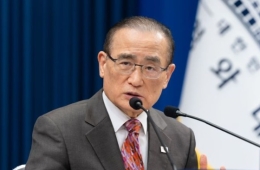
Wi Sung-lac, director of Cheong Wa Dae's National Security Office, briefs on Oct. 30
"Significant recent progress on South Korea-U.S. comprehensive agreement"
Cheong Wa Dae said negotiations on the relocation of U.S. military facilities, cited as an obstacle to moving the Gwangju military airport, have effectively entered their final stage. It said the U.S. military would relocate once replacement facilities are ready and ruled out any so-called “holdout” tactics.
Wi Sung-lac, director of the National Security Office at Cheong Wa Dae, told reporters at Chunchugwan on Oct. 30 that, regarding the relocation of U.S. military facilities at Gwangju Air Base, “The U.S. military wants to address the matter by including the Gwangju base in an agreement, and we have no disagreement with that.” He added, “There had been no progress on a comprehensive agreement, but recently there has been significant progress on the issue. So it is almost done.”

National Security Office Chief Wi Sunglac gives a briefing on current issues at the press briefing room at Cheong Wa Dae on Oct. 30, 2026. Yonhap News.
View original imageWi stressed, “Once a comprehensive agreement is reached, it will establish a framework for relocating the Gwangju base, along with other bases.” South Korea and the United States have discussed plans to relocate several military bases, including those outside Gwangju. They agreed to draw up an agreement to facilitate the relocations and have been negotiating its wording. Wi said that if the agreement is reached, the Gwangju military airport can also be relocated smoothly.
Wi also dismissed concerns that the relocation of U.S. military facilities could be delayed. “There was concern that the U.S. military would not leave easily and that the relocation would be delayed if it resorted to so-called holdout tactics. We need to make this clear,” he said. “The U.S. military will move if replacement facilities are available. There are no signs that the United States intends to refuse to leave or obstruct the process by holding out.”
Hot Picks Today
 "Two Spend 500,000 Won in a Flash, Yet Wait Two Hours?" ... 'Dreamland' Shunned by Kids and Foreign Tourists
- The Era of Getting 200 Million Won After 30 Years Is Over... A Japanese Bank's "Perpetual Department Head" Who Just Clocked In Cries Out
- Spain Hit by Its Worst Tragedy... Lee Kangin, Moreno and Real Madrid Join Soccer World in Mourning
- They Said, “Make It Your Home for Life” - Then Suddenly Kicked 200 Passengers Off... What Happened to the Around-the-World Cruise?
- "130 Rice Bowls Sold Out in a Day"... 'Unfiltered Face' Adds 8 Million Won to Night Market Sales: China's Bungeunwoo
He said the timing of the actual relocation would depend on securing replacement facilities. “If we want to move up the timeline, we will have to build the replacement facilities sooner,” Wi said. “That is mainly a matter of our budget and our preparations.” He added, “The broad agreement is almost in place, and the remaining details involve preparing the budget for the replacement facilities and getting ready for construction, so there is no need to view this as a serious problem.”
© The Asia Business Daily. All rights reserved. Unauthorized AI training and use prohibited.