Goyang City: "Daegok to Add 4,000 Homes... Industrial Land Must Be Finalized Before Housing"
Five Demands to Government, Including Securing Land for Self-Sufficient Development and Allocating Industrial Land
“Must Not Undermine the Goals of Ilsan Reconstruction”
Urges Finalizing Funding and Timeline for Daegok Station Transfer Center
Goyang City in Gyeonggi Province called on the government to secure land for self-sufficient development and allocate industrial land as part of its plan to expand the Daegok Knowledge Convergence District, saying, "The industrial base must be established before housing." The city said it supports the policy goal of stabilizing the housing market in the Seoul metropolitan area, but that housing must not continue to be supplied without jobs.

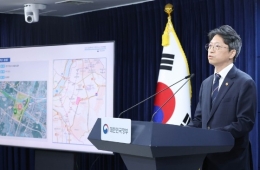
On October 29, after the Ministry of Land, Infrastructure and Transport announced plans to expand the existing Daegok Knowledge Convergence District by about 126,000 pyeong and add 4,000 housing units, Goyang City issued a statement saying that its clear position was "industry first, housing second."
"Goyang, which has shouldered the burden of supplying housing for decades, can no longer remain a city where people only sleep," the city said. "Daegok should be developed as a self-sufficient district with both homes and jobs."
According to the city, 17 residential districts have been developed in Goyang under central government leadership over the past 30 years, and seven out of every 10 residents settled in the city through these developments. However, the city said, industrial development has not kept pace with population growth because of overlapping restrictions, including its designation as an area subject to overconcentration control, development-restricted zones and military installations protection zones.
The city said that Goyang's gross regional domestic product (GRDP) per capita is among the lowest of Gyeonggi Province's 31 cities and counties, while social welfare spending accounts for 54.5% of its total budget. "Land for self-sufficient development has been promised each time a residential development plan was announced, but once projects began, the land was repeatedly reduced or changed to other uses, citing rising construction costs, changing conditions and fiscal constraints," the city said. "This time, we demand a firm commitment, not another promise."
Goyang City made five demands of the government.
First, the city said, sufficient land for advanced industries, knowledge-based industries and business facilities should be secured at the planning stage and finalized before housing plans. It also called for provisions to prevent land for self-sufficient development from being reduced or rezoned during a project, and to require prior consultation with Goyang City when major plans are established or revised.
The city also urged the government to immediately allocate industrial land needed to attract companies and production facilities. "Industrial land accounts for just 0.09% of the area of Goyang, where the entire city is subject to overconcentration control," the city said. "The allocation of industrial land, which we have consistently called for, must not be delayed any longer."
The city also called for a revision to the Enforcement Decree of the Seoul Metropolitan Area Readjustment Planning Act to exclude industrial complexes in border regions from the Seoul metropolitan area's industrial land cap. It said that policies supporting development in border regions conflict with regulations restricting the expansion of industrial land in areas subject to overconcentration control.
As a transportation measure, the city said the metropolitan transport improvement plan should include specific implementation plans for the Daegok Station multimodal transfer center. It argued that funding and a project schedule for the center, which is included in the national plan, must be finalized if Daegok Station, where five rail lines converge, is to be developed as a hub for industry and transportation.
The city also called for nearby settlement areas to be incorporated into the project area and improved. It said the government should actively consider incorporating settlements with inadequate infrastructure and high disaster risks. For areas that cannot be included, it called for plans to expand infrastructure and address traffic congestion, noise and pedestrian safety to be drawn up alongside the Daegok district plan.
The city also expressed concern about the impact on the reconstruction of Ilsan New Town. It said large-scale housing supply in neighboring areas should not undermine the goals of the long-running initiative to redevelop first-generation new towns.
A Goyang City official said, "We need to create an urban structure where Goyang residents can find jobs in Goyang, rather than simply moving from one home to another within the city." The official added, "The five demands are part of a single strategy for self-sufficiency and the minimum conditions for this expansion to earn the trust of residents."
Hot Picks Today
 "Two Spend 500,000 Won in a Flash, Yet Wait Two Hours?" ... 'Dreamland' Shunned by Kids and Foreign Tourists
- The Era of Getting 200 Million Won After 30 Years Is Over... A Japanese Bank's "Perpetual Department Head" Who Just Clocked In Cries Out
- Spain Hit by Its Worst Tragedy... Lee Kangin, Moreno and Real Madrid Join Soccer World in Mourning
- They Said, “Make It Your Home for Life” - Then Suddenly Kicked 200 Passengers Off... What Happened to the Around-the-World Cruise?
- "130 Rice Bowls Sold Out in a Day"... 'Unfiltered Face' Adds 8 Million Won to Night Market Sales: China's Bungeunwoo
"Housing can be built in a few years, but a land-use plan, once set, determines the city's future," the official said. "We will continue discussions with the government until residents' legitimate demands are met."
© The Asia Business Daily. All rights reserved. Unauthorized AI training and use prohibited.