Pyeongtaek City, Samsung Electronics 'Join Hands' to Proactively Manage Trace Pollutants in Semiconductor Wastewater
Discuss measures to manage and reduce PFAS and other substances
Plan to monitor stream water quality and disclose information
Work to ease residents' concerns through public-private cooperation
Pyeongtaek City in Gyeonggi Province and Samsung Electronics will strengthen cooperation to proactively manage trace pollutants, including per- and polyfluoroalkyl substances (PFAS), in semiconductor wastewater.

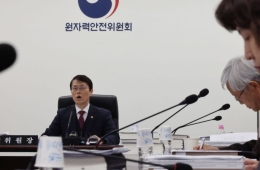
Pyeongtaek City (Mayor Choi Wonyong) holds a meeting on environmental issues at City Hall on the 29th, attended by senior executives and officials from Samsung Electronics' DS Division. Courtesy of Pyeongtaek City.
View original imagePyeongtaek City Mayor Choi Wonyong said the city held a meeting on environmental issues at City Hall on October 29, attended by senior executives and officials from Samsung Electronics' Device Solutions (DS) Division. The participants discussed ways to manage and reduce trace pollutants in wastewater from Samsung's Pyeongtaek Campus.
The meeting was organized to share information on the detection of trace pollutants in semiconductor wastewater, an issue raised by environmental groups and the media, and to find measures to address the issue and ease public concerns.
According to the city, substances in wastewater from Samsung Electronics' Pyeongtaek Campus that are subject to statutory controls are managed at levels equivalent to 10-30% of the permissible discharge limits. However, as concerns have also been raised about trace pollutants for which no statutory discharge limits have been established, the city and Samsung agreed on the need for a proactive response.
The two sides discussed how to manage per- and polyfluoroalkyl substances, chlorine, sulfate ions and other substances in preparation for stricter standards at home and abroad. They plan to develop specific measures for managing trace pollutants through ongoing communication and cooperation.
Pyeongtaek City plans to regularly monitor environmental conditions along the waterway from the wastewater discharge point through Seojeongnicheon Stream to Pyeongtaek Lake, and to make water quality information publicly available to residents. The city also plans to continue urging relevant government agencies to establish management manuals and detailed standards for trace pollutants.
Hot Picks Today
 "Two Spend 500,000 Won in a Flash, Yet Wait Two Hours?" ... 'Dreamland' Shunned by Kids and Foreign Tourists
- The Era of Getting 200 Million Won After 30 Years Is Over... A Japanese Bank's "Perpetual Department Head" Who Just Clocked In Cries Out
- Spain Hit by Its Worst Tragedy... Lee Kangin, Moreno and Real Madrid Join Soccer World in Mourning
- They Said, “Make It Your Home for Life” - Then Suddenly Kicked 200 Passengers Off... What Happened to the Around-the-World Cruise?
- "130 Rice Bowls Sold Out in a Day"... 'Unfiltered Face' Adds 8 Million Won to Night Market Sales: China's Bungeunwoo
A Pyeongtaek City official said, "Along with the development of the semiconductor industry, creating an aquatic environment where residents can feel safe is our top priority. We will communicate and cooperate closely with Samsung Electronics to thoroughly manage water quality in Pyeongtaek Lake and nearby streams."
© The Asia Business Daily. All rights reserved. Unauthorized AI training and use prohibited.