"'KRW 27 Trillion' Czech Nuclear Plant Contract Talks Collapse... 'New Contractor to Be Selected by July Next Year' (2nd LD)"
Failed to reach agreement despite 78 working-level meetings and 11 dispute mediation committee meetings
KHNP ends negotiations with Daewoo E&C-Doosan Enerbility consortium on October 29
"We will allow the existing consortium to participate in the bidding as well"
Negotiations over a KRW 27 trillion construction contract for the Dukovany nuclear power plant project in the Czech Republic between Korea Hydro & Nuclear Power (KHNP) and a consortium of Daewoo E&C and Doosan Enerbility have broken down. The two sides negotiated for about 15 months but failed to bridge their differences over construction costs, including a gap of more than KRW 1 trillion, and the contract structure. KHNP has decided to end its cooperation with the existing consortium and select a new construction contractor through competitive bidding by July next year.

◆Negotiations collapse after 15 months as sides fail to bridge differences over construction costs and contract structure= KHNP announced on October 29 that it was officially ending negotiations with the Daewoo E&C-Doosan Enerbility consortium on a construction contract for the Dukovany nuclear power plant project in the Czech Republic. The two sides tried to reach an agreement through working-level negotiations, a dispute mediation committee, and executive-level talks, but failed to resolve their differences over key contract terms. A KHNP official said, "The two sides could not bridge their differences over key contract terms, including not only construction costs but also the contract structure, scope of work, and whether the terms of the prime contract would be incorporated." The official added, "We decided to end the negotiations and begin the process of selecting a new construction contractor, taking into account the risk that extending the talks further could significantly affect the overall project schedule."
The disagreement centered on how to calculate construction costs and structure the contract. KHNP called for a fixed lump-sum contract, under which the construction price is set in advance, as in the Barakah nuclear power plant project in the United Arab Emirates (UAE). The construction consortium, on the other hand, argued that actual increases in construction volume after detailed design work should be settled through adjustments to the contract price.
Under a fixed lump-sum contract, construction is carried out based on the amount agreed upon when the contract is signed. In principle, the construction contractor bears the associated risk even if the volume of work increases during construction. Under a quantity-based settlement arrangement, however, construction costs may rise further due to design changes, resulting in a different allocation of risk between the parties. According to KHNP, the two sides initially agreed in 2022, during the first bidding process, on the price for building one nuclear reactor and on a fixed lump-sum contract. However, during the final bidding process in 2024 for the construction of two reactors, differences emerged when the construction consortium called for changes to unit prices and quantity-based settlement.
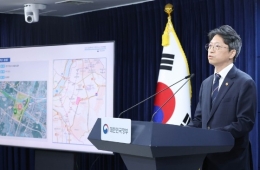
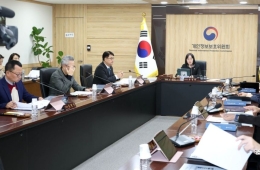
Since signing the prime contract with the Czech project owner in June 2025, the two sides held 78 working-level meetings, two meetings between chief executive officers (CEOs), and 11 dispute mediation committee meetings over about 15 months. They also failed to bridge their differences on pricing and contract terms at the dispute mediation committee meetings held from June 30 to July 31 this year. Choi Ilgyeong, KHNP's executive vice president and head of project management, said, "The fixed lump-sum contract was the arrangement requested by the owner of the Dukovany nuclear power plant project, and we negotiated with the construction contractor on that basis." He added, "A fixed lump-sum contract does not change the contract price even if the volume of work increases. However, KHNP proposed a contract that raised construction costs by 10% to reduce the burden on the contractor, and there was still a huge gap of more than KRW 1 trillion."

◆Tender notice could be issued as early as late March next year; new contractor to be selected by July= KHNP determined that selecting a new construction contractor would have less impact on the overall project schedule than continuing negotiations. Some work is already behind schedule, and a prolonged extension of negotiations could disrupt subsequent design work and permitting and licensing procedures.
KHNP plans to select a new construction contractor through competitive bidding under the State Contracts Act. It aims to hold preliminary briefings for potential contractors, establish comprehensive review and evaluation criteria, and then issue a tender notice and conduct an evaluation before signing a contract by July next year.
Daewoo E&C and Doosan Enerbility, which were part of the existing consortium, will also be eligible to bid again. KHNP said it would provide all companies that meet the eligibility requirements with a fair opportunity to participate, taking into account relevant laws and regulations, project conditions, and their ability to fulfill the contract. Choi said, "Under the agreement originally signed between KHNP and the construction contractor, it was clearly stated that the existing contractor could not participate when a new contractor was selected." He added, "Nevertheless, we plan to allow the existing contractor to bid as well, so that we can select a competitive company based on a comprehensive assessment of construction capabilities, contract terms, and the likelihood of meeting the schedule."

KHNP made clear that it intends to select another South Korean company as the new construction contractor. Choi said, "Of course, we will select a South Korean company as the new construction contractor." He added, "Several companies, including the incumbent contractor, Hyundai Engineering & Construction, and Samsung C&T, are eager to open up the global market through fierce competition. We believe there will be fair competition, and that the competing companies will present a range of terms as a result."
◆Ongoing communication with Czech government and project owner= KHNP said it would also seek to minimize the impact of the failed construction contract negotiations on its relationship with the Czech government and the international credibility of South Korea's nuclear power industry. During the process of selecting a new contractor, it plans to consult with the Czech government and project owner and explain its alternative execution plan and measures to ensure continuity of the project.
The Ministry of Trade, Industry and Energy and KHNP rejected concerns that the breakdown in negotiations would delay the project or damage relations with the Czech government. An official from the ministry said, "The South Korean and Czech governments, as well as KHNP and the Czech project owner, have built trust over the years and maintained ongoing communication about the construction contract." The official added, "The Czech government and project owner want the project completed on time, and it is important to meet requirements such as the localization ratio in the process."
The existing Team Korea cooperation framework for the Dukovany nuclear power plant project will remain in place for areas outside construction. Choi said, "Since signing the prime contract with the project owner, EDU II, in June 2025, we have completed contracts through mutually beneficial negotiations for comprehensive design services (KEPCO Engineering & Construction), the supply of reactor equipment (Doosan Enerbility), and the supply of turbine generator equipment (Doosan Enerbility). Doosan Enerbility is proceeding with preparations for manufacturing without disruption." He added, "Negotiations are proceeding smoothly, with the aim of signing contracts in 2027 for nuclear fuel (KEPCO Nuclear Fuel) and commissioning and maintenance services (KEPCO KPS)."

◆Schedule delays and potential legal disputes pose risks= Selecting a new construction contractor is expected to take about nine months, making it difficult to fully allay concerns about schedule delays. In particular, ensuring continuity in the existing design work and proceeding with permitting procedures without disruption during the contractor replacement process remain challenges. The possibility of legal disputes with the existing consortium is another risk. Although KHNP ended the construction contract negotiations today, terminating the joint cooperation agreement requires a separate process. KHNP plans to issue formal notices and carry out internal decision-making, cost settlements, and the handover of work products.
Hot Picks Today
 "Two Spend 500,000 Won in a Flash, Yet Wait Two Hours?" ... 'Dreamland' Shunned by Kids and Foreign Tourists
- The Era of Getting 200 Million Won After 30 Years Is Over... A Japanese Bank's "Perpetual Department Head" Who Just Clocked In Cries Out
- Spain Hit by Its Worst Tragedy... Lee Kangin, Moreno and Real Madrid Join Soccer World in Mourning
- They Said, “Make It Your Home for Life” - Then Suddenly Kicked 200 Passengers Off... What Happened to the Around-the-World Cruise?
- "130 Rice Bowls Sold Out in a Day"... 'Unfiltered Face' Adds 8 Million Won to Night Market Sales: China's Bungeunwoo
The existing construction contractor may also oppose the termination of the agreement and pursue legal action, such as filing a lawsuit or seeking an injunction. KHNP said it would proceed with selecting a new contractor in parallel, even if a legal dispute arises, to minimize the impact on the project schedule. Choi said, "The existing contractor may file for an injunction. I am not a legal expert, but I do not think it will be granted." He added, "Based on the various discussions KHNP has had with the contractor, as well as the proposals and agreements exchanged, I do not believe there will be any legal issues."
© The Asia Business Daily. All rights reserved. Unauthorized AI training and use prohibited.