Wi Sung-lac on Inter-Korean Dialogue Breakdown: "We Will Rebuild Trust and Restore Dialogue ... Continue as a Pacemaker"
"Trump has expressed willingness for North Korea-U.S. dialogue... We will ensure it leads to actual talks"
On the option of dispatching patrol aircraft to the Strait of Hormuz: "We have considered it, but nothing has been decided"
Wi Sung-lac, director of the National Security Office, said on Oct. 29 that, amid the suspension of inter-Korean dialogue, “we will work to rebuild trust and restore dialogue.”

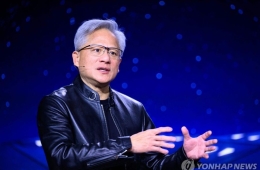
Wi Sung-lac, director of the National Security Office, answers questions from committee members during a parliamentary audit of the Presidential Secretariat, National Security Office, and Presidential Security Service held by the National Assembly Steering Committee on Oct. 29, 2026. Yonhap News Agency
View original imageIn remarks at an audit by the National Assembly Steering Committee of the Presidential Secretariat and other offices, Wi said, “Our goal of easing tensions between the two Koreas and achieving peace in which there is no need to fight will never waver.”
“We will also continue to act as a pacemaker for dialogue between North Korea and the United States,” Wi said. “As President Trump has expressed his willingness to engage in dialogue, we will do our utmost to ensure that this momentum leads to actual talks.” He added, “Alongside dialogue among the parties concerned to establish a peace regime, we will move toward practical, phased progress on denuclearization through ‘a halt, reduction and dismantlement.’”
Wi said the government would build an independent defense capability and swiftly regain wartime operational control. “Peace can be sustained only on the foundation of strong security,” he said. “The government will strengthen our independent defense capabilities and take the lead in our own defense.” He added, “We will swiftly regain wartime operational control and pursue the introduction of advanced military capabilities, including nuclear-powered submarines. We will strengthen the military’s democratic and institutional foundations and support the K-defense industry in becoming a key national industry.”
On instability in the Middle East, Wi said the government would strengthen its supply chain management system through close communication with industry. “With supply chain threats becoming constant due to the Middle East crisis and export controls imposed by major countries, we will strengthen our supply chain management system through close communication with industry,” he said. On technology leaks, he said, “With the conviction that protecting core industries is tantamount to protecting national security, we will do our utmost to protect the country’s core technologies, including through rigorous investigations and punishment for technology leaks.” Regarding cyber threats, he said, “We will accelerate the development of AI models to strengthen security and transition the national cyber response system to an AI-based one so that we can respond comprehensively to evolving threats.”
In response to a question from Kim Joon-hyung, a lawmaker from the Rebuilding Korea Party, about expanding the Cheonghae Unit’s area of operations and considering dispatching maritime patrol aircraft in connection with the United States’ request to deploy forces to the Strait of Hormuz, Wi replied, “We are reviewing various options, but nothing has been decided. We have considered maritime patrol aircraft as an option, but no decision has been made.” He also noted that Japan operates patrol aircraft.
Democratic Party of Korea lawmaker Kim Seong-hoe raised concerns that discussions on regaining wartime operational control could be affected because the Security Consultative Meeting (SCM) between South Korea and the United States would be held early next year, rather than this year. In response, Wi said, “We have made progress in aligning views on the conditions and timing. We will continue to advance the discussions and report the results.” Asked whether there were contingency plans if discussions on setting a year for regaining wartime operational control ran into difficulties, he said, “We have considered various options, but for now we are focused on fulfilling the conditions for determining the timing through consultations with the United States.”
Hot Picks Today
 "Two Spend 500,000 Won in a Flash, Yet Wait Two Hours?" ... 'Dreamland' Shunned by Kids and Foreign Tourists
- The Era of Getting 200 Million Won After 30 Years Is Over... A Japanese Bank's "Perpetual Department Head" Who Just Clocked In Cries Out
- Spain Hit by Its Worst Tragedy... Lee Kangin, Moreno and Real Madrid Join Soccer World in Mourning
- They Said, “Make It Your Home for Life” - Then Suddenly Kicked 200 Passengers Off... What Happened to the Around-the-World Cruise?
- "130 Rice Bowls Sold Out in a Day"... 'Unfiltered Face' Adds 8 Million Won to Night Market Sales: China's Bungeunwoo
Kim Joon-hyung also suggested that there might be differences in views between the National Security Office and the president on issues including denuclearization, South Korea-U.S. joint military exercises and a landmine explosion. “That is a misunderstanding,” Wi said. “The president is talking about the direction we should take. I believe that although the current situation is difficult, we agree on the direction we should move in, so there is no major difference in our views.”
© The Asia Business Daily. All rights reserved. Unauthorized AI training and use prohibited.