“Foster 200 Promising Pharma-Biotech Companies”... Government to Provide Tailored Support for Candidate Substances, Clinical Trials and Commercialization
50 companies selected annually in areas such as new drugs, digital health, and vaccines
Tailored, phased support for 2+3 years through growth directors
60 billion won invested over three years through an R&D-dedicated bank
The government will select 50 promising small and medium-sized pharmaceutical and biotech companies each year for intensive support over five years. It will support every stage, from identifying candidate substances to clinical trials and commercialization, and invest 60 billion won over three years through a bank dedicated to R&D.

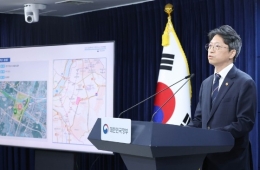
The Ministry of SMEs and Startups and the Ministry of Health and Welfare announced the “K-Pharmaceutical and Biotech Frontier Company Development Plan” at the National Policy Coordination Meeting on October 29. The government plans to designate pharmaceuticals and biotechnology as one of seven SEED sectors and invest approximately 13 trillion won through initiatives including a megafund and the National Growth Fund to secure future growth drivers. As competition centered on next-generation technologies such as AI accelerates, identifying promising companies with innovative technologies has become increasingly important.
The government plans to foster 200 promising companies with growth potential and technological capabilities by 2030. It will select 50 companies annually across three sectors: 20 in new drug development, 20 in medical devices and digital health, and 10 in biomaterials and production technologies. The Ministry of SMEs and Startups and the Ministry of Health and Welfare will jointly identify and select promising companies.
Selected companies will be matched with growth directors to develop company-specific growth strategies and receive tailored support for technology development (R&D), clinical trials, and commercialization during the first-stage, two-year period. After a performance review, outstanding companies will receive an additional three years of support for investment and global expansion. A bank dedicated to technology development (R&D) will invest a total of 60 billion won over three years, and the government will also provide commercialization guarantees worth 90 billion won.
The government will provide integrated support from identifying candidate substances using AI-based drug development models through clinical trials and commercialization. It will support the validation and commercialization of AI-based drug development models and expand the use of public medical and bio data. It will also pursue new R&D initiatives aligned with global regulatory changes, including the FDA’s roadmap for reducing animal testing and the Digital Medical Products Act. The two ministries will establish a joint council to continuously identify regulatory issues and challenges, and work with relevant agencies to pursue institutional improvements.
The government will also build an innovation ecosystem that enables outstanding research at hospitals and universities to lead to startups and helps large and small companies grow together. It will establish an institutional foundation to encourage more hospital researchers to launch businesses and leverage technology transfer organizations to help turn research results into startups and commercial ventures.
The government will strengthen open innovation by matching the technology needs of global pharmaceutical companies and large corporations with promising startups, supporting activities from technology validation and joint technology development (R&D) to investment and commercialization. It also plans to expand investment tailored to each stage of growth, including through regional growth funds.
The government will support overseas expansion so that promising Korean companies can participate in global pharmaceutical and biotech value chains from the early stages of technology development. It will establish networks of global pharmaceutical companies, investment institutions, and local experts, and help each company develop an overseas expansion strategy covering clinical trials, regulatory approvals, and market entry. By linking overseas hubs such as the Ministry of SMEs and Startups’ Chicago Global Business Center (GBC) and the Ministry of Health and Welfare’s Texas Medical Center (TMC), the government will support collaboration with local companies and hospitals, as well as investment attraction and commercialization.
Minister of SMEs and Startups Lee Soyoung said, “In pharmaceuticals and biotechnology, even when technology development is successful, significant time and funding are needed before a product can reach the market. This initiative is highly significant as a new collaborative company-development model that moves beyond support centered on individual projects, with the Ministry of SMEs and Startups and the Ministry of Health and Welfare jointly identifying and selecting promising companies and fostering them into global leaders.”
Hot Picks Today
 "Two Spend 500,000 Won in a Flash, Yet Wait Two Hours?" ... 'Dreamland' Shunned by Kids and Foreign Tourists
- The Era of Getting 200 Million Won After 30 Years Is Over... A Japanese Bank's "Perpetual Department Head" Who Just Clocked In Cries Out
- Spain Hit by Its Worst Tragedy... Lee Kangin, Moreno and Real Madrid Join Soccer World in Mourning
- They Said, “Make It Your Home for Life” - Then Suddenly Kicked 200 Passengers Off... What Happened to the Around-the-World Cruise?
- "130 Rice Bowls Sold Out in a Day"... 'Unfiltered Face' Adds 8 Million Won to Night Market Sales: China's Bungeunwoo
Minister of Health and Welfare Jung Eunkyung said, “In the pharmaceutical and biotech industry, systematic support across every stage, from technology development to clinical trials, regulatory approvals, and commercialization, is important. We will closely link the Ministry of Health and Welfare’s expertise in pharmaceuticals and biotechnology and its hospital and clinical infrastructure with the Ministry of SMEs and Startups’ capabilities in supporting business growth, helping Korean companies with innovative technologies achieve results in global markets.”
© The Asia Business Daily. All rights reserved. Unauthorized AI training and use prohibited.