[1mm Financial Talk] Banking Personnel Shuffle Is Underway... Eyes on December's "Final Candidates"
Selection Process for Next Bank Chiefs Picks Up Speed
Shinhan and Hana Have Already Narrowed Candidate Pools, and Disclosed Timelines and Procedures
Internal Control Capabilities Emerge as Key Factor Amid Record Results
As year-end approaches, the clock is ticking faster on bank personnel appointments. The terms of the heads of the five major banks all expire on December 31 this year, putting the spotlight on whether the current leaders will be reappointed. At the same time, attention is focused on the possibility of a generational shift in the name of reform and on new faces. The banks are posting record-high results, buoyed by growth in their loan assets, but they also face formidable challenges, including AI-powered hacking threats, the expansion of securities firms, and competition over digital assets. The appointment landscape is expected to change significantly depending on what kind of leadership the boards seek in their next bank chiefs.

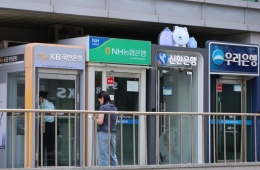
According to the financial sector on October 30, Shinhan Financial Group and Hana Financial Group are moving most quickly with their procedures to select their next bank chiefs among the five major financial groups: KB, Shinhan, Hana, Woori, and NH NongHyup. Shinhan Financial began its management succession process on September 21. After reviewing its initial pool of candidates (the long list) for about a month, it selected a first-round shortlist on October 27. The candidate pool is two to three times the size of the final shortlist. Given that shortlists typically consist of about three people, the pool appears to have been narrowed to five or six candidates. The group plans to conduct further reviews in November, finalize the shortlist, and recommend a final candidate in early December.
Hana Financial also began its management succession process on September 30 and finalized its shortlist on October 26, the first among the five financial groups to do so. The shortlist is believed to include about three people. As the field narrows, industry observers are already discussing whether Hana Bank CEO Lee Ho-sung and Shinhan Bank CEO Jeong Sang-hyeok are included, as well as which new candidates may have been added. Internally, officials have been ordered to keep the list confidential.
Woori Financial began its management succession process on September 30. KB Financial and NH NongHyup Financial are also proceeding with the relevant steps in accordance with the financial authorities' corporate governance best practices, which require the process to begin at least three months before a term expires. They, too, plan to further narrow their candidate pools in November, conduct in-depth interviews, and select their final candidates in early to mid-December.
The common factors likely to determine the selection of the next bank chiefs are performance and the ability to manage internal controls. The five major banks are expected to post record-high results again this year, following last year. Their cumulative net profits for the first three quarters were KRW 3.6837 trillion at Shinhan, KRW 3.5763 trillion at KB Kookmin, KRW 3.3157 trillion at Hana, KRW 2.4006 trillion at Woori, and KRW 1.7523 trillion at NH NongHyup. All but Woori recorded their highest-ever net profits for the first three quarters.
However, some say that the results themselves offer limited grounds for distinguishing candidates' abilities, since they reflect favorable business conditions, including growth in loan assets and increases in interest and fee income. Rather than the scale of results, key points in deciding on the next bank chief may include how much they have strengthened the banks' internal resilience to sustain performance amid an unstable business environment at home and abroad, and whether they have the ability to build it further.
The environment facing the banking sector is indeed far from easy. Large securities firms are rapidly expanding their own funding bases, using promissory notes and integrated investment accounts (IMAs) to retain the large inflows of funds attracted during the stock market boom. As banks compete with securities firms to attract customer funds, their funding bases are also changing. Competition to gain an early lead is intensifying as the digital asset landscape shifts with the emergence of stablecoins and central bank digital currencies (CBDCs).
The customer data breach that occurred ahead of the year-end personnel season is seen as having made internal control management the top criterion for assessing candidates for the next bank chief position. As AI-powered hacking attacks grow increasingly sophisticated, security leadership has also emerged as an important criterion. For the current bank chiefs in particular, key points in their assessment may include not only their commitment to information security, but also how they handled the incident and overhauled their defenses.
One difference in this year's selection process is that the procedures and timeline have become more transparent. Shinhan Financial and Hana Financial, in particular, made public their schedules, from the start of the management succession process to the narrowing of the candidate pool, and strengthened the authority of their bank executive candidate recommendation committees to review and recommend candidates.
Hot Picks Today
 "Two Spend 500,000 Won in a Flash, Yet Wait Two Hours?" ... 'Dreamland' Shunned by Kids and Foreign Tourists
- The Era of Getting 200 Million Won After 30 Years Is Over... A Japanese Bank's "Perpetual Department Head" Who Just Clocked In Cries Out
- Spain Hit by Its Worst Tragedy... Lee Kangin, Moreno and Real Madrid Join Soccer World in Mourning
- They Said, “Make It Your Home for Life” - Then Suddenly Kicked 200 Passengers Off... What Happened to the Around-the-World Cruise?
- "130 Rice Bowls Sold Out in a Day"... 'Unfiltered Face' Adds 8 Million Won to Night Market Sales: China's Bungeunwoo

A financial sector official said, "The most important thing will be how fairly candidates are assessed based on their abilities, rather than the preferences of the financial group chair," adding, "It is in the same vein that Lee Chan-jin, governor of the Financial Supervisory Service, recently urged the chairs of financial group boards not to be swayed by personal ties such as shared schools, regional connections, or personal networks."
© The Asia Business Daily. All rights reserved. Unauthorized AI training and use prohibited.