Plan to Extend CSAT Ban for 'Smart Glasses Cheating' from 1 to 3 Years; Radio-Wave Detectors Also Under Review
Ministry of Education unveils plan to combat cheating with smart glasses on the CSAT
Penalties may include not only bans from taking the exam but also criminal punishment
"Were they wearing smart glasses?" Dedicated personnel to be assigned at each test site
Measures are being pursued to extend the period during which students caught cheating on the College Scholastic Ability Test (CSAT) using smart glasses equipped with artificial intelligence (AI) features are barred from taking the exam from the current one year to three years. Starting with this year's CSAT, dedicated personnel will also be assigned at each test site to determine whether devices are smart glasses, and the introduction of radio-wave detectors for test sites will be considered next year.

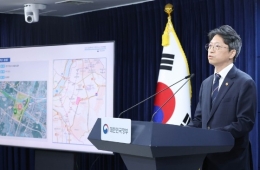
On the 29th, the Ministry of Education announced measures to counter cheating involving smart glasses.
The ministry said it would pursue a plan to extend the period during which CSAT cheaters are barred from taking the exam from one year, as stipulated under the current Higher Education Act, to three years.
Currently, if a test taker is caught wearing or using smart glasses during the CSAT, the exam is invalidated and the test taker is barred from taking the following year's CSAT. The same penalties may also be imposed after deliberation if a test taker refuses an invigilator's request to check whether they are wearing smart glasses.
Even simply bringing smart glasses into a test site or keeping them in a bag will result in the exam being invalidated.
The ministry views cheating involving smart glasses as a deliberate, planned attempt to disrupt the administration of a national examination and plans to pursue criminal penalties as well. In 2005, test takers who systematically exchanged answers by mobile phone during the CSAT were sentenced to eight months in prison, suspended for two years.
The ministry plans to recommend that universities apply the same strengthened penalties, including criminal punishment and an extended period of ineligibility to take the exam, to their own entrance examinations starting this year.
Measures have also been prepared to ease the burden on invigilators tasked with identifying smart glasses.
Starting with this year's CSAT, one designated staff member will be assigned to each test site to determine whether a device is smart glasses. The staff member will make this assessment and, if necessary, patrol and supervise the examination rooms.
If an invigilator finds an item suspected to be smart glasses, the designated staff member will assess it. If further verification is needed, the matter will be addressed promptly through an emergency communication system linking the situation rooms of metropolitan and provincial offices of education with those of the Ministry of Education and the Korea Institute for Curriculum and Evaluation.

The aim is to prevent the burden from falling on individual invigilators.
Legal protections and working conditions for invigilators will also be improved. All CSAT invigilators will be able to enroll in liability insurance, and the coverage and claim periods for incidents occurring during the exam will be extended. For claims for damages arising from accidents that occur while invigilators are performing their duties at test sites on the day of the CSAT, the insurance will cover not only legally payable damages but also attorney fees and litigation costs. The ministry will also work to improve invigilators' working conditions, including by adjusting their allowances to better reflect actual costs.
The ministry is also pursuing the introduction of detection technologies in response to the rapid advancement of electronic devices such as smart glasses.
The Ministry of Education will assess whether radio-wave detectors for test sites, which are being developed by relevant specialist institutions, can be used and will carefully consider supplying them to CSAT test sites next year.
These measures follow a series of recent cases in which cheating with smart glasses was uncovered during various examinations.
After a test taker wearing smart glasses was caught during a regular TOEIC test in May, similar cheating incidents occurred during the essay-based entrance examinations for the University of Seoul and Yonsei University.
Hot Picks Today
 "Two Spend 500,000 Won in a Flash, Yet Wait Two Hours?" ... 'Dreamland' Shunned by Kids and Foreign Tourists
- The Era of Getting 200 Million Won After 30 Years Is Over... A Japanese Bank's "Perpetual Department Head" Who Just Clocked In Cries Out
- Spain Hit by Its Worst Tragedy... Lee Kangin, Moreno and Real Madrid Join Soccer World in Mourning
- They Said, “Make It Your Home for Life” - Then Suddenly Kicked 200 Passengers Off... What Happened to the Around-the-World Cruise?
- "130 Rice Bowls Sold Out in a Day"... 'Unfiltered Face' Adds 8 Million Won to Night Market Sales: China's Bungeunwoo
The Ministry of Education plans to continue pursuing measures to ensure a fair and stable testing environment for students and to ease invigilators' burdens and improve their working conditions.
© The Asia Business Daily. All rights reserved. Unauthorized AI training and use prohibited.