5 Trillion Won to Be Invested by 2030... Government to Pursue 'Strategy to Expand Physical AI in Small and Midsize Manufacturing'
AX Target of 10%, DX Target of 30% for Small and Midsize Manufacturers
Integrated Support for Physical AI Demonstrations Across Equipment, Processes, and Factories
Focus on Fostering Specialized Technology Suppliers, with a Target of 500 Companies
Establish a Virtuous Cycle for Manufacturing Data at Small and Midsize Companies
The government will invest 5 trillion won by 2030 to pursue its “3X Strategy,” integrating the digital and AI (artificial intelligence) transformation of small and midsize manufacturing sites with the transition to robotics. It aims to raise the digital transformation rate from 30% to 50% and the AI adoption rate from 1% to 10% by supporting the digital transformation of 30,000 small and midsize enterprises and the adoption of AI by 6,000 companies.

12 Key Initiatives in Strategy to Expand Physical AI Among Small and Midsize Manufacturers: Ministry of SMEs and Startups
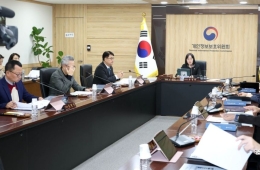
View original imageOn October 29, the Ministry of SMEs and Startups announced its “Strategy to Expand Physical AI in Small and Midsize Manufacturing” at the 16th National Policy Coordination Meeting, chaired by the prime minister and held at Chong Kun Dang in Cheonan, South Chungcheong Province.
As the era of physical AI, in which AI perceives and acts on the physical world, gathers momentum, the core of manufacturing competitiveness is expanding beyond the automation of individual facilities to capabilities in autonomous manufacturing that combine data, AI, and robots.
The Ministry of SMEs and Startups will strengthen its policy framework around four pillars: supporting AI transformation at adopting companies, fostering technology suppliers, creating a virtuous cycle for manufacturing data, and expanding regional and workforce foundations.
To accelerate AI transformation at small and midsize manufacturers, the ministry will establish a phased transformation system tailored to companies’ capabilities, conduct integrated demonstrations of physical AI, and link these efforts with systems for supplying smart factories equipped with general-purpose and foundational technologies.
The ministry will provide phased support for digital transformation (DX) and AI transformation (AX), based on the capabilities of adopting small and midsize companies. It will conduct integrated demonstrations of physical AI across equipment, processes, and factories to verify the feasibility and effectiveness of operating AI and robots together in production environments, and develop leading models suited to the production conditions of small and midsize companies.
By 2030, the ministry plans to supply manufacturing robots, including articulated, collaborative, and logistics robots, to around 1,000 companies, laying the groundwork for AI adoption. It will also develop standard models that apply physical AI to non-routine manual tasks and hazardous or harmful processes, using manufacturing data from small and midsize production sites. The ministry will establish a “Smart Robo Factory” (tentative name) that integrates standard models validated for individual processes within a single factory. In addition, it will adapt and expand to small and midsize manufacturing sites the results of major projects, such as the Ministry of Science and ICT’s “AI Factory Manager for Everyone” operating system for unmanned factories, and AI models based on tacit knowledge developed by the Ministry of Trade, Industry and Energy.
The ministry plans to support leading technology suppliers in technology development, demonstration, and global expansion, with the aim of fostering 500 specialized companies by 2030. It will establish a strategic technology roadmap for smart manufacturing based on a special classification system, setting out the direction for suppliers’ technology development and investment. Based on the roadmap and data, the ministry will provide coordinated support for suppliers’ development and demonstration of core technologies. Leading technology suppliers will be designated as specialized smart manufacturing companies, receive preferential consideration when participating in the government’s smart manufacturing innovation support programs, and receive support from technology development through demonstration and overseas expansion.
Regarding the selection of leading technology suppliers, Park Yongsoon, head of the Ministry of SMEs and Startups’ SME Policy Office, said, “There are 2,700 companies registered as suppliers with the ministry, and we plan to select around 500 leading companies from among them. This year, we plan to designate 100 on a trial basis. To drive smart manufacturing innovation in Korea, we need to foster more intelligent technology suppliers. Since suppliers are a key pillar, we must continue to develop them both in quantity and quality.”
The ministry will transform manufacturing data into “a strategic asset for AI innovation.” It will promote the development of manufacturing data assets through data valuation and recognize data as an in-kind contribution in government support programs, easing companies’ cash burden. The aim is to strengthen policy incentives for companies to provide and use data. The ministry will also upgrade the existing Korea AI Manufacturing Platform (KAMP) to “Manufacturing AI 24,” establishing a virtuous cycle for manufacturing data that links data collection and asset development with AI model development and on-site application.
The ministry will also establish regional AI hubs and train specialized personnel. It will strengthen the regional foundation for expanding manufacturing AI by linking regional AI hubs, such as manufacturing AI data centers, with AX demonstration infrastructure. It will develop young talent into AX specialists through regionally focused programs linked to local industries at the four science and technology institutes, as well as on-site internships, while also providing training for current employees. Furthermore, it will identify on-site regulatory issues through industry associations and organizations and establish a collaborative system that combines the expertise of support institutions.
Hot Picks Today
 "Two Spend 500,000 Won in a Flash, Yet Wait Two Hours?" ... 'Dreamland' Shunned by Kids and Foreign Tourists
- The Era of Getting 200 Million Won After 30 Years Is Over... A Japanese Bank's "Perpetual Department Head" Who Just Clocked In Cries Out
- "Teacher by Day, Adult Film Star by Night": Bizarre Excuse... Japanese School Rocked by Tip About Porn Video
- European Gas Prices Hit 4-Year High... Urgent Push to Secure Supplies Ahead of Winter
- [Exclusive] "I Was Lured by Gangnam Unni's Coupons"... Behind Glamorous 'K-Beauty,' Complaints About Cosmetic Procedures Surge 38%
Minister of SMEs and Startups Lee Soyoung said, “In this era of sweeping AI transformation, innovation in manufacturing AI among small and midsize companies is essential for Korea to become a leading nation in physical AI. Small and midsize manufacturing sites will become the stage for demonstrating and expanding physical AI.”
© The Asia Business Daily. All rights reserved. Unauthorized AI training and use prohibited.