"Manage Healthcare Spending and NHI Finances Together"... Government Pursues Healthcare System Reform
Medical Innovation Committee Discusses Recommendations for Sustainable Healthcare Cost Management
Strengthen Prevention and Primary Care, Use AI to Improve Spending Efficiency
Boost Payments for Essential Care and Health Outcomes; Coordinate Management of Non-Covered Services and Indemnity Health Insurance
The government is pursuing reforms to the healthcare system to ensure that people receive the medical care they need while keeping healthcare costs at a reasonable level.

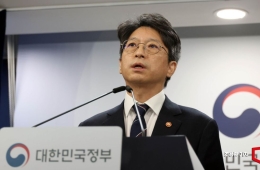
The Medical Innovation Committee under the Prime Minister's Office held its 11th meeting at the President Hotel in Jung-gu, Seoul, on October 29 and discussed its "Recommendations to the Government for Establishing a Sustainable Healthcare Cost Management System." The recommendations aim to manage the public's financial burden while improving the level of healthcare coverage, as medical demand and spending rise amid an aging population and an increase in complex chronic diseases.
According to the Ministry of Health and Welfare, South Korea's current healthcare expenditure totaled 216.6 trillion won in 2024, up 6.5% from the previous year and accounting for 8.5% of gross domestic product (GDP). Of that amount, households paid 30.9% directly. Going forward, medical demand is expected to rise as the population ages, while the financial foundation centered on National Health Insurance premiums is expected to weaken as the working-age population declines.
In response, the committee proposed three key strategies: "a system that improves health outcomes," "an efficient system that pays based on value," and "a sustainable financial and accountability system."
First, the committee recommended shifting the healthcare system's focus from treating illnesses after they occur to prevention and ongoing health management. People should be able to receive continuous care at nearby primary care providers, and risk factors identified through health screenings should lead to actual preventive care and treatment. It also recommended appropriate compensation for consultations and chronic disease management at primary care providers, as well as referrals to necessary medical services.
It also recommended coordinating and providing integrated medical care, long-term care, caregiving, home-based medical care, and rehabilitation services so that older people can maintain their health in the communities where they live. The committee proposed clarifying the roles of different medical institutions and improving referral and return-referral systems, while prioritizing local medical capacity and access and taking into account conditions in medically underserved areas and the public's right to choose.
Reforming the healthcare payment system was also proposed as a priority. The aim is to continuously assess the actual effects and value provided by medical services, pharmaceuticals, and medical supplies, and use the results to promote appropriate utilization and a reasonable pricing and compensation system. The committee recommended using data and proven artificial intelligence (AI) and digital technologies in these assessments, and prioritizing essential medical care and areas with high health value when allocating funds secured through more efficient spending.
The recommendations also include moving beyond the limitations of the existing fee-for-service system and developing a "mixed payment system" that also rewards the capabilities needed to sustain essential medical care, the core functions of primary care, quality of care, and patient health outcomes. The plan is to expand the system in stages after pilot programs and performance evaluations, taking into account patients' severity of illness and local conditions. In addition, the government plans to reduce people's actual healthcare costs by linking non-covered services and indemnity health insurance with National Health Insurance.
For financial management, the committee recommended tracking total healthcare spending across the public and private sectors, beyond National Health Insurance, and developing medium-term projections and management plans. However, it decided not to impose a uniform cap on total healthcare spending. It also recommended assessing the effects of major healthcare policies on public health, access to care, healthcare costs, and household burdens both before and after implementation, and evaluating and disclosing their impact not only on National Health Insurance finances but also on non-covered services and private insurance.
The recommendations also call for establishing a stable funding base by strengthening the government's responsibility for National Health Insurance and improving the fairness of premiums in line with income and ability to pay. They also include measures to clarify the roles and relationships within existing decision-making bodies, including the Health Insurance Policy Deliberation Committee.
Hot Picks Today
 The Era of Getting 200 Million Won After 30 Years Is Over... A Japanese Bank's "Perpetual Department Head" Who Just Clocked In Cries Out
- "Could That Really Be a Teacher at Our School?"... Japanese Teacher Caught Appearing in Adult Video Gives Bizarre Explanation
- [Breaking] Special Counsel Seeks Death Penalty for Yoon as 'Ringleader of Insurrection' in Appeal Trial
- "They Blocked China's Chips, and It Became a 'Value-for-Money Monster'..." China's Counterattack, Copying the U.S. and Selling It for Peanuts [China Shock, K-Industry on the Brink | AI] 1
- "Two Spend 500,000 Won in a Flash, Yet Wait Two Hours?" ... 'Dreamland' Shunned by Kids and Foreign Tourists
Medical Innovation Committee Chair Jung Ki-hyun said, "Healthcare spending is a social investment to protect people's health and lives, as well as an important responsibility of the state." He added, "I hope these recommendations will serve as an opportunity to build social consensus on how to use limited resources more effectively and share the burden of healthcare costs."
© The Asia Business Daily. All rights reserved. Unauthorized AI training and use prohibited.