Banks' Inclusive Finance Scores to Be Published; Top Performers Get Cuts to Contributions and Surcharges
17 banks to be rated from S to C; top performers eligible for up to 20% reduction in contributions
KRW 4.9 trillion in nonperforming loans at least 15 years overdue to be cleared; write-offs to begin in Q1 next year
Repayment capacity to be assessed for debts of up to KRW 50 million overdue for five years
Financial authorities will assess banks' inclusive finance performance, assign grades of S, A, B or C, and release the results. The assessment will consider not only how much funding banks provide to borrowers with low credit ratings, but also their lending rates and repayment performance after debt restructuring. Banks with strong results will receive reductions in their contributions to the inclusive finance fund and in their surcharges, while lower-ranked banks will face higher contribution burdens.

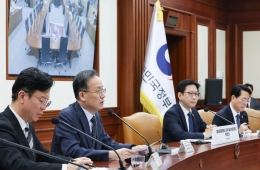
On Oct. 28, the Financial Services Commission (FSC) held the seventh meeting on a major shift toward inclusive finance at the Korea Asset Management Corporation (KAMCO) Yangjae Tower in Seoul, chaired by FSC Chairman Lee Eog-weon. It announced the "Plan to Introduce a Comprehensive Inclusive Finance Assessment Framework" and the "Plan to Improve the Management of Nonperforming Loans at Financial Public Institutions," among other measures.
The comprehensive assessment will cover 17 domestic banks. To reduce advantages and disadvantages arising from differences in asset size, the banks will be divided into three groups for relative assessment: six large banks, eight small and medium-sized banks, and three internet banks.
Funding provision and debt restructuring will each account for 35% of the assessment, while governance, social consideration, and non-financial services such as financial counseling and education will each account for 10%. The assessment will consider qualitative indicators, not just loan volumes or the number of debt restructurings. These indicators include interest rates on loans to borrowers with low credit ratings, the extent of principal and interest reductions during debt restructuring, and whether borrowers maintain regular repayments after restructuring.
The results will be released in four grades. Banks ranked in the top two grades may receive a reduction of up to 20% in their contributions to the Korea Inclusive Finance Agency, and surcharges for violations of the Financial Consumer Protection Act may be reduced by up to 10%. Banks receiving the lowest grade, by contrast, will face an increase of up to 20% in their contribution burden.
The Financial Supervisory Service will handle the assessment process, and a five-member assessment committee, including a private-sector chair, will review and finalize the results. The first assessment, covering performance in 2026, will be conducted as a pilot, with only high-performing banks to be disclosed in March 2027. Incentives and penalties are scheduled to take effect starting with the 2028 assessment. From 2027, the assessment will also be expanded to cover non-bank financial institutions.
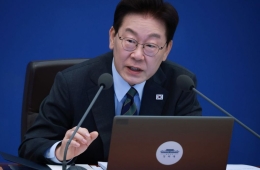
"The financial sector has also responded actively to inclusive finance, but it has in some respects been pursued as a passive task in which the sector responds when the government makes a request," Chairman Lee said. "It is now time to build a framework that enables financial companies to pursue inclusive finance on their own initiative."
Meanwhile, financial authorities also plan to resolve nonperforming loans that financial public institutions have been unable to recover for an extended period. As of the end of June 2026, seven financial public institutions, including the Korea Credit Guarantee Fund and KAMCO, held nonperforming loans totaling 59.6 trillion won. Of this amount, 4.9 trillion won in long-term nonperforming loans that had been outstanding for at least 15 years, comprising 118,000 cases, will be resolved in a single batch.
A principle of completing the statute of limitations based on repayment capacity will also be introduced for personal and sole-proprietor debts held by public institutions. For debts of 50 million won or less, once five years have passed since delinquency, repayment capacity will be assessed, and debts will not be collected if borrowers cannot afford to repay them. The measure will apply to vulnerable groups, including basic livelihood security recipients, without a separate assessment, regardless of the amount owed. Debts for which a second statute of limitations expires after 15 years of delinquency will be written off unless there are exceptional circumstances, such as concealed assets.
KAMCO's principal reduction range will be expanded from 30-60% to 30-80%. The system for guaranteed loans will also be improved to allow borrowers to receive debt restructuring before the guarantor institution repays the debt on their behalf.
Hot Picks Today
 "Three times Lee Jaeyong's fortune?"... Meet China's richest man, who amassed 134 trillion won at 43.
- "What Happened to Mighty Tesla?"... "Cut Your Exposure," Analysts Warn [Click eStock]
- "I Made an Extra 6 Million Won a Month"... "This Can Actually Make Money?" The Twist Behind a Few Pieces of Junk
- "27,000 Won for an Hour of Walking?"... Robot Dog-Walking Jobs in the U.S. Now Pay by the Hour
- "If You See It, Avoid It"... 'Superfood' Fruit Kills 12-Day-Old Baby
In addition, the authorities plan to develop measures in the fourth quarter of 2026 to shorten the period for which delinquency records are used, so that the records of people who have fully repaid their debts do not remain in credit assessments for an extended period.
© The Asia Business Daily. All rights reserved. Unauthorized AI training and use prohibited.