SKT, Churn Rate 'Plunges' Despite Hacking Incident... "Waiving Termination Fees Mattered"
Analysis of SK Telecom's Crisis Response
Churn Rate Falls as Subscriber Numbers Rebound
SK Telecom, which suffered a massive hacking incident last year, was assessed as having achieved progress in restoring trust through customer protection and compensation and investments in information security, despite shortcomings in its initial response and security management.

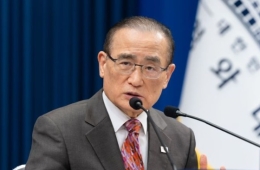
At a seminar titled "Corporate Management Crises and Responses," held by the Korean Society for Media Management at the Korea Press Center in Jung-gu, Seoul, on October 28, Professor Shin Minsu of Hanyang University analyzed SK Telecom's response to the incident.
According to Professor Shin, SK Telecom's average monthly churn rate surged to 1.6% in the second quarter of 2025, immediately after the incident, but fell to 0.8% in the second quarter of 2026, one year later, close to the pre-incident level of 0.7%. The number of mobile phone subscribers hit a low in the fourth quarter of last year, then rose for two consecutive quarters, increasing by 220,000. From January through July this year, SK Telecom recorded a net gain of 156,842 subscribers in the mobile number portability market, the most among the three mobile carriers.
In customer satisfaction surveys, SK Telecom ranked first this year for the 29th consecutive year in the National Customer Satisfaction Index (NCSI) and for the 27th consecutive year in the Korean Standard-Service Quality Index (KS-SQI). It also regained first place in the Korea Customer Satisfaction Index (KCSI) after one year, having lost the top spot in the wake of last year's incident.
Professor Shin identified "the company's decision to assume the risks and costs previously borne by customers" as a key factor in SK Telecom's recovery of trust. For 51 days after the incident, SK Telecom suspended new business and focused on replacing and protecting existing customers' USIM cards. It enrolled all customers in a USIM protection service, offered free USIM replacements, and temporarily waived contract termination fees for customers who canceled their service.
The measures SK Telecom pledged totaled KRW 1.2 trillion, including a KRW 500 billion customer compensation package and KRW 700 billion in information security investments over the next five years. Professor Shin noted that waiving termination fees was especially significant because it guaranteed customers the freedom to leave the service at any time.
Other factors cited in the recovery of trust included strengthening systems to block abnormal authentication, improving server, account, and network management, and having security measures verified by the Personal Information Protection Commission and external experts.
Hot Picks Today
 "Two Spend 500,000 Won in a Flash, Yet Wait Two Hours?" ... 'Dreamland' Shunned by Kids and Foreign Tourists
- The Era of Getting 200 Million Won After 30 Years Is Over... A Japanese Bank's "Perpetual Department Head" Who Just Clocked In Cries Out
- Spain Hit by Its Worst Tragedy... Lee Kangin, Moreno and Real Madrid Join Soccer World in Mourning
- They Said, “Make It Your Home for Life” - Then Suddenly Kicked 200 Passengers Off... What Happened to the Around-the-World Cruise?
- "130 Rice Bowls Sold Out in a Day"... 'Unfiltered Face' Adds 8 Million Won to Night Market Sales: China's Bungeunwoo
However, he noted that challenges remain, including the security failure to detect the prolonged intrusion, insufficient explanations in the immediate aftermath of the incident, and supply and on-site confusion during the USIM replacement process. "Operations have returned to normal, but the scope of accountability is still being determined," Professor Shin said. "Trust is restored not through communication campaigns, but through an operational system that follows a clear sequence."
© The Asia Business Daily. All rights reserved. Unauthorized AI training and use prohibited.