SK hynix Tops 100 Trillion Won in Quarterly Revenue for First Time... Operating Profit Hits Record 83 Trillion Won
Third-quarter revenue reaches 104.6 trillion won
Operating profit up 632.1% year over year
"AI memory supply shortage to persist through 2030"
Secures LTAs with 14 Big Tech firms
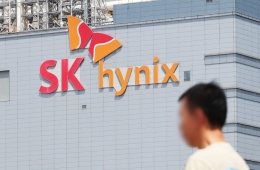
SK hynix surpassed 100 trillion won in revenue in a single quarter for the first time in its history, extending its record-breaking performance streak to six consecutive quarters. As prices for key products continued to rise amid global investment in artificial intelligence (AI) infrastructure, operating profit also reached the 83-trillion-won range, exceeding market expectations and demonstrating overwhelming profitability.

In an earnings announcement on the 28th, SK hynix said it posted revenue of 104.6155 trillion won, operating profit of 83.3338 trillion won, and net profit of 39.7756 trillion won in the third quarter of this year. Compared with the previous quarter, revenue rose 32% and operating profit increased 38%.
Compared with the same period last year, revenue surged 327.9%, operating profit jumped 632.1%, and net profit also rose 215.7%. Compared with the previous quarter, revenue and operating profit increased 32% and 38%, respectively. The results far exceeded market forecasts. According to financial information provider FnGuide, the third-quarter earnings consensus—the average forecast among securities firms—was 98.2257 trillion won in revenue and 76.964 trillion won in operating profit, both of which SK hynix surpassed by more than 6 trillion won.
Profitability indicators also broke the previous quarter's records. The third-quarter operating margin was 80%, up 4 percentage points from 76% in the previous quarter. This demonstrated an unprecedented level of profitability for a manufacturer. The net profit margin also reached 38%.
The strong results were driven by the company's next-generation, high-value-added AI semiconductor lineup. In the DRAM segment, shipments of HBM4, the sixth-generation high-bandwidth memory, ramped up, while a surge in sales of DDR5 for servers drove revenue growth. In the NAND flash segment, supplies of high-capacity, 321-layer TLC enterprise solid-state drives (eSSDs) for data centers expanded significantly, further solidifying the company's high-margin business structure.
Record results also significantly strengthened the company's financial health. At the end of the third quarter, cash and cash equivalents totaled 114.5 trillion won, up 26.5 trillion won from the previous quarter. Meanwhile, borrowings fell by 2.8 trillion won to 15.8 trillion won. As a result, net cash swelled to 98.7 trillion won, approaching the 100-trillion-won mark.
SK hynix expects the memory semiconductor supply shortage to continue through 2030. The company said that as AI is delivering tangible improvements in work efficiency and profitability in various fields, including software development, search, and customer service, a virtuous cycle of continued growth in AI investment has taken hold. In particular, the market is expanding in earnest beyond AI use by businesses and individuals to “physical AI,” such as autonomous vehicles and robots, driving a sharp increase in memory demand. Meanwhile, advanced memory is difficult to manufacture, and expanding factories takes years, so the structural constraint that supply cannot keep pace with demand is expected to persist.
In response, SK hynix has signed long-term agreements (LTAs) with 14 key customers, including major global cloud service providers (CSPs), to guard against medium- and long-term earnings volatility. The LTA volumes already secured account for more than 50% of total production capacity in 2027–2028, and the company is proactively coordinating with some customers to extend contract terms to typically five years or more.
SK hynix plans to sustain solid growth next year by accelerating capacity expansion and the transition to advanced processes. In DRAM, it will increase the share of its sixth-generation (1c) 10-nanometer-class process and expand supplies of SOCAMM, based on LPDDR5, for AI servers. The company plans to ramp up production capacity at its M15X fab in Cheongju to the maximum by the end of the year. In the fourth quarter, HBM4 is expected to surpass HBM3E in both shipment volume and revenue, becoming the company's main product. In NAND, the company will increase the share of its domestic 321-layer process to more than 50% in the fourth quarter and focus on developing next-generation solutions, including high-bandwidth flash (HBF).
Hot Picks Today
 "Koreans Spend 1 Million Won Each and Come Back"... 'They Said They Were Going for Value for Money,' but Open Their Wallets Wide in Japan
- Sold for 3.8 Billion Won, Now Down 700 Million... "I'll Sell" as Eunma Listings Surge 3.7-Fold
- Anthropic Tailwinds Lift Korean Stocks as Both Markets Surge Early
- "Wow, Have Middle-Aged Men Had This All to Themselves?"... Women in Their 20s and 30s Find Comfort in a Standing Drink
- "I Have 9 Billion Won, but I Still Can't Quit"... The Unexpected Worry of a Major-Company Employee in His 40s Who Hit It Big with Investments
Next year, infrastructure investment is expected to increase substantially from this year as the first fab at the Yongin Semiconductor Cluster begins full-scale operations. SK hynix said, “Based on LTA volumes for which demand visibility has been secured, we plan to flexibly adjust the scale and timing of investments after carefully assessing customer demand, product competitiveness, profitability, and investment efficiency.”
© The Asia Business Daily. All rights reserved. Unauthorized AI training and use prohibited.