Seoul National University Bundang Hospital Confirms Benefits of Cochlear Implant Surgery in Children with Auditory Nerve Aplasia
Auditory performance improved one year after surgery in the EMPES group
Children unresponsive to speech decreased from 6 to 1
A research team led by Professor Choi Byungyoon of the Department of Otorhinolaryngology at Seoul National University Bundang Hospital said it had confirmed the potential to improve auditory development by applying cochlear implant surgery and a rehabilitation strategy called the “EMPES approach” to children with congenital hearing loss whose auditory nerves were not visible on magnetic resonance imaging (MRI).
According to Seoul National University Bundang Hospital on October 28, the team studied children with auditory nerve aplasia, in whom the nerve was not visible on MRI, among children with auditory nerve deficiency, a condition in which the auditory nerve is congenitally thin or underdeveloped. The auditory nerve carries sound signals detected by the ear to the brain, and problems with the nerve can make it difficult to hear and understand sounds.

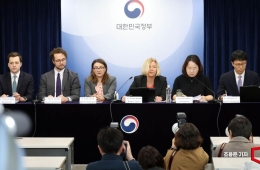
Choi Byungyoon, professor of otorhinolaryngology at Seoul National University Bundang Hospital. Seoul National University Bundang Hospital
View original imageAuditory nerve aplasia has been regarded as a condition in which cochlear implant surgery is unlikely to be effective. A cochlear implant is a device that delivers sound signals by stimulating the auditory nerve with electrodes inserted into the cochlea. If the auditory nerve is not visible on MRI, it may be assumed that there is no nerve to receive the electrical stimulation.
However, as reports have continued to suggest that MRI alone cannot determine whether the auditory nerve is present, cochlear implant surgery has increasingly been attempted in children with auditory nerve aplasia. Specific guidelines for the timing of surgery, electrode insertion method, and device activation have not been established.
To address this, the research team developed the “EMPES approach” by combining three strategies known to support auditory and language development: performing surgery as early as possible, inserting the electrode as close as possible to the modiolus, the central axis of the cochlea where nerve fibers converge, and activating the device within 24 hours after surgery.
The team analyzed 46 children with bilateral auditory nerve aplasia (86 ears) who underwent cochlear implant surgery at Seoul National University Bundang Hospital and Seoul National University Hospital between November 2011 and December 2024. Of these, the team compared auditory development over a period of up to 48 months in 36 children who were followed for at least one year after surgery: 24 children (48 ears) who received the EMPES approach and 12 children (20 ears) who did not.
First, during surgery, the team stimulated the auditory nerve with an electrode and checked for an electrically evoked compound action potential (ECAP). Responses were observed even in children whose auditory nerves were not visible on MRI. In particular, more sites showed an electrical response when the electrode was positioned close to the modiolus. This suggests that nerve tissue capable of responding to electrical stimulation may be present even when the nerve is not visible on MRI.
Differences were also seen in auditory performance after surgery. One year after surgery, the mean score on the Categories of Auditory Performance (CAP) scale, which rates responses to sound and speech understanding on a scale of 0 to 7, was 2.79 in the EMPES group, significantly higher than the mean of 1.67 in the group that did not receive the approach.
The number of children unable to respond to speech one year after surgery also decreased. Six of the 12 children in the group that did not receive the approach had a CAP score below 2, compared with 1 of the 24 children in the EMPES group.
Long-term follow-up also showed language perception ability in some children. Among the EMPES group, six children followed for up to 48 months after surgery correctly repeated 10% to 50% of words in a test in which they listened to sounds without seeing the speaker’s mouth. Two of these children also achieved accuracy scores of 60% and 93.33%, respectively, on a sentence-level test.
However, the study had a small number of participants, and auditory and language development varied among the children, limiting the extent to which the results can be generalized. The research team said that even with the EMPES approach, language development may generally be slower than in other children with hearing loss and normal auditory nerve development, and that further research is needed to validate the findings.
Hot Picks Today
 "Two Spend 500,000 Won in a Flash, Yet Wait Two Hours?" ... 'Dreamland' Shunned by Kids and Foreign Tourists
- The Era of Getting 200 Million Won After 30 Years Is Over... A Japanese Bank's "Perpetual Department Head" Who Just Clocked In Cries Out
- Spain Hit by Its Worst Tragedy... Lee Kangin, Moreno and Real Madrid Join Soccer World in Mourning
- They Said, “Make It Your Home for Life” - Then Suddenly Kicked 200 Passengers Off... What Happened to the Around-the-World Cruise?
- "130 Rice Bowls Sold Out in a Day"... 'Unfiltered Face' Adds 8 Million Won to Night Market Sales: China's Bungeunwoo
“Auditory nerve aplasia was a representative condition for which poor outcomes from cochlear implant surgery were expected,” Professor Choi Byungyoon said. “The EMPES approach may offer a way to advance auditory development during a critical period for language development in these children.” He added, “If cochlear implant surgery does not provide sufficient benefit, an auditory brainstem implant can be considered, so performing surgery early and monitoring the child’s progress can broaden the available options.” The findings were published in the international journal Otology & Neurotology.
© The Asia Business Daily. All rights reserved. Unauthorized AI training and use prohibited.