[2026 Parliamentary Audit] Labor Minister on Claim That 52-Hour Workweek Exception Is Unconstitutional: "That's a Possible Argument"
Minister of Employment and Labor Kim Younghoon said on Oct. 27 that “social dialogue must be brought to a successful conclusion” regarding the introduction of labor-related exemptions under the Super-Regional Special Zones Act to support the implementation of mega-projects.

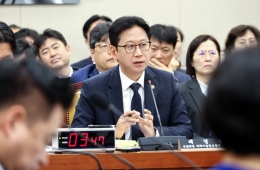
Minister of Employment and Labor Kim Younghoon delivers opening remarks during a parliamentary audit of the Ministry of Employment and Labor at the National Assembly on Oct. 13, 2026. Photo by Yoon Dongju
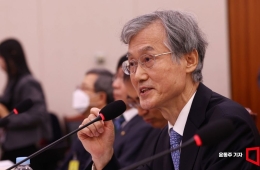
View original imageDuring a comprehensive parliamentary audit of the Ministry of Employment and Labor by the National Assembly’s Climate, Energy, Environment and Labor Committee that day, Kim was asked by Lee Jong-bae of the People Power Party whether social dialogue among labor, management and the government on introducing labor-related exemptions under the act was deadlocked. He replied, “It is true that there are concerns about that.”
“Sustainable development is possible only if companies’ productivity and workers’ right to health can be balanced,” Kim said. “With that in mind, I will work to ensure that social dialogue proceeds smoothly.” However, he did not say whether key labor-related exemptions—including an exception to the 52-hour workweek limit for high-income professionals (the white-collar exemption) and an extension of the permitted employment period for fixed-term workers—would be specified in the law or in an enforcement decree.
When People Power Party lawmaker Na Kyung-won demanded that he say whether the labor-related exemption provisions would be included in the law or the enforcement decree, Kim replied, “Social dialogue is currently underway, so I will support legislation based on its outcome.”
Hot Picks Today
 "Koreans Spend 1 Million Won Each and Come Back"... 'They Said They Were Going for Value for Money,' but Open Their Wallets Wide in Japan
- "You Mean Only Middle-Aged Men Got to Enjoy This?"... Where Japanese Women in Their 20s and 30s Are Flocking
- Man in His 60s Arrested for Dumping Body in Guro-gu, Man in His 80s for Ordering It (Updated)
- "Naked Again?" Controversial Actress Crosses a Line... Slammed for Sexualizing 'Child Characters'
- "They Get a Good Night's Sleep and Earn Twice My Salary... Honestly, I'm So Jealous I Could Die": Civil Servant's Post Targeting Firefighters Sparks Outrage
When Democratic Party of Korea lawmaker Lee Yong-woo argued that transferring matters such as the 40-hour workweek, overtime pay, and rest periods and holidays—which are fundamental to labor law—from legislation to individual written agreements between employers and workers was unconstitutional because it violated the constitutional principle that working conditions must be prescribed by law, Kim said, “I think that argument could be made.”
© The Asia Business Daily. All rights reserved. Unauthorized AI training and use prohibited.