NSSC Approves 10-Year Life Extension for Gori Units 3 and 4, Giving Power Supply 'Breathing Room'
NSSC Reconsiders Application; Approves Continued Operation After Vote
First-Ever Simultaneous Approval for Continued Operation of Two Nuclear Units
Facility Upgrades to Take 4-6 Months; Restart Expected Early Next Year
Higher Chances of Continued-Operation Approval for Hanbit Units 1 and 2, Which Use the Same Reactor Design
Extension of Nuclear Plant Continued-Operation Approval Cycle to 20 Years Also Discussed

The operating lives of Units 3 and 4 at the Gori Nuclear Power Plant in Gijang, Busan, which had been shut down after reaching the end of their design lives, have been extended by 10 years. This is the first time the Nuclear Safety and Security Commission (NSSC) has simultaneously approved continued operation for two nuclear power units. The continued operation of Gori Units 3 and 4 is expected to ease pressure on the domestic power supply. The possibility of approval for continued operation of Hanbit Units 1 and 2, which use the same reactor design, has also increased.
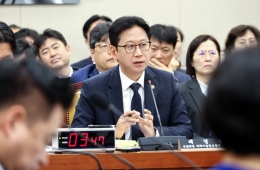
On the 27th, the NSSC held its 2016-17th meeting and, after deliberating on Korea Hydro & Nuclear Power's (KHNP) application for approval to continue operating Gori Units 3 and 4 (pressurized water reactors, 1,025 MWe), approved it in a vote of five in favor and two against.
The item was first put on the agenda on the 15th, but was brought back for consideration today at the request of committee members, who said further explanation was needed on matters including how public hearings for residents had been reflected, whether the latest technical standards had been incorporated, and whether the latest research findings on climate change had been taken into account.
Gori Units 3 and 4 received construction permits in 1979. Unit 3 received an operating license in 1984, and Unit 4 in 1985. Their 40-year design lives expired on September 28, 2024, for Unit 3 and August 6, 2025, for Unit 4.
On September 26, 2022, KHNP submitted periodic safety review reports for the continued operation of Gori Units 3 and 4. The item was subsequently placed on the agenda following a safety review by the Korea Institute of Nuclear Safety (KINS) and approximately six months of preliminary review by the Nuclear Safety Expert Commission.
The NSSC said it had conducted a comprehensive review to confirm that ▲ the periodic safety review reports for the continued operation of Gori Units 3 and 4 had been properly assessed in accordance with the methods and standards set out in the relevant nuclear safety laws and regulations, and ▲ the applications for operating license amendments, including changes to the plants' operating periods and equipment replacements related to environmental qualification assessments, met the licensing requirements. The commission said it had confirmed that Gori Units 3 and 4 have sufficient safety margins to ensure safety throughout their continued operation and meet the applicable standards.
With the approval for continued operation adopted today, the operating lives of Gori Unit 3 and Unit 4 have been extended through September 2034 and August 2035, respectively.
An NSSC official said, "Under the terms of the approval, KHNP plans to carry out follow-up measures, including facility upgrades, over the next four to six months," adding, "We plan to approve the restart after conducting an on-site inspection." Accordingly, Gori Units 3 and 4 are expected to restart sequentially from the first quarter of next year.
With power demand surging amid the growth of electricity-intensive industries such as semiconductors and data centers, the restart of Gori Units 3 and 4 is expected to help ease the domestic power shortage.
Of the 26 nuclear power plants currently operated by KHNP, eight are shut down. Gori Units 3 and 4 each have a generating capacity of 950 MW, bringing their combined supply capacity to 1.9 GW.
Gori Units 3 and 4 are also expected to affect deliberations on continued operation of Hanbit Units 1 and 2 in Yeonggwang, South Jeolla Province, which use the same reactor design. The NSSC plans to put the approval applications for continued operation of Hanbit Units 1 and 2 on the agenda in the first half of next year. Continued operation of the two Hanbit units is needed to ensure a stable power supply for the government's semiconductor cluster in the Honam region.
Despite today's approval, debate is expected to continue over the effectiveness of the continued-operation system. Although the operating lives of Gori Units 3 and 4 have been extended by 10 years, their actual operating periods are expected to be only eight to nine years because the shutdown period is included. Some in the nuclear industry argue that the current 10-year approval period for continued operation of nuclear plants whose design lives have expired should be extended to 20 years.
Hot Picks Today
 "They Get a Good Night's Sleep and Earn Twice My Salary... Honestly, I'm So Jealous I Could Die": Civil Servant's Post Targeting Firefighters Sparks Outrage
- Man in His 60s Arrested for Dumping Body in Guro-gu, Man in His 80s for Ordering It (Updated)
- [Breaking] Supreme Court Issues Additional Arrest Warrant for Kim Keon Hee
- "Naked Again?" Controversial Actress Crosses a Line... Slammed for Sexualizing 'Child Characters'
- "You Mean Only Middle-Aged Men Got to Enjoy This?"... Where Japanese Women in Their 20s and 30s Are Flocking
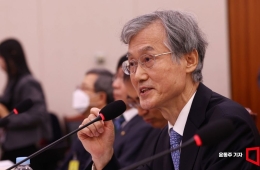
At today's NSSC meeting, the secretariat reported on a proposal to extend the interval for continued-operation approvals. The NSSC says it can discuss extending the interval for continued operation of nuclear power plants if it receives a request from the Ministry of Climate, Energy and Environment, the government agency responsible for nuclear power policy. However, committee members Park Jeong-un and Jin Jae-yong opposed discussing the extension proposal.
© The Asia Business Daily. All rights reserved. Unauthorized AI training and use prohibited.