[2026 State Audit] Ruling Party on South Korea-U.S. Alliance Concerns: "Disagreements Can Arise"; Opposition: "Are You Denying Reality?"
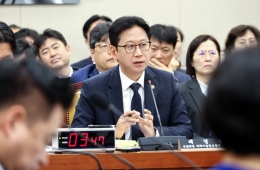
On October 27, the ruling and opposition parties revealed differing views on concerns about a recent rift in the South Korea-U.S. alliance during a comprehensive audit of state affairs by the National Assembly’s Foreign Affairs and Unification Committee. The ruling party said, “The South Korea-U.S. alliance is solid, although disagreements can arise,” while the opposition questioned whether the government was “denying reality when the ambassadors of both countries are issuing public warnings.”

Jeong Jeom-sik, floor leader of the People Power Party, said at the committee’s audit at the National Assembly that morning, “U.S. Ambassador to South Korea Michelle Steel publicly described South Korea-U.S. relations as ‘turbulent,’ and Ambassador to the United States Kang Kyung-wha also acknowledged, in effect, that communications with senior White House officials were not working, saying she was frustrated. When the ambassadors of both countries are warning of a crisis in the alliance, isn’t the foreign minister, as the head of the Ministry of Foreign Affairs, denying reality?”
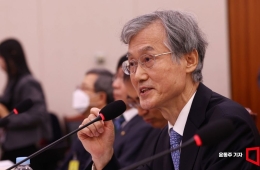
Foreign Minister Cho Hyun responded, “There can be disagreements, but claims made by some that the alliance has collapsed are absurd.” He added, “Over breakfast with Ambassador Steel, I said, ‘When an airplane passes through turbulence, there’s no problem as long as you fasten your seat belt securely,’ and she agreed.”
Hong Ki-won, the Democratic Party’s ranking member on the committee, countered, “The South Korea-U.S. alliance is solid, but there can be disagreements on various issues. That is entirely normal in diplomatic relations. If there were no disagreements at all between South Korea and the United States, that would be one country, not an alliance.”
The ruling and opposition parties also clashed over recent restrictions by U.S. intelligence agencies on sharing information about North Korea, as well as delays and denials of visas for visits to the United States. Democratic Party lawmaker Cha Ji-ho said, “The Ministry of Foreign Affairs is staking everything on the South Korea-U.S. alliance, but what we have received in return is restrictions on intelligence sharing about North Korea and visa denials.” He asked Cho, “In your communications with the U.S. side, did you express regret over the visa issuance issue or raise matters such as the principle of reciprocity?”
In response, People Power Party lawmaker Park Chung-kwon said in a procedural statement, “Didn’t this happen because the minister disclosed military secrets and appointed someone with a questionable background to head an intelligence agency? Is the alliance falling apart like this, and are you saying we should protest to the United States and expel Americans in proportion?”
The case of Democratic Party lawmaker Chung Chung-rae, who could not attend the committee’s audit of its North America division because of delays in visa issuance, also came under scrutiny.
Hong said, “If the U.S. government did not issue a visa for Representative Chung by the time we needed it, at the very least our committee should have taken a critical stance toward the U.S. side. It is regrettable that we are taking a self-deprecating stance, suggesting that he could not get a visa because there are problems in South Korea-U.S. relations.”
Hot Picks Today
 "You Mean Only Middle-Aged Men Got to Enjoy This?"... Where Japanese Women in Their 20s and 30s Are Flocking
- "They're Coming After My Pension Too?" Public Unease Mounts... Spain Sees Mass Protest Over Reform Push
- "Naked Again?" Controversial Actress Crosses a Line... Slammed for Sexualizing 'Child Characters'
- Another Former Employee Comes Forward With Workplace Allegations at Hey Jini's Company... "Exploited Within the Bounds of the Law"
- [Breaking] Smoke Billows From Fire in Gangnam's Guryong Village; Fire Authorities Issue Level 2 Response Alert
Kim Dae-sik, the People Power Party’s ranking member on the committee, said, “It is unacceptable for a South Korean National Assembly member traveling to conduct an audit of state affairs to have their visa put on hold. It is the Ministry of Foreign Affairs’ role to actively support the committee members’ parliamentary diplomacy. The ministry also bears its share of responsibility.”
© The Asia Business Daily. All rights reserved. Unauthorized AI training and use prohibited.