[This Week's Exhibitions] Deborah Turbeville: "Atmosphere," Goni Solo Exhibition: "Telescope," and More

Deborah Turbeville's "Staircase at Passage Vivienne in Paris - Comme des Garçons series" (1980). By layering blurred figures with a weathered space, she transformed fashion photography into a psychological, narrative scene. Deborah Turbeville / MUUS Collection, Piknic
View original imageDeborah Turbeville: "Atmosphere"
The models do not look at the camera. Before their clothes, it is the weathered walls, blurred light, and silence drifting between the figures that catch the eye. Deborah Turbeville (1932-2013) worked at the heart of 1970s fashion photography, yet turned its conventions on their head. Rather than foregrounding glamorous outfits and perfect bodies, she captured pensive women, decaying spaces, and images blurred out of focus. Her 1975 "Bathhouse" series, published in Vogue, placed women in swimsuits in an old New York public bathhouse, but not one of them tries to entice the viewer. It was a moment when photographs taken to show fashion began to contain emotions and narratives beyond fashion.

Deborah Turbeville’s “Madame du Barry’s Private Quarters - Unseen Versailles Series” (1980). Through furniture draped in fabric and empty rooms, the work captures traces of vanished time and decay rather than the splendor of the past. Deborah Turbeville / MUUS Collection, Piknic
View original imageThis first solo exhibition in Korea features around 200 works, including 102 vintage prints and original collages, as well as 88 newly produced prints. It traces how photography expands from a magazine page into an entire world, from "Unseen Versailles," featuring dusty rooms and fabric-covered furniture in Versailles, and "Makiaju," made by tearing and pasting photographs, handwriting, and text, to "Passport," a series of more than 130 photocollages inspired by an unpublished novel. Turbeville called this "atmosphere." These are photographs that make us yearn for a time that may never have existed, rather than a past that actually did. Through February 28, 2027, at Piknic in Jung-gu, Seoul.

Tino Sehgal. A participatory artist who has long used the human body, voice, and encounters with audiences as the materials of his work, he will present a 20-hour immersive project set in nature in Jeju. Taraka Jeju.
View original imageTino Sehgal's Jeju Project
You leave after experiencing the work, but there is no photograph to show and no object to touch. Tino Sehgal's work exists only while people meet through their bodies and voices and in their encounters with the audience. After holding his first solo exhibition in Korea at the Leeum Museum of Art this past spring, Sehgal is now leaving the gallery to enter the forests and gardens of Jeju. Participants walk, rest, and spend time amid the natural surroundings of Seogwipo, then meet, talk, and move with an "Interpreter" who appears without warning. At that moment, the boundary between audience and artwork also blurs.
Hot Picks Today
 "Better than stocks and real estate": Chinese investors rush in and snap up 430 metric tons of 'this' in a week
- "It's Never Too Late in Life": 50-Year-Old Grade 9 Civil Servant Shares His First-Day-at-Work Experience
- "China to Lead Global AI Language Models by 2030, Share Tech Leadership with U.S."
- Apartment Complex 'Abuzz' After Elementary Schoolgirl Goes Missing... Messages Flood Group Chat Late at Night
- "Even with 9 Billion Won, I Can't Quit My Job"... The Unexpected Concerns of a Major-Company Employee in His 40s After an 'Investment Windfall'
This project is less like a visit to an exhibition that takes only a short time to walk through and more like an experience of staying in one place for 20 hours. Time spent in nature connects Sehgal's participatory work with humanities lectures and Jeju dishes made with local ingredients. If his work has used relationships rather than material objects as its medium, this time the very process of forming those relationships extends to nearly a full day. Instead of the white walls of a museum, the conditions for the work are set by forests and gardens; instead of a predetermined route, by chance encounters. The project asks not so much what people "saw" in the art, but whom they met and how they changed over that time. Through November 29, at Taraka Jeju in Seogwipo, Jeju.

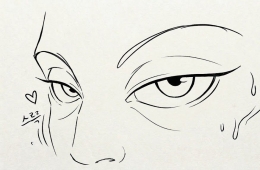
Goni’s “Telescope” (2026). By layering images of nearby objects such as keys, bottles, and glasses on the screen, the work explores the physical and psychological distance between distant landscapes and the objects before our eyes. More modest...
View original imageGoni Solo Exhibition: "Telescope"
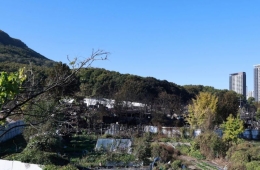
A telescope brings distant things closer, but it cannot take you there. Goni makes that remaining distance a subject of painting. The artist, who has spent long periods looking closely at furniture and small objects at home, turns in this exhibition to the outdoors, including views beyond the window, ancient tombs, historic sites, and parks. Placing objects at different distances on the same canvas, from nearby keys, bottles, and glasses to far-off landscapes, Goni asks how closely we can see things and how much. The places where paint has spread and dried, along with the partial collages, seem less like records of objects' shapes than traces left by the time spent looking at them.

Goni's "Condensation 5" (2026). Through faint fields of color, grids, and partial collage, it captures how a subject observed over time fades from memory and then resurfaces. More modest...
View original imageThe exhibition title also holds a personal distance. The artist's maternal grandfather often spoke of his hometown, which he could no longer return to after the division of Korea, and Goni visited Baengnyeongdo Island, from which the hometown could be seen. The experience of one's gaze crossing first to land one cannot reach echoes the paradox of the "telescope." The more clearly we draw distant things into view, the more clearly we see that we cannot reach them. Painting, too, is less a window that substitutes for reality than a tool for looking at the distance that remains between us and what we see. Through November 27, at The Soso in Jung-gu, Seoul.
© The Asia Business Daily. All rights reserved. Unauthorized AI training and use prohibited.