MBK Rebuts Controversy Over Osstem's High Dividends, Homeplus Job Cuts: "Claims Are Inaccurate"
"Osstem Borrowing: KRW 1 Trillion, 40% of Funds"
"No Artificial Restructuring at Homeplus"
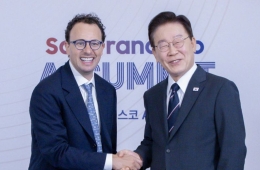
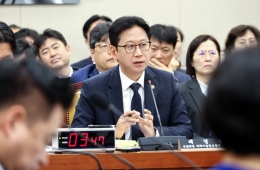
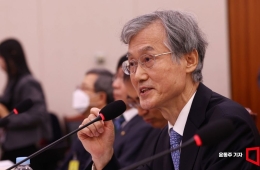
MBK Partners, a domestic private equity fund (PEF) manager, issued a rebuttal on October 27 to claims that it had relied on excessive leveraged buyouts, high dividends and repeated restructuring during its acquisition and operation of Osstem Implant and Homeplus.

MBK said that, in the case of Osstem Implant, the acquisition loan was actually KRW 1 trillion (40% of the required funds), not the KRW 1.7 trillion cited by critics; that its 2026 dividend was about 60% lower than the previous year; and that the company had 444 more employees than immediately before the acquisition. Regarding Homeplus, MBK said there had been no artificial restructuring before it filed for rehabilitation, that store sales were a choice made to ensure the company's survival rather than to recover its investment, and that it had provided funding and guarantees totaling KRW 400 billion since the rehabilitation process began.
MBK Partners issued a statement to clarify its position, saying that some claims made at a press conference the previous day at the National Assembly Communication Center were inaccurate and that it wanted to set the record straight and address misunderstandings.
"Osstem: KRW 1.7 trillion was a bridge loan"

The Osstem Implant branch of the Metal Workers' Union had previously claimed that the MBK consortium borrowed KRW 1.7 trillion when it acquired the company for about KRW 2.5 trillion in 2023.
MBK said the figure represented "only the size of a bridge loan temporarily borrowed from financial institutions when a large deposit was required for a short period as part of the tender offer process." It added that "leverage (borrowed funds) accounted for only 40% of the funds required for the tender offer and delisting." MBK also said the special purpose vehicle was established not by MBK alone but together with UCK Partners and Chairman Choi Kyu-ok, adding that "the company is currently managed jointly by the three parties."
In response to claims that high dividends had weakened the company, MBK said, "During 2023 and 2024, the two shareholders, MBK Partners and UCK Partners, and Chairman Choi Kyu-ok received no dividends and focused on enhancing the company's value." It added that "dividends were not paid until 2025 and 2026," and said the 2026 dividend had been "substantially reduced by about 60% from 2025 to reflect the company's business conditions."
In response to the claim that "368 regular employees left within a year," MBK said the workforce had grown from 2,291 at the end of 2022, immediately before the acquisition, including 2,182 non-fixed-term employees, to 2,735 in the first half of 2026, including 2,627 non-fixed-term employees. MBK said, "Two years after the acquisition, the number of non-fixed-term employees had risen to 2,933, and total employment at one point exceeded 3,000." It added that "employment at overseas subsidiaries fluctuates from time to time depending on each country's employment system and business conditions."
"Homeplus: No artificial restructuring was ever carried out"

The Homeplus branch of the Mart Workers' Union and others claimed that asset sales and workforce reductions had been repeated.
MBK countered, "From the time of our investment until the filing for rehabilitation, we never once carried out artificial workforce restructuring." It added that "in 2019, we converted all approximately 14,200 indefinite-term contract workers to regular employees."
Regarding store sales and closures, MBK said, "We have never disposed of assets to recover the majority shareholder's investment," and claimed that they were "unavoidable strategic choices to ensure the company's survival and lay the groundwork for sustainable growth." Excluding chronically unprofitable stores and others, MBK said it had "made every effort to maintain the number of stores and employment by choosing a sale-and-leaseback (SLB) approach, whereby stores are redeveloped and then reoccupied."
MBK said that since the rehabilitation proceedings began in March 2025, it had "provided a total of KRW 400 billion in funding to fulfill its social responsibility." The amount consisted of KRW 40 billion in personal contributions, a KRW 60 billion DIP loan from Curious, a KRW 100 billion direct loan, and a KRW 200 billion joint guarantee for a DIP loan from Meritz Financial Group. MBK said that it and its executives were repaying a substantial portion of the guaranteed debt and direct loans, adding, "We even provided our homes as collateral."
Hot Picks Today
 "Wow, Have Middle-Aged Men Had This All to Themselves?"... Women in Their 20s and 30s Find Comfort in a Standing Drink
- "Koreans Spend 1 Million Won Each and Come Back"... 'They Said They Were Going for Value for Money,' but Open Their Wallets Wide in Japan
- They Earn “430 Million Won a Year” Yet Receive Government Aid... AI Hub Declares Emergency Over “8.8 Million Won Monthly Rent”
- "Naked Again?" Controversial Actress Crosses a Line... Slammed for Sexualizing 'Child Characters'
- "They Get a Good Night's Sleep and Earn Twice My Salary... Honestly, I'm So Jealous I Could Die": Civil Servant's Post Targeting Firefighters Sparks Outrage
MBK also said, "Cash inflows from operations and financial support from MBK Partners were used first and foremost to pay employees' wages," and stated that KRW 763 billion in wages had been paid through July. MBK said, "Under an agreement between labor and management, salaries are currently being paid with a two-month delay, and we are making every effort to normalize operations."
© The Asia Business Daily. All rights reserved. Unauthorized AI training and use prohibited.