"Talent Is Key"... Jeonnam-Gwangju Education Office to Train 2,000 Semiconductor Professionals
Targeting a 2029 Opening for Gwangju Semiconductor Meister High School
Restructuring 10 Vocational High Schools to Train 800 Semiconductor Professionals Annually
As the Honam region draws up a blueprint to become a new hub for South Korea’s semiconductor industry, the Jeonnam-Gwangju Integrated Special City Office of Education has begun laying the groundwork for “tailored talent development,” a key driver of that effort.
The plan is to build a robust vocational education ecosystem that will produce 2,000 semiconductor professionals each year by 2030, making it possible for students to learn locally and settle into jobs at local companies—a model of “learning and working locally.”

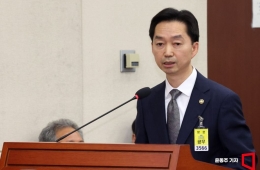
The Jeonnam-Gwangju Integrated Special City Office of Education announced its "Policy for Nurturing Semiconductor Talent" at the Gwangju Education Training Institute. Provided by the Office of Education.
View original imageOn October 26, the Jeonnam-Gwangju Integrated Special City Office of Education held its first public policy hearing at the Gwangju Education Training Institute and announced its “Policy for Nurturing Semiconductor Talent,” outlining these plans.
The policy aims to proactively address demand for skilled workers arising from large-scale investment in the southwestern semiconductor industry and to strengthen the professional capabilities of students at local vocational high schools. In particular, the office plans to complete a system for training about 2,000 semiconductor industry professionals annually by 2030, including the establishment of the tentatively named Gwangju Semiconductor Meister High School, which is targeted to open in March 2029.
The talent development plan is divided into four areas: fostering semiconductor-specialized schools (630 students); restructuring departments at vocational high schools (800 students); education linked to joint training centers and local universities (300 students); and job training tied to corporate recruitment (270 students).
The semiconductor-specialized schools will operate under two models: three Jeonnam-Gwangju Semiconductor Meister High Schools and four Jeonnam-Gwangju-style Glocal Meister High Schools. The Office of Education will consider several options, including converting existing specialized high schools, establishing new Meister high schools, and shifting schools to different industrial fields, and will finalize the implementation approach and selected schools by November. Each school is planned to enroll 128 students per grade.
The plan also includes overhauling local vocational high schools. Departments at 10 vocational high schools in Jeonnam and Gwangju will be restructured around semiconductor-related occupations. Key departments in electrical engineering, electronics, information technology, and communications will shift their focus to semiconductor equipment and control, while foundational departments in mechanical engineering and chemical engineering will focus on semiconductor processes, equipment, and back-end manufacturing. The changes are expected to train 800 students annually.
The Office of Education will also make active use of educational resources outside schools. It will partner with local universities and research institutions, including Chonnam National University, Chosun University, Mokpo National University, and Sunchon National University, to offer joint courses tailored to industry demand in areas such as semiconductor equipment, processes, and data centers. It also plans to establish a work-based training system linking industry, academia, and research to companies’ actual hiring needs, preparing talent who can move directly into the workplace.
The public hearing also featured a policy presentation, a keynote address by Lee Gyupil, former vice president of Samsung Electronics’ Semiconductor Research Institute, and a discussion among experts. Seo Unseok, principal of Chungbuk Semiconductor High School—the country’s first Meister high school specializing in semiconductors—attended in person and offered practical advice on plans for the proposed Gwangju Semiconductor Meister High School.
Superintendent Kim Daejung said, “For large-scale investment in the semiconductor industry to translate into tangible growth for the region, it is crucial to systematically develop skilled talent with the capabilities demanded by industry.” He added, “We will build a vocational education system that precisely meets industry needs by fostering specialized schools and restructuring academic departments.”
Hot Picks Today
 "300,000 Won Grant" Shelved at Chuseok to Go to All Residents After All... This City Says It Will Pay Before Lunar New Year
- "Didn't Save This Money to Leave to Our Kids?"... Retired Couples Spend $10,000 on a Single Trip
- Kang Shincheol Says Military Proposed Talks After Anticipating Kim Jong Un's China Visit
- Friend Who Went Abroad Goes "Silent"... 617 South Koreans Out of Contact, What's Going On?
- "Stockpile 9 Liters of Bottled Water and Three Days' Worth of Food"... UK on Edge as Nationwide Emergency Preparedness Alert Issued
He continued, “We will deepen cooperation with industry and universities so that students can learn locally, find jobs at local companies, and settle in the region, fully realizing this model of ‘learning and working locally.’ We will also provide every support needed to help students grow into highly skilled professionals.”
© The Asia Business Daily. All rights reserved. Unauthorized AI training and use prohibited.