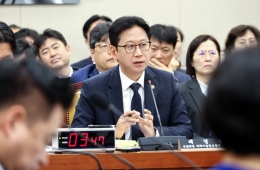
Climate Minister Kim Seonghwan: "Hard to Include All Speculative AIDC Demand in Power Plan"... Signals Possible Forecast Revision
"Fewer Demand Projections Than Expected Have Been Firmly Established"... 2040 Forecast of 11.9 GW May Be Revised
For Up to 38 GW of Demand From Three Major Megaprojects: "We’ll Meet It With a Mix of Renewables and Nuclear Power"

Climate, Energy and Environment Minister Kim Seong-hwan indicated that the government may revise its existing forecast for electricity demand from artificial intelligence data centers (AIDCs), saying it would realistically reflect the outlook in the 12th Basic Plan for Electricity Supply and Demand. With the government pursuing three major megaprojects—semiconductors, physical artificial intelligence (AI), and AIDCs—that are expected to generate up to 38 GW of additional electricity demand, Kim also said the government would meet rising demand by expanding both renewable energy and nuclear power.
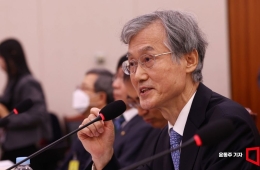
At a comprehensive audit by the National Assembly’s Climate, Energy, Environment and Labor Committee on October 26, People Power Party lawmaker Lee Jong-bae asked whether the forecast for AIDC electricity demand might be scaled back. Kim replied, “It would be difficult to include all speculative demand in the 12th Basic Plan. We will reflect AIDC electricity needs in the plan appropriately, taking into account companies’ plans and realistic demand.” He added, “We will make sure not to overestimate or underestimate demand.”
Lee said, “There have been reports that the Ministry of Climate, Energy and Environment is discussing cutting its previous forecast for electricity demand from AIDC megaprojects by half, reducing it by 3 to 4 GW.” He added, “The president announced a major push for AIDCs, which are essential in the AI era, but the public suspects the minister intends to scale back the plans.”
In response, Kim said, “There is, in fact, a global debate over how much AIDC demand should be included in the 12th Basic Plan.” He explained, “When we announced the three major megaprojects, we tried to reflect companies’ projected demand as much as possible. But as work has proceeded, we have found that fewer of those demand projections than expected have been firmly established.”
In August, the Demand Forecasting Subcommittee of the General Committee for the 12th Basic Plan projected peak AIDC electricity demand of 11.9 GW in 2040. That was an increase of 7.9 GW in just four months from the 4.0 GW forecast presented in April. The estimate incorporated 10.8 GW of projects with specific plans, out of 20.8 GW in contracted power capacity cited by companies.
At the audit, lawmakers also raised concerns that the additional electricity demand from the three major megaprojects could conflict with the 2035 Nationally Determined Contribution (NDC). According to Lee, the government’s three major megaprojects are expected to create up to 38 GW of additional electricity demand if fully realized.
“The global trend in addressing the climate crisis is to reduce fossil fuel use and shift toward renewable energy. At the same time, the AI revolution is driving a sharp increase in electricity demand,” Kim said.
He added, “We cannot meet electricity demand by relying mainly on coal. The global trend—and Korea’s reality—is that we need to meet rising demand by expanding a mix of renewable energy and nuclear power.” He stressed, “We will pick up the pace and act decisively to ensure we can carry out a major transformation of the power sector and prepare well for the AI revolution.”
Kim also signaled that the government may revise coal power operating standards and the pricing system for energy storage systems (ESS) to support renewable energy expansion. At the audit, Democratic Party of Korea lawmaker Park Ji-hye said, “We emphasize an energy transition centered on renewable energy, but many parts of the power system have yet to change.” She argued that the existing power market operating system was designed to favor large-scale power sources such as nuclear and coal. According to Park, coal-fired power generation rose 15% through August this year compared with the same period last year, while greenhouse gas emissions in the energy conversion sector increased by about 10%. Renewable energy output curtailment in May also rose 55% from the same month last year.
Kim responded, “This year, in particular, we may not have sufficiently reviewed this issue while implementing a policy of additionally operating nuclear and coal-fired power plants to curb gas demand as much as possible.” He added, “Once the effects of the war in the Middle East have subsided, we will actively consider measures such as lowering the minimum output requirement for coal-fired power plants.”
Concerns that the introduction of regional electricity pricing could cause losses for power generators were also raised. Democratic Party of Korea lawmaker Shin Jeong-hoon criticized the introduction of a regional marginal price system (LMP), saying, “The introduction of regional wholesale electricity pricing is creating significant concerns about energy companies’ confidence in their investments.”
The government is pursuing a plan to cut industrial electricity rates in the Yeongnam and Honam regions by up to 10%. The resulting annual decline in Korea Electric Power Corporation’s revenue is estimated at 2.8 trillion won. Introducing LMP could lower the corporation’s power procurement costs by setting different wholesale electricity prices by region, but concerns have been raised that private power generators in those regions could incur losses as their sales prices fall.
Hot Picks Today
 "Koreans Spend 1 Million Won Each and Come Back"... 'They Said They Were Going for Value for Money,' but Open Their Wallets Wide in Japan
- "You Mean Only Middle-Aged Men Got to Enjoy This?"... Where Japanese Women in Their 20s and 30s Are Flocking
- Man in His 60s Arrested for Dumping Body in Guro-gu, Man in His 80s for Ordering It (Updated)
- "Naked Again?" Controversial Actress Crosses a Line... Slammed for Sexualizing 'Child Characters'
- "They Get a Good Night's Sleep and Earn Twice My Salary... Honestly, I'm So Jealous I Could Die": Civil Servant's Post Targeting Firefighters Sparks Outrage
Kim responded, “We will pursue a range of measures to minimize losses.”
© The Asia Business Daily. All rights reserved. Unauthorized AI training and use prohibited.