Q4 Bank Lending to Remain Tight: 'Status Quo' for Households, Higher Bar for Businesses
Bank of Korea: Results of the Survey of Loan Officers at Financial Institutions
It is expected to remain difficult to get a bank loan in the fourth quarter of this year. However, while the tightening of household lending is expected to ease, the bar for corporate loans is likely to rise further.
According to the results of the “Financial Institutions’ Lending Practices Survey” conducted by the Bank of Korea on loan officers at financial institutions, the composite lending attitude index for banks stood at -11 in the fourth quarter, marking its seventh consecutive month in negative territory. A negative index means that more financial institutions said they would tighten lending than ease it.

By borrower type, banks are expected to maintain their tightening stance on household loans, but with less intensity. The index for household housing loans is projected to approach 0 in the fourth quarter, up from -17 in the third quarter, indicating that lending conditions will remain at the previous quarter’s level. The index for general household loans rose to -8 from -28 over the same period, indicating less tightening than in the previous quarter. In other words, banks are likely to moderate the pace of tightening rather than further raise an already high bar for loans.
By contrast, more respondents said they would take a stricter approach to corporate loans. The lending attitude index for large companies remained positive from the fourth quarter of last year through the second quarter of this year and held at the previous quarter’s level in the third quarter, but fell to -8 in the fourth quarter, signaling a return to a tightening stance. The index for small and medium-sized enterprises (SMEs) turned negative at -19 in the third quarter and remained at -19 in the fourth quarter, indicating that lending attitudes are expected to tighten further from the previous quarter.
A Bank of Korea official said, “With external conditions remaining highly uncertain and loan quality recently showing signs of deterioration, lending attitudes toward both large companies and SMEs are expected to tighten.”
Regarding household loans, the official said, “With banks’ lending capacity restored following the August 13 real estate measures, housing-related loans are expected to remain at the previous quarter’s level, while the tightening stance on credit loans and other lending is expected to continue.”
In the fourth quarter, demand for corporate loans is expected to remain broadly at the previous quarter’s level, while household loan demand is forecast to rise, led by housing-related loans.
The composite loan demand index for domestic banks stood at 6, maintaining its forecast of an increase following a reading of 13 in the previous quarter. Demand for corporate loans is expected to rise somewhat among large companies (3), driven by efforts to secure liquidity in advance against external uncertainty and the impact of rising corporate bond yields. Demand among SMEs (0) is expected to remain at the previous quarter’s level.
Household loan demand is expected to increase steadily for housing-related loans (14), while demand for general loans (3) is also forecast to rise slightly.
Domestic banks expect credit risk for both businesses and households to increase in the fourth quarter. The composite credit risk index rose to 29 from 26 in the previous quarter.
The credit risk index for SMEs stood at 31, down from 33 in the previous quarter, but concerns about their credit risk remained higher than for large companies and households. Meanwhile, credit risk concerns rose for large companies, with the index increasing from 3 to 6, and for households, from 19 to 28.
Among nonbank financial institutions, lending attitudes are expected to tighten from the previous quarter in every sector except credit card companies. Lending standards are expected to tighten at mutual savings banks (-10), mutual finance cooperatives (-31), and life insurance companies (-3). For credit card companies, the index is expected to approach 0 in the fourth quarter from -14 in the third quarter, indicating that the tightening stance will remain at the previous quarter’s level.
Credit risk is also expected to remain high, particularly at mutual finance institutions (40), life insurance companies (20), and savings banks (17). Loan demand is expected to increase slightly among both businesses and households at savings banks and life insurance companies. By contrast, demand is forecast to decline at mutual finance institutions and credit card companies amid rising interest rates and slowing demand for stock investments.
Hot Picks Today
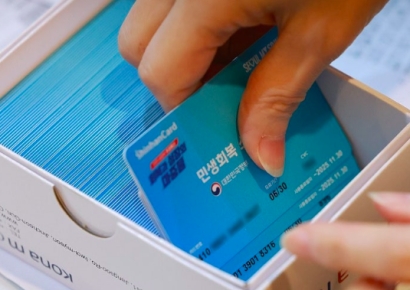 "300,000 Won Grant" Shelved at Chuseok to Go to All Residents After All... This City Says It Will Pay Before Lunar New Year
- "Didn't Save This Money to Leave to Our Kids?"... Retired Couples Spend $10,000 on a Single Trip
- IBK's Cumulative Net Income Through Q3 Falls 2% to KRW 2.2141 Trillion
- Friend Who Went Abroad Goes "Silent"... 617 South Koreans Out of Contact, What's Going On?
- "Stockpile 9 Liters of Bottled Water and Three Days' Worth of Food"... UK on Edge as Nationwide Emergency Preparedness Alert Issued
The survey was conducted from September 2 to 16, 2026, and covered a total of 203 financial institutions. It asked about trends over the past three months and the outlook for the coming three months.
© The Asia Business Daily. All rights reserved. Unauthorized AI training and use prohibited.