Rep. Shin Seongbeom Urges Safety and Quality Safeguards as Government Shortens Housing Supply Timeline
Government Seeks to Cut Housing Supply Timeline from 68 to 37 Months... Need to Resolve On-the-Ground Conflicts
Cites Farmland Survey to Stress Need for Thorough Reviews During Policy Implementation
Calls for Reforms to Land Transaction Permit System and Owner-Occupancy Requirements
National Assembly member Shin Seong-beom (People Power Party; Sancheong, Hamyang, Geochang and Hapcheon), a member of the National Assembly's Land, Infrastructure and Transport Committee, said that the government's plan to shorten the housing supply timeline must be accompanied by thorough reviews of safety, quality and environmental impacts, not just efforts to speed up projects.
Shin said he understood the need for the government's policy to expand housing supply, but stressed that essential administrative procedures and on-site reviews must not be neglected in the process of shortening project timelines.

[Photo courtesy of Rep. Shin Seongbeom's office] National Assembly member Shin Seongbeom (People Power Party; Sancheong, Hamyang, Geochang and Hapcheon). He stressed that the government’s plan to shorten the timeline for housing supply requires thorough vetting to ensure safety, environmental protection and housing quality.
View original imageReferring to President Lee Jae-myung's emphasis on speeding up housing supply at a Cabinet meeting and an on-site meeting in the Incheon Gyeyang district on October 20, Shin said, "I support the goal of supplying housing quickly, but we must be careful to ensure that excessively shortening timelines does not lead to other problems."
He said the feasibility of the plan and conditions on the ground must both be reviewed in response to the government's previously announced real estate measures, which set a target of reducing the time from announcing candidate sites for public housing developments to starting construction by 31 months, from 68 months to 37 months.
Shin cited land compensation issues, permitting consultations between local governments, resident opposition and environmental impact assessments among the various factors contributing to delays in public housing development projects.
He said there may be limits to shortening project timelines through administrative streamlining alone, and that specific measures to facilitate coordination among relevant agencies and resolve conflicts with residents must be implemented in tandem.
Shin also referred to controversy over the use of statistics and changes to the survey scope during the government's nationwide survey of farmland.
He said the area covered by the farmland survey was expanded from an initial 1.15 million hectares to 1.36 million hectares, and that farmland transaction statistics produced different results depending on the periods and criteria used for aggregation.
He also said that some data showed a decline in transactions when reanalyzed according to the survey period, despite the increase in farmland transactions reported by the Ministry of Agriculture, Food and Rural Affairs, adding that the appropriateness of the statistical interpretation should be reviewed.
According to data presented by Shin, the Ministry of Agriculture, Food and Rural Affairs said transactions of dry fields and paddy fields from January through July this year increased 2.2% from the same period a year earlier.
Shin's office, however, said that an analysis of transactions of undeveloped land from May through July using Korea Real Estate Board data showed a 6.7% decline. It also said an analysis of sales contracts for dry fields, paddy fields and orchards from May 18 through July 31, based on the Ministry of Land, Infrastructure and Transport's Actual Transaction Price Disclosure System, showed a 5.2% decline from the same period a year earlier.
However, the figures differ in their aggregation periods, transaction categories and statistical criteria, limiting the extent to which they can be directly compared under identical conditions.
Referring to the farmland survey as an example, Shin stressed that verification during policy implementation and gathering input from people on the ground are more important than focusing solely on targets for shortening timelines, including in housing supply policy.
"We should not excessively compress the procedures and review processes required to meet timeline reduction targets," he said. "We must take particular care to ensure that expanding housing supply does not affect safety or the environment, or lead to a decline in housing quality."
Shin also said the impact of the land transaction permit system and owner-occupancy requirements on the supply of rental housing should be assessed.
Raising concerns that the regulations could constrain the supply of rental housing, he said their impact on the land transaction permit zones and the owner-occupancy requirements should be reviewed, and that necessary measures should be taken to help stabilize the jeonse and monthly rental markets.
Shin's remarks focused not on the government's overall direction to expand housing supply, but on potential problems during project implementation and the need for institutional improvements. Whether shorter supply timelines can be achieved alongside safety and quality controls is expected to be a key issue going forward.
Streamlining administrative procedures to expand housing supply can bring forward delivery timelines, but on-the-ground challenges, including land compensation, resident conflicts and environmental impact assessments, must also be addressed.
Hot Picks Today
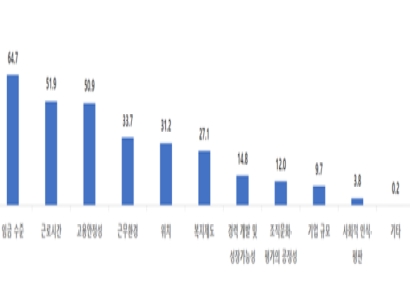 "Please Pay Me at Least 3 Million Won a Month": More Than Half of Young People Today Prioritize "Working Conditions" Over Company Size
- Selling Like Crazy Every Year... 30-Year-Old Hetbahn Takes on a New Challenge: Tastes Better Than "Mom's Home Cooking" [On-Site Report]
- Ran 18 km With 9-Year-Old Tied to Him at the Waist... "Man Banned From Competing for 3 Years"
- "Hey, Lady, Teach Your Kids to Behave!" ... 300,000 Won in Cash and a Bodily Injury Claim Demanded Over Child's Door Ding
- Beachgoer Finds 'Plastic' That Turns Out to Be Perfume Ingredient Worth More Than Twice as Much as Gold
The feasibility of project timelines and safety and quality management systems should be reviewed to ensure that the government's supply targets lead to actual construction starts.
© The Asia Business Daily. All rights reserved. Unauthorized AI training and use prohibited.