Joo Byung-ki: 1% of Revenue in Fines for Refusing Investigations; Coercive Fines for Withholding Materials
Calls for legal amendments amid controversy over Coupang's refusal to cooperate with an investigation
Stresses need for coercive fines when companies refuse to submit materials
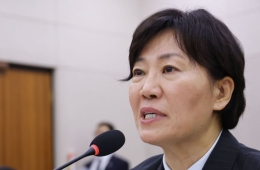
Fair Trade Commission Chairman Joo Byung-ki said on October 25, "It would be far more efficient to strengthen investigative authority through amendments to the law, allowing fines of around 1% of total sales to be imposed when companies refuse to cooperate with investigations, so that penalties do not become a slap on the wrist."

Fair Trade Commission Chairman Joo Byung-ki (left) appeared on KBS Sunday Diagnosis Live. KBS website.
View original imageAppearing on KBS's "Sunday Diagnosis Live" that day, Chairman Joo was asked about calls for the introduction of compulsory investigative powers. He said, "The current administrative investigative authority is sufficient," but added, "In the future, we will need to strengthen investigative authority somewhat through amendments to the law." He was outlining a fundamental solution to Coupang's recent refusal to allow an on-site inspection by the Korea Fair Trade Commission (KFTC) and its subsequent filing of a lawsuit. He also addressed the refusal to comply with an order to submit materials during an investigation into Hanwha Group's trademark rights transactions, saying, "The law should be amended to allow coercive fines to be imposed when companies fail to comply with orders to submit materials."
However, as the law has not yet been amended, the KFTC plans to use all the enforcement measures currently at its disposal. Chairman Joo said, "Coupang has grown into a heavyweight company representing South Korea, and it must act responsibly in keeping with its size. When a heavyweight player abuses its market power, it is like a weapon against the economically vulnerable." He added, "We have sent a review report recommending administrative fines for obstruction of an investigation, and deliberations are currently underway." In response to concerns that the Coupang investigation could escalate into a diplomatic issue, he said, "The KFTC does not discriminate between countries in enforcing the law. There is a journal called Global Competition Review that ranks competition authorities around the world, and the KFTC has ranked among the top for the past 10 years." He countered, "A comparison of surcharge rates imposed in the past could even suggest that the KFTC enforces the law much more stringently against domestic companies."
Regarding allegations that information was leaked in advance during an on-site investigation of Hanwha Group, he said, "We have identified indications of some obstruction of the investigation and are looking into them. We will take thorough action through an internal inspection." He also addressed the policy to raise the required ownership stake in listed subsidiaries held by holding companies from 30% to 50%, saying, "This restores the requirement to the level it was at before it was lowered." He explained, "The point is that companies should invest under their own responsibility, rather than using other people's money, as global companies with wholly owned subsidiaries do."
Explaining why an investigation into collusion among food companies was chosen as the first case for the recently revived Special Investigation Planning Unit, dubbed the "Grim Reaper of the Business World," he said, "It is because markets that are most closely tied to people's daily lives have become monopolized or oligopolized." In response to criticism that collusion keeps recurring because penalties are too lenient, he said, "In April this year, we raised the minimum surcharge rate for serious cartel conduct from 0.5% to 10% through a revision to the relevant public notice." He signaled that the KFTC would thoroughly recover amounts exceeding the unjust profits companies had gained.
On controversy over delivery app commissions, he again emphasized the need to enact the Online Platform Fairness Act, known as the On-Platform Act. Chairman Joo said, "South Korea's delivery app market is twice the size of Japan's and larger than the markets of the United Kingdom and Germany combined," describing the introduction of a regulatory framework tailored to the platform economy as urgent. Responding to claims that regulation would stifle corporate innovation, he dismissed the argument, saying, "Preventing exploitation and abuse by giant platforms will allow the innovation ecosystem of the many businesses and consumers that transact on them to thrive." He argued that platform regulation would instead promote innovation across the market as a whole.
Hot Picks Today
 "Please Pay Me at Least 3 Million Won a Month": More Than Half of Young People Today Prioritize "Working Conditions" Over Company Size
- Selling Like Crazy Every Year... 30-Year-Old Hetbahn Takes on a New Challenge: Tastes Better Than "Mom's Home Cooking" [On-Site Report]
- Ran 18 km With 9-Year-Old Tied to Him at the Waist... "Man Banned From Competing for 3 Years"
- "Hey, Lady, Teach Your Kids to Behave!" ... 300,000 Won in Cash and a Bodily Injury Claim Demanded Over Child's Door Ding
- Beachgoer Finds 'Plastic' That Turns Out to Be Perfume Ingredient Worth More Than Twice as Much as Gold
Finally, Chairman Joo said, "The KFTC has a tremendous responsibility to address polarization in the South Korean economy between large and small businesses and across social classes." He added, "It is important to establish an inclusive and fair market system in which economically vulnerable parties can compete on equal terms."
© The Asia Business Daily. All rights reserved. Unauthorized AI training and use prohibited.