"The Best Time Since Kim Jong Un Took Power"... North Korea's Growth May Exceed Estimates
U.S. Expert: "Income from Russia to Continue for 2-3 Years After War Ends, Driven by Rearmament Demand"
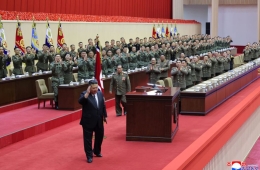
An American expert has said that North Korea is experiencing the most favorable economic conditions since North Korean leader Kim Jong Un took power, thanks to expanded military and economic cooperation with Russia. He also suggested that North Korea's actual economic growth rate may have exceeded the Bank of Korea's estimate.

On Oct. 23 local time, Troy Stangarone, a U.S. expert on the Korean Peninsula's economy, said at George Washington University's North Korea Economic Forum, "This is clearly the best time since Kim Jong Un took power."
He cited expanded cooperation with Russia following the war in Ukraine, stronger economic cooperation with China, and increased income from cybercrime as the reasons behind this assessment. He said these factors may have enabled North Korea to earn more money now than it could expect to secure over the next several years.
He projected that income from cooperation with Russia would continue for some time even if the war in Ukraine ends. Since Russia will need to acquire weapons and military supplies to rebuild its military after the war, North Korea could earn additional income over the next two to three years, he said.
However, he predicted that the funds flowing into North Korea could decline if Russia's demand for rearmament falls.
He also suggested that North Korea's actual economic growth rate may have exceeded the Bank of Korea's estimate. In July, the Bank of Korea estimated that North Korea's real gross domestic product (GDP) grew 3.5% last year from the previous year.
Stangarone said that even if the funds flowing from Russia to North Korea amounted to only half the estimated figure, they would still represent substantial income, and that North Korea's economy may have grown more than expected.
However, he noted that it is unclear whether the current economic boom will lead to long-term growth. The key, he said, is whether North Korea can use the funds secured through external cooperation to build a sustainable economic structure.
Hot Picks Today
 "Let's Give Unemployment Benefits to Those Who Find Jobs Quickly and Stay Long-Term"... Petition Takes Aim at Compensation for 'Voluntary Resignations'
- " 'We're Selling at Half Price' " SH's Ambitious Sale Draws Applications for Just 2 Lots... Risk of Falling Into the Red for the First Time in 14 Years
- Kim Jong Un Sends World Into a Frenzy, Then Appears at Major Military Event, Making 'Death Rumors' Look Moot
- '46.8% Gap' SK hynix Shares Trade at a Deep Discount Only in Korea... Why Has the Gap Widened? [Weekend Money]
- "Shares Hit Daily Limit on 56 Billion Won News"... Marubeni Launches Tender Offer for K-Beauty Firm of 'Chae Sira's Husband' Kim Taewook
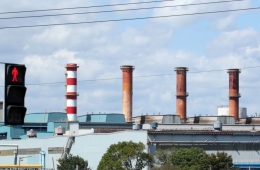
He cited chronic energy shortages as a major obstacle to economic growth. Even if factory construction and industrialization expand, production and economic growth could be limited unless sufficient energy, including electricity, is supplied to operate them.
© The Asia Business Daily. All rights reserved. Unauthorized AI training and use prohibited.