I Thought Only 'Old Guys' Ate It... Young People Are Hooked on This 'Unusual Food' at Risk of Disappearing? [Delicious Stories]
Akita Prefecture's Regional Specialty: Iburigakko
Pickled Daikon Dried over Hearth Smoke to Beat Heavy Snow
Winning Over Young People...Reinvented as an Unusual Dessert
Japan has pickled radish with a smoky aroma. Called Iburi Gakko, or Iburi-zuke, it is a regional specialty. Made in Akita Prefecture in the Tohoku region of Honshu, Iburi Gakko has a brown hue, as if charred. Thanks to its distinctive flavor, it is popular as a snack to accompany drinks and as an unusual dessert paired with Western foods such as cheese.
A distinctive specialty made by smoking and pickling daikon radish

Iburigakko, daikon radish that has been smoked and pickled. Unlike ordinary pickled radish, it is browned by the smoke. Photo via the Iburigakko Promotion Council website.
View original imageIburi Gakko is a type of pickled radish made by pickling dried daikon. Unlike the bright yellow pickled radish commonly eaten in Japan, however, it has a brown hue that looks almost blackened. To make it, daikon is dried thoroughly over hot smoke, then pickled with rice bran, salt, sugar, and other ingredients. Like ordinary pickled radish, it tastes sweet and sour and has a pleasantly chewy texture, but the bitter, smoky aroma characteristic of smoked foods gives it a distinctive flavor.
Why did people in Akita Prefecture begin making pickled radish smoked until it was charred? According to the Iburi Gakko Promotion Council of Japan, Akita Prefecture was notorious for the heavy snowfall that arrived early, between late autumn and winter, when turnips were grown. Making pickled radish requires drying daikon outdoors in a dry place, but the bad weather in Akita left farmers with little time to dry it.
In the past, when there were no refrigerators or other facilities for storing vegetables, farmers had no way to store food to last through the winter without dried daikon. Farmers in Akita came up with a clever solution: they dried turnips by smoking them over the hearth indoors. This gave rise to Iburi Gakko, smoked pickled radish. The Iburi Gakko Promotion Council takes pride in the dish, describing it as "a food that embodies the wisdom of our mothers, who would not let the cold and heavy snow of winter defeat them."
From a snack for adults to enjoy with drinks to a dessert

“Iburi Sand,” which spread online and became a global sensation. Cream cheese is spread between two slices of Iburi Gakko. Screenshot from the online community Reddit.
View original imageWith the development of refrigeration in the 20th century, there was no longer much need to make Iburi Gakko, but orders kept coming thanks to enthusiasts who were captivated by the distinctive flavor of smoked pickled radish. Artisans specializing in making and selling Iburi Gakko began to emerge in Akita Prefecture.
Iburi Gakko was once regarded as little more than a regional specialty enjoyed by adults, but in recent years it has attracted the attention of younger people. One reason is that its distinctive smoky flavor pairs well with strong Western spirits such as whisky. Local farms that introduce Iburi Gakko also recommend it as a snack to enjoy with spirits and Japanese sake.
Meanwhile, a dessert dubbed "Iburi Sand" has also become a huge hit: thick cream cheese is sandwiched between two thin slices of Iburi Gakko. Iburi Sand became a sensation after spreading among local social media users on TikTok, Instagram, and X, and is now famous enough that people in South Korea are trying it too. Some South Korean online shopping malls even sell Iburi Gakko and cream cheese together as a set.
A second golden age, but artisans struggle to find successors

A craftsman in Akita Prefecture, Japan, makes Iburigakko using traditional smoking methods. Most artisans reportedly have been unable to find successors. Nikkei YouTube of Japan
View original imageIburi Gakko has just entered its second golden age, but, ironically, it is at risk of disappearing from farms in Akita Prefecture. The reasons are Japan's increasingly strict food regulations and the longstanding aging of the farming population. Japan's Food Sanitation Act, revised in 2024, requires small-scale food producers to meet high hygiene standards as well. This has had the unintended effect of imposing substantial additional production costs on Iburi Gakko artisans, most of whom work on a small, home-based scale.
The most urgent problem, however, is the lack of young artisans to take over from the traditional Iburi Gakko makers. In a 2022 survey of 300 farmers in Akita Prefecture conducted by the Iburi Gakko Promotion Council, 40% of all artisans said, "It is difficult to continue making pickled radish."
Hot Picks Today
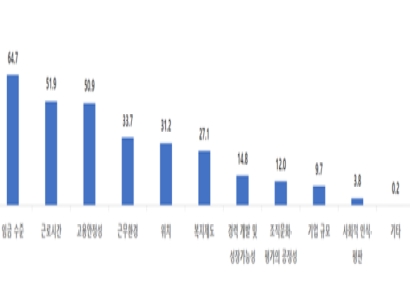 "Please Pay Me at Least 3 Million Won a Month": More Than Half of Young People Today Prioritize "Working Conditions" Over Company Size
- Selling Like Crazy Every Year... 30-Year-Old Hetbahn Takes on a New Challenge: Tastes Better Than "Mom's Home Cooking" [On-Site Report]
- "Americans Would Be Amazed If They Came": Wide-Eyed at a Sight They've Never Seen Before... Foreigners Also Fall for K-Baseball [K-Holic]
- "Hey, Lady, Teach Your Kids to Behave!" ... 300,000 Won in Cash and a Bodily Injury Claim Demanded Over Child's Door Ding
- Beachgoer Finds 'Plastic' That Turns Out to Be Perfume Ingredient Worth More Than Twice as Much as Gold
Even then, most of the artisans were already in their 70s, and only a handful had successors, it is said. Local governments are making every effort to preserve Iburi Gakko culture by working with farms to establish shared production centers and offering apprenticeships to young people seeking work.
© The Asia Business Daily. All rights reserved. Unauthorized AI training and use prohibited.