Supreme Court: "Medical Costs for Relapse Must Be Covered Even After Vaccine Disability Compensation"
Guillain-Barré syndrome after a flu shot... Grade 1 disability
The Supreme Court has ruled that the state must cover medical expenses incurred before a person received disability compensation for vaccine side effects, as well as expenses for treatment after the person’s condition relapsed or worsened.

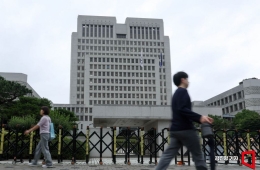
According to legal sources on October 23, the Supreme Court’s First Division, with Justice Shin Sook-hee presiding, upheld a lower court ruling in favor of the heirs of a now-deceased person identified as A, who had taken over A’s lawsuit seeking to overturn the denial of payment for additional medical expenses.
A was diagnosed with Guillain-Barré syndrome after receiving a flu vaccine in October 2014 and was classified as having a Grade 1 physical disability the following year. A was initially denied compensation but won a separate administrative lawsuit. In May 2021, the Korea Disease Control and Prevention Agency paid A approximately 325.78 million won in one-time disability compensation, medical expenses and nursing care costs. The medical expenses covered only costs incurred through July 2015.
A sought an additional approximately 136.19 million won, including unpaid medical expenses incurred through June 2021. The Korea Disease Control and Prevention Agency denied the request, citing a proviso in the Enforcement Decree of the Infectious Disease Control and Prevention Act stating that medical expenses would not be paid to someone who had received one-time disability compensation. A filed a lawsuit but died eight days before the appellate court issued its ruling, and the heirs took over the case at the final appeal stage.
The issues were whether the right to compensation passed to a victim’s heirs upon the victim’s death, and whether the proviso in the Enforcement Decree barring payment of medical expenses was invalid because it exceeded the authority delegated by the law.
The first-instance court ruled in A’s favor, finding that the proviso exceeded the scope of the authority delegated by the law and was invalid because it unfairly discriminated against people who had received one-time compensation. The appellate court also found that, because the law required medical expenses to be paid in
“full,” it was difficult to conclude that lawmakers intended to stop paying them once a person received one-time compensation.
The Supreme Court also ruled that the agency’s decision should be overturned, though for different reasons. First, the court found that the right to compensation for vaccine-related injuries was a property right and, under the Civil Act, passed to the victim’s heirs upon the victim’s death.
The court said the proviso in the Enforcement Decree was not invalid. Instead, it should be interpreted narrowly to mean that only the costs of “conservative treatment” received “after” a person had received one-time compensation to maintain their current condition were excluded from coverage. Medical expenses should be covered if the illness recurred or worsened and active treatment was needed.
The Korea Disease Control and Prevention Agency rejected the claim in full, including medical expenses incurred before the one-time compensation was paid and expenses that may have been for active treatment afterward. The court found this unlawful and said the entire decision had to be overturned because it was difficult to separate out only the expenses that should be paid.
Hot Picks Today
 Despite "Insufficient Balance" Notices, They Board Anyway... Reports of Foreign Fare Evasion Mounting
- "If It Helps My Child's Studies, It's Worth Every Penny"... U.S. Parents Open Their Wallets for $10,000 Tests
- [Exclusive] "We Came for a KRW 140,000 Trip": Following Chinese Tourists in Korea Uncovers a 'Suspicious' Tour
- "I'm paying to stay, and you want me to do the laundry and dishes too?" ... Airbnb bans excessive cleaning demands
- "Baek Jongwon Had Been Quiet, Then Hit It Big"... Waits in the 100s in U.S. Despite KRW 46,000 Pork Belly
The court found that the lower court was wrong to rule that the proviso was invalid outright, but upheld its conclusion that the entire decision should be overturned.
© The Asia Business Daily. All rights reserved. Unauthorized AI training and use prohibited.