[Weekend Money] "I'm the Last Winner" - Tire Stocks Cash In Amid Fierce Battle Between Battery Makers and Automakers
EV Tires: Higher Selling Prices and Shorter Replacement Cycles Boost Profitability
Limited Low-Priced Competition from Chinese Imports... Domestic Tire and Materials Makers in Focus
Amid fierce price competition in the electric vehicle market, securities analysts say tiremakers, rather than automakers or battery companies, are likely to enjoy long-term benefits. EVs use more expensive tires than conventional vehicles and need them replaced more often, meaning that wider adoption could boost tiremakers' profitability.
EV Tires: Higher Prices and More Frequent Replacements
According to Samsung Securities on Oct. 24, analyst Lim Eun-young said in a recent report titled "The EV Era: Tires Will Be the Lasting Winner" that tiremakers are the companies most likely to enjoy sustained sales growth and improved profitability as EVs become mainstream.
EVs are, on average, 15–20% heavier than internal combustion engine vehicles in the same class because of their batteries. To bear the extra weight, they are typically fitted with tires measuring 18 inches or more. These larger tires have average selling prices (ASPs) 20–30% higher than conventional tires.
They also need to be replaced more often. EVs generate strong driving force from the moment they start moving, causing their tires to wear out faster. Their tires are replaced every three to four years on average, one to two years sooner than those on internal combustion engine vehicles. As EVs whose sales surged around 2020 enter the main replacement cycle for their tires, demand is also expected to rise.
Profitability is also higher. Tires designed for EVs include additional materials, such as sound-absorbing foam to reduce noise and silica to improve driving efficiency. These additions account for just 1–2% of revenue in extra costs, while the selling price is 15–20% higher than that of tires for internal combustion engine vehicles.
Analyst Lim estimated operating margins of 15–18% for replacement tires for EVs, and said Hankook Tire & Technology could achieve margins of up to 30%.

Profitability is also higher than that of automakers and battery companies. Samsung Securities' operating margin forecasts for this year are 2% for Tesla's EV business, 5% for BYD and 16% for CATL. By comparison, it estimated margins of 17% for Hankook Tire's tire business and 13% for Kumho Tire.
Tiremakers Hold Up Against Low-Priced Chinese Rivals; Materials Suppliers Also Set to Benefit
Another positive is that low-priced competition from Chinese companies is relatively limited. Market share in the automaking industry can shift quickly with new vehicle sales, but the tire market is driven mainly by replacement demand from vehicles already on the road. The U.S. and European tire markets are each about twice the size of China's.
Trade barriers are also high. The United States applies anti-dumping duties and other measures to tires made in China, while the European Union (EU) has also imposed anti-dumping duties on Chinese tires for passenger cars and light trucks since July. Since tires are directly linked to safety, consumers also tend to strongly prefer brands they know.

Chinese EV maker BYD manufactures major components in-house but sources its tires externally. Both Hankook Tire and Kumho Tire supply tires to BYD. The growth of Chinese automakers therefore presents domestic tiremakers with an opportunity to gain new customers.
The shift toward higher-performance tires also creates opportunities for domestic materials suppliers. Aramid-nylon hybrid tire cords, which can withstand the weight of EVs, sell for about five times the price of conventional products. Demand is also expected to rise for SSBR, a high-performance synthetic rubber that reduces tire wear.
Taking into account the share of revenue from tire materials and profitability, Samsung Securities expects HS Hyosung Advanced Materials, Kumho Petrochemical and Kolon Industries, in that order, to benefit the most. HS Hyosung Advanced Materials is the world's leading polyester (PET) tire cord manufacturer, while Kumho Petrochemical has expanded its SSBR production capacity.
However, rising raw material prices and ocean freight rates amid the prolonged war in the Middle East pose short-term challenges. Kumho Tire also faces continued downward pressure on its share price from the sale of the creditors' remaining stake. Samsung Securities set a target price of 90,000 won for Hankook Tire and 7,500 won for Kumho Tire.
Hot Picks Today
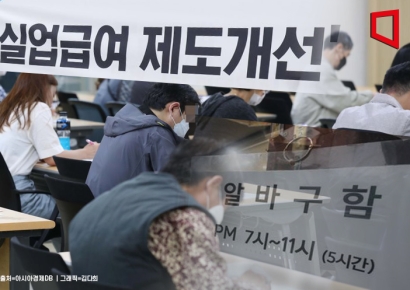 "Let's Give Unemployment Benefits to Those Who Find Jobs Quickly and Stay Long-Term"... Petition Takes Aim at Compensation for 'Voluntary Resignations'
- "How Much Can You Buy for 20,000 Won?" Bustling... Millennials and Gen Z Flock to an 'Unexpected Shopping Hotspot' [China.zip]
- "Same facial mole and gait?" ... Kim Jong Un appears in a show of defiance, rendering death rumors moot
- "Survives Fall from 35th Floor," Chinese Influencer Returns After 17 Months
- "Shares Hit Daily Limit on 56 Billion Won News"... Marubeni Launches Tender Offer for K-Beauty Firm of 'Chae Sira's Husband' Kim Taewook
"The prolonged war is spurring EV demand in countries that import energy, making tiremakers structural beneficiaries," analyst Lim added. "This is the time to use the current weakness in share prices as an investment opportunity."
© The Asia Business Daily. All rights reserved. Unauthorized AI training and use prohibited.