Justice Ministry to Cut E-7-4 Extension Documents from 12 to 7
More Bonus Points for Workers Switching to E-7-4 After Long Service at the Same Company
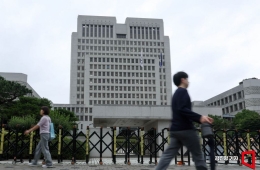
The Ministry of Justice will improve the E-7-4 skilled worker visa system, which provides a pathway to long-term residence for foreign workers in non-professional occupations. It will simplify the documents required to extend a period of stay and award additional points to workers who have been employed at the same workplace for a long time.

On Oct. 22, the Ministry of Justice announced plans to improve the E-7-4 system. The E-7-4 is a status granted to foreign nationals who entered Korea on visas such as the Employment Permit System (E-9) or the Seafarer Employment Visa (E-10) and are recognized as skilled workers after an assessment of their Korean-language ability, income and employment history. In September 2023, the annual quota was increased from 2,000 to 35,000. As of September this year, 52,648 people held this status.
First, the number of documents required when applying to extend a period of stay will be reduced from 12 or more to seven or fewer. Hi Korea, the immigration services website, will pilot an online “Work Visa Guide.” The service will let users search for occupations they can work in by occupation name or keyword, and check the qualifications, wage standards, number of available positions and required documents for each occupation. Users can enter their education, work experience and annual salary to find occupations they may qualify for, and calculate their E-7-4 points to see whether they meet the passing threshold. The service will also provide a checklist of required documents for each application type. The guidance will not have legal force; decisions on whether to grant permission will be made on a case-by-case basis by overseas diplomatic missions and immigration offices.
Incentives for long-term employment will also be expanded. Workers who have been employed by the same company for a long time will receive additional points based on their length of service when switching to E-7-4 status. The length-of-stay requirement for subsequently changing to resident (F-2) status will also be eased. The Ministry of Justice said it would establish and clarify, through an official notice, a step-by-step pathway from E-9 and E-10 to E-7-4, then F-2, and ultimately permanent resident (F-5) status.
The improvements reflect the results of a survey conducted last June with the Korea Federation of SMEs and the Human Resources Development Service of Korea. The survey covered 470 businesses and 316 foreign workers. The most commonly cited difficulties in switching status were obtaining Korean-language test scores (53.5%) and complicated procedures (18.7%) among foreign workers, and the burden of application documents and administrative procedures (30.1%) among employers. Of those surveyed, 85.3% of employers and 81.3% of foreign workers said they intended to switch to E-7-4 status. Among employers, 75.7% said the system was helpful, most commonly citing long-term employment and workforce stability (38.4%).
Hot Picks Today
 "If It Helps My Child's Studies, It's Worth Every Penny"... U.S. Parents Open Their Wallets for $10,000 Tests
- Despite "Insufficient Balance" Notices, They Board Anyway... Reports of Foreign Fare Evasion Mounting
- [Exclusive] "We Came for a KRW 140,000 Trip": Following Chinese Tourists in Korea Uncovers a 'Suspicious' Tour
- "Photos of Kim Jong Un Released by North Korea Are a Deception"... Debate Over Death Rumors Continues
- "Baek Jongwon Had Been Quiet, Then Hit It Big"... Waits in the 100s in U.S. Despite KRW 46,000 Pork Belly
Lee Jinsu, acting Minister of Justice, said, “This improvement is not intended to increase the number of foreign workers entering the country. Rather, it is intended to help foreign workers who have already worked diligently for a long time in industrial workplaces continue working with stability and settle in local communities. We will continue to listen to the voices of people on the ground and improve the system so that both businesses and workers can see and feel the benefits.”
© The Asia Business Daily. All rights reserved. Unauthorized AI training and use prohibited.