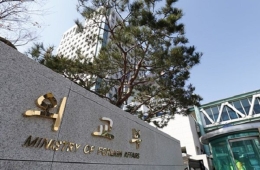
"Consumption Recovery to Spread Amid Semiconductor Boom"... Lift Next Year's Consumption by 0.4 Percentage Points
Bank of Korea assesses conditions for a recovery in private consumption
Semiconductor-driven bonuses and dividends -> increased spending, mainly among high-income households
Government transfer spending and a lower exchange rate -> improved purchasing power for middle- and low-income households
"Private consumption to expand from next year... stock price declines remain a wild card"
The Bank of Korea expects the recovery in private consumption to become more pronounced starting next year as the benefits of the semiconductor industry’s strong performance ripple through the economy. Bonuses and dividends at semiconductor companies are expected to mainly boost consumption among high-income households, while increased government transfer spending, funded by higher corporate tax revenue, is expected to primarily improve the spending capacity of middle- and low-income households. Together, these factors are estimated to raise next year’s private consumption growth rate by up to 0.4 percentage points. The recent decline in the won-dollar exchange rate has also been found to improve the purchasing power of low-income households the most.

According to the report, “October Economic Assessment: An Analysis of Conditions for a Recovery in Private Consumption,” released by the Bank of Korea on the 22nd, private consumption has continued to recover since reaching a low in the first quarter of last year, but the pace of recovery weakened somewhat in the third quarter of this year. In particular, the consumption diffusion index, which measures how broadly the recovery in consumption is spreading across product categories, is around 60. This remains below the level of 80 or higher seen around the time of the COVID-19 pandemic. The Bank of Korea said, “In terms of how broadly the recovery in consumption is spreading, its scope remains limited.”
The Bank of Korea said that the strength and durability of the recovery in private consumption will depend on how widely the benefits of the semiconductor industry’s strong performance spread to households. Accordingly, it examined the potential for the recovery to broaden in three areas - ▲ large bonus and dividend payments by major companies, including semiconductor firms ▲ increased government transfers to households ▲ improved real household purchasing power as a result of a lower exchange rate - and assessed the conditions for a recovery ahead.
The Bank of Korea’s assessment found that bonuses are expected to significantly boost consumption among households receiving special bonuses starting early next year. Major domestic companies in semiconductors, automobiles and shipbuilding plan to pay employees special bonuses totaling approximately KRW 60 trillion to KRW 70 trillion starting at the end of this year.
According to the Bank of Korea’s estimates, an increase of KRW 1 million in one-time income is expected to raise consumption by about KRW 110,000. Taking this into account, bonus payments are projected to increase next year’s annual private consumption growth rate by approximately 0.1 to 0.15 percentage points. Kwak Beopjun, head of the Business Trends Team at the Bank of Korea’s Research Department, said, “The bonuses are exceptionally large, so there are aspects that make it difficult to estimate their effects simply based on historical data. However, while the money may not be spent immediately, it increases households’ spending capacity, so some of it may translate into consumption over time.”
The Bank of Korea expects the payments to contribute in particular to a recovery in durable goods (goods that can be used for a long time after purchase) and leisure services, where the recovery has been relatively weak. However, the benefits are limited to certain households, so it is expected to take time for the effects to spread.
The Bank of Korea also expects large dividend payments by semiconductor companies to contribute to increased household consumption after the fourth quarter of this year. The consumption effects of dividends are expected to be concentrated in discretionary spending by higher-income households that own stocks. However, the Bank of Korea noted that the effects may spread somewhat more widely than in the past, as stock ownership has recently become more widespread. Overall, it estimated that increased household dividend income would raise next year’s private consumption growth rate by approximately 0.05 percentage points.

The Bank of Korea expects higher corporate tax revenue resulting from the semiconductor industry’s strong performance to lead to increased government transfer spending to households (cash, goods and services provided without payment in return), helping improve the spending capacity of middle- and low-income households. Corporate tax paid by Samsung Electronics and SK hynix rose sharply, from KRW 1.3 trillion in 2024 to KRW 11.2 trillion in the first half of this year. The government has drawn up next year’s budget at KRW 821 trillion, up 9% from this year. In particular, next year’s budget is estimated to include an increase of around KRW 20 trillion in transfer spending that goes directly to households, including pensioners, retirees, and families with children or those expecting or raising children.
As a substantial portion of the increase in transfer spending is expected to go toward supporting middle- and low-income households, which have a high marginal propensity to consume (the share of additional income spent on consumption), their spending capacity is also expected to improve. The Bank of Korea estimated that, through this channel, increased household transfer payments would raise next year’s private consumption growth rate by approximately 0.2 to 0.25 percentage points.
A lower exchange rate is expected to boost the real purchasing power of households overall by reducing import prices. According to the Bank of Korea, a 10% decline in the won-dollar exchange rate is estimated to improve households’ real purchasing power by about 0.35%. The direct effect through imported final goods was estimated at 0.15 percentage points, while the indirect effect through imported intermediate goods was estimated at 0.2 percentage points.
The Bank of Korea expects the improvement in purchasing power to be relatively greater for low-income households, which spend a larger share of their income on consumption. By income quintile, the improvement in purchasing power relative to actual disposable income was 0.46% for the lowest-income quintile, more than twice the 0.2% for the highest-income quintile. This means that a 10% decline in the exchange rate would improve the real purchasing power of households in the lowest-income quintile by 0.46%.
Taking these factors together, the Bank of Korea expects the recovery in private consumption to gradually gain momentum from the first quarter of next year. In terms of how broadly the recovery spreads, bonuses and dividends are expected to mainly boost the spending capacity of high-income households, while increased household transfer payments and a lower exchange rate are expected to significantly improve the purchasing power of middle- and low-income households, thereby strengthening spending capacity across households overall.
However, factors that could constrain the pace of the recovery in private consumption remain, including ▲ household debt continuing to rise while already at a high level ▲ the possibility that a recovery in the housing construction sector may be delayed.
Hot Picks Today
 "Domestic Eggs Face Strict Rules, Imports Get a Free Pass?" ... "Loophole" Exposed in KRW 120 Billion Egg Imports
- Despite "Insufficient Balance" Notices, They Board Anyway... Reports of Foreign Fare Evasion Mounting
- "With studio rent alone at 1.5 million won, discontent across all walks of life was bound to erupt"... France seethes over economic hardship
- "Photos of Kim Jong Un Released by North Korea Are a Deception"... Debate Over Death Rumors Continues
- [Exclusive] "We Came for a KRW 140,000 Trip": Following Chinese Tourists in Korea Uncovers a 'Suspicious' Tour
The Bank of Korea also noted that a “reverse wealth effect” resulting from a stock market correction could constrain the strength of the consumption recovery. Stock prices fell sharply after mid-June, and household gains from stock holdings are estimated to have turned negative in the third quarter. As a result, consumption has declined in categories sensitive to stock price fluctuations, including department store retail sales and leisure services. Shin Dongju, a manager on the Business Trends Team at the Bank of Korea’s Research Department, said, “If there is a further stock market correction, expectations of a rebound in stock prices weaken, or the recovery in sentiment among households that have incurred losses is delayed, the constraints on consumption could persist for some time.”
© The Asia Business Daily. All rights reserved. Unauthorized AI training and use prohibited.