[2026 Parliamentary Audit] Lee Hyoungil: "National Pension Service Should Be Evaluated by Long-Term Returns, Not Short-Term Market Fluctuations" (Comprehensive)
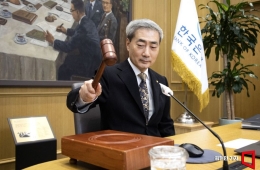
Lee Hyoungil, Deputy Prime Minister and Minister of Finance and Economy, said on October 22 that the National Pension Service had not raised its target allocation to domestic stocks “to boost the stock market in the short term or defend share prices.”
At a comprehensive audit by the National Assembly’s Committee on Finance and Economy that day, People Power Party lawmaker Kim Sanghoon pointed out that raising the target allocation to domestic stocks had increased the investment risk for the National Pension Service. Lee explained that the decision was made “after considering several factors together, including market conditions and the principles governing fund management.”

Lee emphasized that the sharp rise in the domestic stock market had made it difficult to maintain the existing asset allocation standards. “Domestic stocks rose very rapidly from the second half of 2025 onward, so we postponed rebalancing in January this year,” he said. “By around May, we had settled on ending the postponement and normalized rebalancing starting July 1.”
He noted in particular that if the target allocation to domestic stocks had not been adjusted, large-scale selling would have flooded the market during the process of normalizing rebalancing. “If we had not raised the target allocation, the target would have been too low while domestic stocks had already risen substantially, so we expected that proceeding as before would lead to a sharp increase in selling,” Lee added.
He also actively addressed the controversy surrounding his attendance at the National Pension Fund Management Committee. Kim said that Lee, while serving as First Vice Minister of Finance and Economy, had skipped other meetings but selectively attended only the committee meeting where an increase in the target allocation to domestic stocks was discussed.
In response, Lee countered, “Discussions on the medium- to long-term target allocation are scheduled for every May, and the first vice minister has attended during that period each year.”
Lee also explained why it had been decided to keep the minutes of the meeting confidential for four years. “We have decided to keep them confidential each year because disclosing the relevant information could have a direct impact on the financial markets,” he emphasized.
At the audit that day, lawmakers also discussed claims that the value of the National Pension Service’s domestic stock holdings had plunged by 182 trillion won in just three months as the KOSPI fell.
Democratic Party of Korea lawmaker Oh Kihyung said, “If people take the decline from the end of June, when the KOSPI was in the 8,000 range, and claim that 182 trillion won has disappeared, that would imply a loss every time the market fell each day. That is an unreasonable claim.”
Hot Picks Today
 Despite "Insufficient Balance" Notices, They Board Anyway... Reports of Foreign Fare Evasion Mounting
- A 'Premium Dessert' from Korea... 'Orion Custard' Hits Big in China and Vietnam as Production Lines Expand
- "I Hide in the Classroom Alone to Eat Steamed Buns. Please Help Me"... Tearful Plea Draws 600 Million Views, But It Turns Out...
- "I Killed My Mother": Daughter in Her 40s Reports Herself to Police; Police Make Emergency Arrest
- [Exclusive] "We Came for a KRW 140,000 Trip": Following Chinese Tourists in Korea Uncovers a 'Suspicious' Tour
In response, Lee said, “I believe we should avoid evaluating the National Pension Service’s investment performance based on short-term market fluctuations. Rather than focusing on changes in valuation at different points in time, I believe it is appropriate to make a comprehensive assessment based on the long-term investment returns of the entire portfolio, including domestic and overseas assets, stocks and bonds.”
© The Asia Business Daily. All rights reserved. Unauthorized AI training and use prohibited.