Oh Sehoon's 'Day of Destiny' D-1... Could It Shake Up Politics?
Acquittal Would Strengthen His Position in Race Among Conservative Presidential Hopefuls
Democratic Party Also on Alert... By-Election Would Put Leadership to the Test
With the appellate ruling in Seoul Mayor Oh Se-hoon’s case just one day away, political circles are watching closely. The ruling could reshape not only Oh’s personal political fortunes but also the contest for leadership within the conservative camp and the balance of power between the ruling and opposition parties over the Seoul mayoral election.
According to political circles on October 22, the People Power Party is closely monitoring the outcome of Oh’s appeal and its potential impact on the party’s internal dynamics. Some observers say the competition among potential presidential candidates could also shift depending on the court’s judgment on Oh, a major presidential contender in the conservative camp.

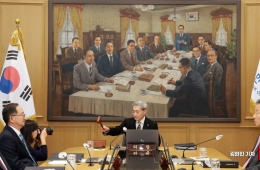
Seoul Mayor Oh Se-hoon answers questions from committee members during a National Assembly audit by the Public Administration and Security Committee at Seoul City Hall on the 15th. Provided by Yonhap News.
View original imageIf Oh is acquitted in the appellate court on October 23, he will have an opportunity to strengthen his political standing. In addition to his proven competitiveness in Seoul mayoral elections and his support base as the incumbent mayor, shedding the “Myung Tae-kyun risk” could allow him to expand his influence within the conservative camp. Analysts say this could also give him an advantageous foothold in the contest for leadership with independent lawmaker Han Dong-hoon and People Power Party leader Jang Dong-hyeok.
Recent opinion polls have also shown Oh with the highest favorability rating among major politicians. In a survey conducted by Gallup Korea from October 13 to 15 among 1,003 voters aged 18 or older nationwide, 30% said they viewed Oh favorably.
He was followed by Han at 23%, Democratic Party of Korea leader Kim Min-seok at 21%, and former Rebuilding Korea Party leader Cho Kuk at 20%. The survey had a 95% confidence level and a margin of error of ±3.1 percentage points. For more details, refer to the website of the National Election Survey Deliberation Commission.
By contrast, if the guilty verdict is upheld on appeal, Oh is expected to face greater political pressure. If he appeals to the Supreme Court, legal uncertainty will continue until its ruling, potentially constraining both his administration of the city and his future political activities. He would not immediately lose his mayoral office, but rivals within the conservative camp could adjust their moves in light of his legal risk and the possibility of a by-election.
The ruling is also a variable that could affect the Democratic Party of Korea’s strategy to retake the Seoul mayor’s office. The party must consider the possibility of a by-election if a sentence that ultimately results in Oh losing his office is finalized.
However, even if an election does take place, it is unclear whether it would present an opportunity for the Democratic Party of Korea. Some observers say that holding a Seoul mayoral by-election while public sentiment in the greater Seoul area remains unrecovered over the president’s approval rating and real estate policies could itself put pressure on the party leadership.
Hot Picks Today
 [Exclusive] "We Came for a KRW 140,000 Trip": Following Chinese Tourists in Korea Uncovers a 'Suspicious' Tour
- Despite "Insufficient Balance" Notices, They Board Anyway... Reports of Foreign Fare Evasion Mounting
- "I Killed My Mother": Daughter in Her 40s Reports Herself to Police; Police Make Emergency Arrest
- The 'Oppa' Boss Is Gone, the 'Senior' Boss Is Here: Starting Up to Make Ends Meet... New Businesses Down 1.5%
- "Photos of Kim Jong Un Released by North Korea Are a Deception"... Debate Over Death Rumors Continues
A lawmaker from the conservative camp said, “If the Democratic Party of Korea loses the Seoul mayoral election again, calls for the leadership to take responsibility could emerge,” adding, “The leadership is unlikely to welcome a by-election unreservedly either.”
© The Asia Business Daily. All rights reserved. Unauthorized AI training and use prohibited.