SKT "Researching Mathematical Challenges to Enhance Its Proprietary Foundation Model's Reasoning Performance"
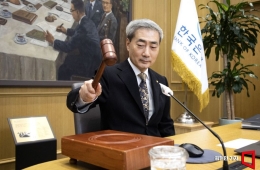
Technology exchange meeting with researchers from Seoul National University and KAIST

SK Telecom said Thursday that it is partnering with Korean mathematics and artificial intelligence (AI) researchers to enhance the mathematical reasoning capabilities of its proprietary AI foundation model, A.X K2, and take on the challenge of researching and solving difficult mathematical problems with the model.
Earlier Thursday, SK Telecom held a technology exchange meeting with faculty members and researchers from Seoul National University and KAIST at its headquarters in Euljiro, Seoul, to discuss research into difficult mathematical problems using A.X K2 and ways to further develop the model. Participants included Seo Inseok, Byeon Seongsu and Hong Youngjun from Seoul National University's Department of Mathematical Sciences; Park Noseong from KAIST's School of Computing; and student researchers. Leading Korean researchers in mathematics and AI, including the meeting's participants, are taking part in the project.
In mathematics, researchers will contribute their expertise in their respective fields. They include Seo Inseok of Seoul National University's Department of Mathematical Sciences, who studies probability theory and statistical physics; Lee Junkyung of the School of Computational Sciences at the Korea Institute for Advanced Study, who studies discrete mathematics and graph theory; and Kim Sanghyun of the School of Mathematics at the Korea Institute for Advanced Study, who studies low-dimensional topology and geometric group theory.
In the fields of large language models (LLMs) and methodologies for using them in mathematical research, Hong Youngjun of Seoul National University's Department of Mathematical Sciences and Interdisciplinary Program in Artificial Intelligence will collaborate with Lee Dabin, Oh Byeonggwon and Byeon Seongsu of the university's Department of Mathematical Sciences, as well as Park Noseong of KAIST's School of Computing. They plan to study ways to incorporate mathematicians' expertise into model training and to use LLMs in practical mathematical research.
The researchers will work together to help A.X K2 develop an in-depth understanding of individual fields of mathematics. They plan to address gaps in specialized knowledge and reasoning capabilities that existing models have not adequately handled, then use the enhanced model to tackle difficult mathematical problems in each field.
SK Telecom will apply the mathematical reasoning capabilities strengthened through this industry-academic collaboration to further develop agentic AI. The company plans to improve AI's ability to check whether its reasoning and results are sound when it creates plans to solve complex problems and carries out multistep tasks. In the long term, its goal is to build mathematical capabilities that can rival those of the world's leading AI models and create AI agents that learn the knowledge they need and improve on their own.
Hot Picks Today
 Despite "Insufficient Balance" Notices, They Board Anyway... Reports of Foreign Fare Evasion Mounting
- "I Hide in the Classroom Alone to Eat Steamed Buns. Please Help Me"... Tearful Plea Draws 600 Million Views, But It Turns Out...
- President Lee Jaemyung: "Giving Up Direction and Supervision of SCIA Is Grounds for Impeachment"
- A 'Premium Dessert' from Korea... 'Orion Custard' Hits Big in China and Vietnam as Production Lines Expand
- [Exclusive] "We Came for a KRW 140,000 Trip": Following Chinese Tourists in Korea Uncovers a 'Suspicious' Tour
"We are actively pursuing industry-academic collaborations in mathematics to improve our proprietary foundation model's ability to solve real-world problems," said Kim Taeyun, who oversees foundation models at SK Telecom. "We will further develop our agentic AI capabilities through joint research with expert researchers."
© The Asia Business Daily. All rights reserved. Unauthorized AI training and use prohibited.