"Free rides for older adults generate 650 billion won in annual social benefits"... National investment needed
"Final Briefing on Study of Measures to Ensure the Sustainability of Fare-Free Transportation"
Net Losses Projected to Top 3 Trillion Won by 2050 Amid Super-Aging
A study has found that free urban railway rides for older adults increase their social activities, generating more than 650 billion won in social benefits annually. Meanwhile, the combined deficit of urban railway operators nationwide is projected to exceed 3 trillion won by 2050, likely lending renewed support to calls for the central and local governments to compensate for their losses.

Cover of the final report on a commissioned study to develop measures to ensure the sustainability of the urban railway fare-free transportation system. Provided by Seoul Metro.
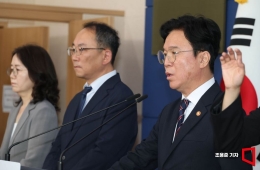
View original imageSeoul Metro said it would present these findings at a final briefing on the research project, “Developing Measures to Ensure the Sustainability of the Urban Railway Fare-Free Transportation System,” on October 22. The study was jointly commissioned by six urban railway operators nationwide, including Seoul Metro, and conducted by the Korean Society of Transportation. It began in July and was completed in about four months.
According to the report, the social benefits generated by fare-free transportation amounted to 650.6 billion won annually in 2025. By category, health benefits, including suicide and depression prevention and a reduction in illness, were the largest at 338.6 billion won. Transportation and environmental benefits, such as lower vehicle operating costs and fewer traffic accidents, totaled 229.3 billion won, while economic benefits, including increased spending at local businesses, amounted to 82.7 billion won.
Within the health category, the benefits of suicide prevention alone were estimated at 142.1 billion won. These benefits are expected to rise as the population ages, reaching 898.3 billion won in 2035 and 1.0598 trillion won in 2050. A Seoul Metro official said, “This shows that fare-free transportation goes beyond simply reducing fares and serves as a form of public investment that helps reduce national welfare spending and other costs.”
The challenge lies in the operators’ finances. The combined net losses of the six operators are projected to rise from 1.4821 trillion won in 2025 to 1.9139 trillion won in 2030 and 3.1486 trillion won in 2050.
In a survey of 2,000 adults nationwide conducted by the society, 73.6% of respondents identified the central government (41.7%) or local governments (31.9%) as responsible for funding the system. Only 9% said the operators should bear the cost themselves. However, just over half, or 51.5%, said the system “should be maintained,” while 24.4% said there was “no need to maintain it.”
The society said that in France, Germany and the United Kingdom, the national or local governments fully cover or share the losses from fare reductions mandated for transport welfare purposes. It also challenged the government’s opposition to national funding on the grounds of fairness to areas without urban railways, noting that transport welfare programs are already being implemented by individual ministries, including the Ministry of Land, Infrastructure and Transport’s “Everyone’s Card” and the Ministry of Oceans and Fisheries’ fare subsidies for island residents traveling by passenger ferry.
As a policy alternative, the report proposed forming an inter-ministerial council led by the Ministry of Land, Infrastructure and Transport and the Ministry of Health and Welfare to define each ministry’s role and establish standards for calculating costs. Raising the age threshold for free rides from 65 to 70 was also considered, but its impact was limited.
Under the current system, Seoul Metro is projected to become fully capital-impaired in 2033. Raising the age threshold would delay this by just one year, to 2034. The society said that raising the age threshold must be accompanied by improvements to the cost-sharing system, including national funding.
Hot Picks Today
 24-Year-Old Wins Sleep Contest, Takes Home 19 Million Won After Sleeping Soundly Alongside Strangers
- "My portfolio was so battered, I didn't even want to look" - Companies that shone amid October's market plunge
- "Even Underwear Has to Be Cut Up with Scissors"... China Hit by Rise of "Trash Hunters" in an "If You're Slow, You're Out" Scramble
- "Please Make More," After Hitting It Big in China and Vietnam... Orion Custard Expands Production Lines
- "Photos of Kim Jong Un Released by North Korea Are a Deception"... Debate Over Death Rumors Continues
Han Young-hee, head of the Planning Division at Seoul Metro, said, “This study assessed public investment to maintain the fare-free transportation system as a policy choice with sufficient economic justification. We plan to actively persuade key stakeholders, including the National Assembly and the government, of the need to improve the system and build broader consensus on establishing a reasonable cost-sharing system through public discussion.”
© The Asia Business Daily. All rights reserved. Unauthorized AI training and use prohibited.