Oh Sehoon Inspects Seoul's Disaster Response System... "We Will Protect Residents' Daily Lives"
Seoul Metropolitan Government's "2026 Disaster Response Safe Korea Exercise"
Scenarios included ground subsidence, structural collapse, and electric vehicle fires
Rescue operations using quadruped robots and drones, among other measures.
Seoul Mayor Oh Sehoon inspected the Seoul Metropolitan Government’s integrated disaster response system. Assuming a chain of disasters, beginning with ground subsidence caused by an earthquake and followed by structural collapses and electric vehicle fires, he reviewed the entire process from initial response through recovery and restoration.
The Seoul Metropolitan Government said that it held the “2026 Seoul Disaster Response Safe Korea Exercise” at 9:50 a.m. on the 22nd at Mokdong Sports Complex in Yangcheon-gu, with Mayor Oh in attendance.

This year’s exercise was designed to simulate real-world conditions and reflected five disasters that had recently occurred in Seoul: ground subsidence in Myeongil-dong, an accident at the Seosomun Overpass demolition site, an electric bus fire at the Eunpyeong depot, a fire at a guesthouse in Sogong-dong, and an underground utility tunnel fire in Seongbuk-gu. In particular, the exercise combined different types of accidents into a single complex disaster scenario to comprehensively assess response capabilities needed in an actual disaster, from situation alerts, on-site command, rescue and emergency medical care to the restoration of urban infrastructure, as well as coordination among relevant agencies.
A total of 725 people from 21 organizations and groups, including the Seoul Metropolitan Government, Yangcheon-gu, fire services, police, the military, and Korea Electric Power Corporation, took part in the exercise, with 76 vehicles deployed. At Mokdong Sports Complex, five training zones were set up for ground subsidence, electric vehicle fires, multiple casualties involving foreign nationals, structural collapse, and damage to urban infrastructure, with response drills conducted for each scenario.
The drills in the ground subsidence and structural collapse zones focused on searching for trapped people and rescuing victims. In the “ground subsidence zone,” participants recreated a scenario in which vehicles were trapped by a road collapse, surveyed ground conditions using ground-penetrating radar (GPR), and practiced rescuing vehicle occupants with lifting equipment.
In the “structural collapse zone,” participants assumed that a temporary structure at a construction site had collapsed. They deployed search-and-rescue dogs, search drones, quadruped robots, and radio-wave detectors to practice locating and rescuing survivors in the rubble.
Firefighting drills were also conducted to prevent fires caused by electric vehicle battery thermal runaway from spreading. In the “electric vehicle fire zone,” participants recreated a battery thermal runaway scenario based on the electric bus fire at the Eunpyeong depot. They reviewed response procedures, including using fire blankets to contain the spread of flames and portable fire suppression tanks to cool the batteries.
Emergency aid drills for incidents involving multiple foreign casualties and urgent restoration drills for damage to urban infrastructure were also held. In the “multiple foreign casualties zone,” drawing on the Sogong-dong guesthouse fire, participants practiced assessing the condition of foreign patients who had difficulty communicating in Korean and providing emergency medical care, using pictogram cards, artificial intelligence (AI) translation apps, and interpretation support.
In the “damage to infrastructure, including communications networks, zone,” participants drew on the Seongbuk-gu underground utility tunnel fire to simulate a scenario in which damage to communications facilities disrupted card payments and communications services. The city focused on minimizing inconvenience to residents and disruptions to small businesses by reviewing temporary payment options and emergency communications network restoration procedures.
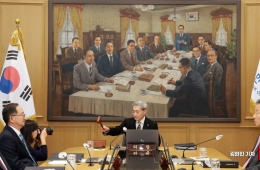
Meanwhile, a discussion-based exercise to activate the Disaster and Safety Countermeasures Headquarters was held in the video conference room at Seoul City Hall. The city reviewed its command and coordination system, including issuing alerts about the disaster, holding situation assessment meetings, and operating the headquarters’ 13 working groups.
Hot Picks Today
 [Exclusive] "We Came for a KRW 140,000 Trip": Following Chinese Tourists in Korea Uncovers a 'Suspicious' Tour
- Despite "Insufficient Balance" Notices, They Board Anyway... Reports of Foreign Fare Evasion Mounting
- "I Killed My Mother": Daughter in Her 40s Reports Herself to Police; Police Make Emergency Arrest
- The 'Oppa' Boss Is Gone, the 'Senior' Boss Is Here: Starting Up to Make Ends Meet... New Businesses Down 1.5%
- "Photos of Kim Jong Un Released by North Korea Are a Deception"... Debate Over Death Rumors Continues
Mayor Oh said, “This exercise was an opportunity to check whether coordination among relevant agencies can operate effectively in response to complex disasters, and to review the entire process from initial response through recovery and restoration, including support for victims regardless of language or nationality and their return to everyday life. We will address shortcomings identified during the exercise and incorporate the lessons into our actual disaster response system to make Seoul a special city that thoroughly protects residents’ lives and everyday routines and enhances their quality of life.”
© The Asia Business Daily. All rights reserved. Unauthorized AI training and use prohibited.