Seoul to Eliminate Blind Spots in Building Energy Management... Switches to 'Rating System'
From the Country's Only Reporting and Rating System to a Rating System
Rate All Covered Buildings Using the National Energy Database
Turn Obstacles to Existing Policies into Tools for Expanding Them
Refine Assessment Criteria by Building Use and Strengthen Distinctions Between Ratings
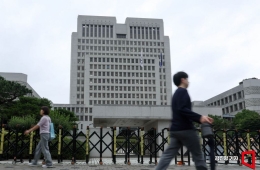
The Seoul Metropolitan Government is transitioning its “Building Energy Reporting and Rating System,” which relied on voluntary reporting by building owners and managers, to a rating system. The city currently offers incentives, including under its Building Energy Efficiency Improvement Loan Program, based on buildings’ energy ratings. It has decided to change the system so that all buildings are rated first, followed by individual verification.
According to the Seoul Metropolitan Government on October 22, 7,604 buildings had participated in the Building Energy Reporting and Rating System as of September this year. In 2024, the city became the first in the country to introduce the system, attracting 4,281 participating buildings that year and 6,392 in 2025.
Buildings Account for 70% of Greenhouse Gas Emissions... Seoul Metropolitan Government Says "Systematic Building Energy Management Is Needed"
Under the Building Energy Reporting and Rating System introduced by the Seoul Metropolitan Government, building owners and others report their electricity, city gas and district heating consumption from the previous year. The city then assesses each building’s energy performance based on energy use per unit of floor area and assigns it a rating from A to E. The system covers 15,117 non-residential buildings with a gross floor area of at least 1,000 sq. m. (at least 3,000 sq. m. for privately owned buildings). The city uses the data to check energy consumption by building and develop efficiency improvement plans.
The Seoul Metropolitan Government has focused on the fact that buildings account for 68.1% of the city’s total greenhouse gas emissions. In particular, non-residential buildings with a floor area of at least 3,000 sq. m. account for 21.8% of Seoul’s total carbon dioxide emissions, underscoring the need for systematic management.
The Building Energy Reporting and Rating System has demonstrated its effectiveness. In 2025, the city assessed the energy efficiency of 6,055 buildings and provided diagnostic support for some of them. It also conducted simulated carbon credit trading involving 538 city-owned buildings and provided consulting on ways to reduce their greenhouse gas emissions.
This year, the ratings for all assessed buildings were distributed as follows: 4.3% received an A, 47.5% a B, 39.0% a C, 7.2% a D and 2.0% an E. Buildings rated A or B accounted for 51.8%, meaning that more than half of the assessed buildings met or exceeded the management target.
The Seoul Metropolitan Government plans to select buildings rated A or B that have low energy consumption and a strong record of energy management as “Seoul Low-Carbon Exemplary Buildings” and present awards in December. For buildings rated D or E, the city will survey their energy use and connect them with tailored consulting on improving energy efficiency and consultations on low-interest loans. The city also plans to expand and strengthen its green remodeling program to improve the energy performance of public buildings.

Seoul's concept for transitioning to a building energy "rating system." Seoul Metropolitan Government
View original imageLimits of the Reporting and Rating System... A Change in Approach Needed to Improve Energy Management Efficiency
One limitation is that the number of additional participating buildings has been declining. The number of participants rose by 2,111 buildings in 2025 compared with 2024, but the year-on-year increase was only 1,212 buildings as of September 2026. At this rate, it is expected to take nearly seven years for all of the more than 15,000 buildings covered by the system to participate. The city also concluded that the system needs improvement because nearly 85% or more of buildings are concentrated in the B and C rating categories, reducing its ability to distinguish between buildings.
Support mechanisms, including legislation to make participation mandatory and thereby activate the system, have also been lacking. Amendments to the Energy Use Rationalization Act and the Green Buildings Construction Support Act have been pending in the National Assembly since 2024, while the Ministry of Land, Infrastructure and Transport is reviewing detailed regulations for the full implementation of an energy consumption cap system.
In response, the Seoul Metropolitan Government will move away from an assessment system centered on voluntary reporting and use the national energy database to rate every building, including those that have not reported their energy use. The city will then verify and correct the information for individual buildings. Although national databases are available from entities such as Korea Electric Power Corporation and the Korea District Heating Corporation, the system was designed around voluntary reporting because the difficulty of accurately measuring energy consumption for each building in a complex was considered a limitation on the use of the data. The city plans to change its approach by using the national database first and correcting errors for buildings whose energy consumption data is inaccurate.
In November, the city will rate public buildings that have not previously reported their energy use. It will calculate preliminary ratings for these buildings using the national energy database and notify them of the results, after which the buildings will be asked to verify and supplement the information. From 2027, the system will be extended to all buildings covered by the program. The city expects that, independently of amendments to laws mandating reporting, it will be able to manage all buildings, including those whose energy consumption has been difficult to determine.
To accurately reflect building use and operational characteristics, the Seoul Metropolitan Government will expand its existing 26 use categories into at least 56 more detailed categories. For example, “educational and research facilities” will be divided into general educational facilities, research facilities, libraries, universities, high schools, middle schools and elementary schools, while “medical facilities” will be divided into general hospitals, hospitals and long-term care hospitals, among other categories. The city also plans to subdivide the B and C rating ranges, where a relatively large number of buildings are concentrated, because it is difficult to distinguish performance differences between buildings in these categories, and to make the distinctions between ratings clearer.

Distribution of greenhouse gas emissions across Seoul. Seoul Metropolitan Government.
View original imageExpand Incentives and Revise Laws and Systems... Strengthen Cooperation with the Government
The city will also expand incentives to encourage greater participation. It plans to introduce a reduction in loan interest for buildings that improve by one energy rating level and participate in the Building Energy Efficiency Improvement Loan Program, as well as provide plaques to buildings ranked in the top 1%.
The Seoul Metropolitan Government has also decided to strengthen cooperation with the central government to revise relevant laws and systems. The Ministry of Land, Infrastructure and Transport is currently drafting amendments to relevant laws to make building energy reporting, ratings and energy consumption caps mandatory, incorporating the Seoul Metropolitan Government’s experience implementing the system. The Seoul Metropolitan Government is also working to strengthen local governments’ authority over building energy and greenhouse gas management and expand participation.
Hot Picks Today
 Despite "Insufficient Balance" Notices, They Board Anyway... Reports of Foreign Fare Evasion Mounting
- "If It Helps My Child's Studies, It's Worth Every Penny"... U.S. Parents Open Their Wallets for $10,000 Tests
- [Exclusive] "We Came for a KRW 140,000 Trip": Following Chinese Tourists in Korea Uncovers a 'Suspicious' Tour
- "I'm paying to stay, and you want me to do the laundry and dishes too?" ... Airbnb bans excessive cleaning demands
- "Baek Jongwon Had Been Quiet, Then Hit It Big"... Waits in the 100s in U.S. Despite KRW 46,000 Pork Belly
Yoon Jaesam, head of the Climate and Environment Headquarters at the Seoul Metropolitan Government, said, “This transition to a rating system will be an administrative example of turning obstacles to existing policies into a means of expanding them. We will use a range of ideas to enhance the database on building energy consumption and further develop our efforts to reduce greenhouse gas emissions.”
© The Asia Business Daily. All rights reserved. Unauthorized AI training and use prohibited.