"AI and Green Transition: Beyond Costs, Toward Growth" ... Industry: "Conditions Must Be in Place to Invest"
Ministry of Climate, Energy and Environment, KBCSD Hold Leaders Forum
Manufacturing Growth Sought Through AI and Green Transition
Need for Proactive Investment, Policy and Financial Support Emphasized
There were calls for companies to make proactive investments, backed by policy, financing and power infrastructure, to make artificial intelligence (AI) and the green transition new growth engines for manufacturing. The message was that AI adoption should not be limited to reducing the workforce, nor the green transition to regulatory compliance; both should instead be linked to stronger competitiveness in winning orders and the creation of new markets.

Jung Mookyung, president of sustainability management at Korea Zinc, explains the company’s resource-circulation and eco-friendly smelting strategies at the 18th KBCSD Leaders Forum and 8th Sustainable Business Innovation Forum, held at Grand InterContinental Seoul Parnas in Gangnam, Seoul, on the 21st. Photo by Seo Mideum
View original imageThe Korea Business Council for Sustainable Development (KBCSD) and the Ministry of Climate, Energy and Environment held the 18th KBCSD Leaders Forum and the 8th Sustainable Business Innovation Forum on the 21st at Grand InterContinental Seoul Parnas in Gangnam-gu, Seoul. Participants from business, government, finance and the legal sector discussed ways to strengthen industrial competitiveness by combining the AI transition with the green transition.
In his keynote address, Hur Dongsoo, honorary chairman of GS Caltex and KBCSD honorary chairman, stressed the need for proactive investment in AI-enabled autonomous manufacturing and low-carbon processes, saying, "We need to prepare for the future when the market is down so that we can seize opportunities when the upswing comes." He said that turning on-site experience and know-how into data and embedding AI technology in operations could create a competitive gap that rivals would find difficult to close when the market opens up.
However, he noted that investment should be based on "calculated risks." He said companies should analyze energy efficiency and carbon-reduction costs for each process, then invest in feasible projects in stages. "We need to set aside the supplier-centered mindset of asking what we can make with our AI technology and instead provide tailored solutions that help address the survival challenges facing customers and society," Hur said.
Lee Kyungjeon, a professor at Kyung Hee University who delivered a special lecture, also said the goal of the AI transition should be to expand the customer base and markets, rather than simply cut costs. He shared his experience helping develop a production scheduling system for Daewoo Shipbuilding. By using AI to cut the time needed to create a schedule from around 10 to 15 days to four days, the benefits went beyond shorter working hours and improved the company's ability to meet delivery deadlines, he said. Being able to adjust production schedules quickly allows a company to give shipowners delivery dates and secure orders, he explained.

Participants discuss ways to implement the green transition at the 18th KBCSD Leaders Forum and 8th Sustainable Corporate Innovation Forum, held on the 21st at the Grand InterContinental Seoul Parnas in Gangnam-gu, Seoul. From left: KBCSD Chairman Park Jaewan; Oh Ilyoung, policy chief at the Ministry of Climate, Energy and Environment; Jung Mookyung, president of sustainability management at Korea Zinc; Jung Junho, CEO of SK Securities; and Son Doil, managing partner of Yulchon LLC. Photo by Seo Mideum
View original imageLee said companies should ask, "Which customers' pain points can we solve, and which markets can we open up?" rather than focusing on how many people, hours or costs they can cut. He also recommended selecting AI projects by weighing their urgency, impact, feasibility and risks.
Examples of the green transition that change raw-material procurement methods and business structures were also presented. Jung Mookyung, president of sustainability management at Korea Zinc, introduced integrated smelting technology that recovers additional gold, silver and rare metals from smelting byproducts left over after producing zinc and lead. The company plans to extend this approach to spent batteries and electronic waste, building a supply chain that connects the procurement of recycled materials with metal production.
"The circular use of resources is not about processing waste; it is a green-transition strategy that fundamentally changes how raw materials are procured," Jung said, explaining that the circular system is complete only when the recovered metals are reliably used as industrial materials.
There were also calls to make policies more predictable to enable these investments. Park Jaewan, chairman of KBCSD, identified bottlenecks in industrial electricity rates and the expansion of power infrastructure as practical challenges to corporate competitiveness. He stressed that investment could be held back without consistent policy signals from the government and risk-sharing through financial and legal frameworks.
The government also identified policy continuity as a key priority. Oh Ilyoung, climate and energy policy chief at the Ministry of Climate, Energy and Environment, said that uncertainty surrounding past disclosure policies had left corporate staff unsure about whether they were prepared. He said the government would incorporate the Korean Green Transformation Strategy into laws, budgets and administrative plans so it would continue regardless of changes in government. He added that, to meet the power needs of semiconductor plants and AI data centers, the government would prepare the power grid and market systems while making the coexistence of renewable energy and nuclear power a core principle.

Major attendees pose for a commemorative photo at the 18th KBCSD Leaders Forum and the 8th Sustainable Corporate Innovation Forum, held on the 21st at the Grand InterContinental Seoul Parnas in Gangnam-gu, Seoul. From left: Professor Lee Kyungjeon of Kyung Hee University; Hwang Byeongso, CEO of GS E&R; Lee Jongyeol, adviser at Kim & Chang; Jung Junho, CEO of SK Securities; Choi Dongryeol, partner at Yulchon LLC; Kim Miseop, vice chairman of Mirae Asset Securities; Park Seunghee, president of Samsung Electronics; Myung Nohyun, vice chairman of LS; Kim Taejin, president of GS Engineering & Construction; Hur Myungsoo, standing adviser to GS Engineering & Construction and KBCSD honorary chairman; Kim Myungja, adviser to the Presidential Committee for National Integration; Oh Ilyoung, climate and energy policy chief at the Ministry of Climate, Energy and Environment; Park Jaewan, chairman of KBCSD; Hur Dongsoo, honorary chairman of GS Caltex and KBCSD honorary chairman; James Kim, chairman of the American Chamber of Commerce in Korea; Lee Kyungho, chairman of Younglim Wood and KBCSD honorary chairman; Lee Youngjun, CEO of Lotte Chemical; Jung Mookyung, president of Korea Zinc; Son Doil, managing partner at Yulchon LLC; Lim Kyungtae, president of Halla Cement; Kim Sungjin, chairman of the Korea Power Exchange; Yoon Jongsoo, adviser at Kim & Chang; Lee Byongyong, CEO of Nature and Environment; and Yoo Bongseok, chief revenue officer of Naver. Korea Business Council for Sustainable Development (KBCSD)
View original imageThe role of finance in supporting the recovery of long-term investments was also emphasized. Jung Junho, CEO of SK Securities, said that companies with high carbon emissions today could still receive funding through transition finance if they had credible emissions-reduction plans. He proposed clarifying which technologies and investments would qualify as transition activities in each industry, and sharing private-sector investment risks through measures such as guarantees and subordinated investment from policy finance institutions.
Hot Picks Today
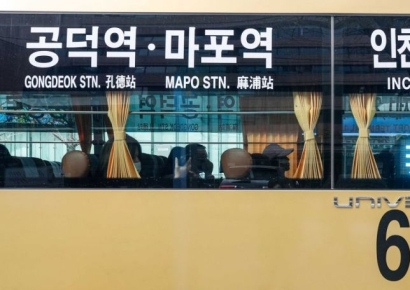 Despite "Insufficient Balance" Notices, They Board Anyway... Reports of Foreign Fare Evasion Mounting
- A 'Premium Dessert' from Korea... 'Orion Custard' Hits Big in China and Vietnam as Production Lines Expand
- "I Hide in the Classroom Alone to Eat Steamed Buns. Please Help Me"... Tearful Plea Draws 600 Million Views, But It Turns Out...
- "I Killed My Mother": Daughter in Her 40s Reports Herself to Police; Police Make Emergency Arrest
- [Exclusive] "We Came for a KRW 140,000 Trip": Following Chinese Tourists in Korea Uncovers a 'Suspicious' Tour
Son Doil, managing partner at Yulchon LLC, proposed assessing power supply, site availability and transmission networks together, and creating a system that would allow verified carbon data to be reused for regulatory compliance, export reviews and financing assessments. "Transition finance is less about providing money to reduce costs than about financing the time needed for the transition," Jung said.
© The Asia Business Daily. All rights reserved. Unauthorized AI training and use prohibited.